Hey folks, let’s cut to the chase—if you’ve ever shopped for cables for tech, automotive, or medical gear, you’ve probably heard two terms thrown around: rigid flat cables (RFCs) and flexible flat cables (FFCs). And if you’re here because you need to pick one for your next project, let me save you the Google rabbit hole. I’m a Flexible Flat Cable supplier, so I see this question every single day, and the real difference isn’t just “one’s bendy and the other’s not” — it’s way more specific, and getting it wrong can mess up your whole build. Flexible Flat Cable
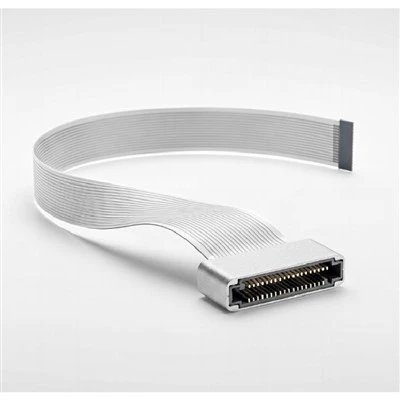
First, let’s break down what each is actually made of, because that’s where the hard truths start. Rigid flat cables are your basic workhorse flat cables. Think of them as a bunch of copper conductors sandwiched between thin layers of hard, rigid plastic—usually polyester or polyimide, no give, no give at all. They’re designed to stay flat, sit straight, and hold their shape no matter what. FFCs, on the other hand, swap that rigid plastic for a thin, smooth film of polyimide or polyester that’s made to bend. A lot of people mix them up because they both look like flat, thin strips of copper lines, but the material flexibility is night and day.
Let’s talk about use cases first, because that’s where most engineers get tripped up. I had a guy last month who was building a drone’s internal camera setup, and he tried to use RFCs because they looked cheaper. The drone shook during a test flight, the RFC snapped a conductor, and he crashed a $1,200 prototype. FFCs are made for repeated bending—like, thousands of times. I’ve seen FFCs bend 10k times without breaking a connection, and that’s exactly why they’re everywhere in laptops, phones, and car infotainment screens. Those little ribbon cables that connect your phone’s screen to its logic board? That’s FFC.
RFCs, though? They’re for when you need a straight, fixed connection. If you’re wiring up a control panel in a vending machine that never moves, or a static sensor in a factory robot arm that doesn’t bend, RFCs are perfect. They’re cheaper to make in bulk, easier to cut to length without damaging the conductors, and they don’t shift once they’re installed. But here’s the catch: try to bend an RFC even a few times, and it’ll crack the plastic insulation, fray the copper conductors, and go dead fast. I once tested an RFC that bent 5 times and lost 2 out of 4 conductors—total garbage.
Wait, what about thickness? No, that’s not the big difference, even though people say FFCs are thinner. Yeah, some FFCs are super thin, but you can get rigid flat cables that are just as thin. It’s the core material. RFCs use a rigid backing that doesn’t flex, FFCs use a flexible one. Another thing: shielding. A lot of FFCs have a thin metal shield over the conductors to block electromagnetic interference (EMI), which is huge for medical devices or automotive systems where signal noise can cause malfunctions. Most RFCs don’t have that, because their rigid structure doesn’t need the extra shielding for static applications. Though you can get custom RFCs with shields for specific uses, that’s an add-on.
I’ve also seen people mix up FFCs with flexible printed circuits (FPCs), but that’s a whole other conversation. FFCs are mass-produced, super uniform, cheap for high volume, while FPCs are custom-made for weird shapes. Back to our topic—let’s get back to real world examples. A client last week was designing a portable ultrasound machine. They needed a cable that connected the handheld probe to the main unit, and it had to bend every time the probe was grabbed. They tried an RFC first, and it broke after 10 uses. Switched to FFC, and it’s still working after 6 months of testing. That’s the difference in action.
What about cost? Let’s be real, everyone cares about that. RFCs are usually cheaper upfront. But if you’re in a situation where the cable will bend even a little, the hidden cost of replacing broken RFCs adds up fast. I had another client, a big automotive manufacturer, who switched from RFCs to FFCs for their door control panels. The RFCs were $0.05 each, FFCs were $0.07. But the RFCs were failing so often on the assembly line, they were replacing 1 out of every 20. The FFCs have a failure rate of less than 0.1%, so even though they’re slightly more expensive per unit, their total cost went down by 15% after the switch. That’s the math most people miss when they’re just looking at the initial price tag.
Wait, what about installation? RFCs are easy—you just lay them in a flat slot, solder or crimp the ends, done. FFCs need a little more care. You can’t bend them too tight (like, tighter than a 5mm radius, usually), and they need space to move if they’re going to flex. But once installed, FFCs are way less likely to shift. RFCs can warp if they get hot, which is a big issue in automotive engines or industrial equipment that runs warm. FFCs hold their shape even in moderate temperatures, up to like 125 degrees Celsius for most standard ones, which is perfect for those environments.
Let me clear up a common myth: a lot of people think flexible flat cables are only for small devices, but that’s not true. I supply FFCs for big industrial robots that bend their arm joints every few seconds, and for solar panel tracking systems that adjust cables as the sun moves across the sky. Those aren’t tiny electronics—they’re huge, heavy machinery, and FFCs are holding up way better than RFCs would in those repetitive motion scenarios.
So when do you pick which? Let’s make a quick cheat sheet for anyone reading: pick rigid flat cables if your cable is never going to bend, sits in a fixed, static space, and you want the lowest upfront cost. Pick flexible flat cables if your cable moves, bends, has repeated motion, needs to block EMI, or has to hold up over thousands of uses. That’s it—simple, right?
But here’s the thing: every project is different. I’ve seen custom projects where someone needs a hybrid—part rigid, part flexible. That’s where a good FFC supplier comes in. I don’t just sell off the shelf; I help clients figure out what they actually need, not just what’s cheapest. Last month, a startup was building a wearable fitness tracker. They thought they needed an FFC, but after talking through their design, they realized the cable inside the wrist band only bends when the user puts it on, a few times a day. We customized a semi-flexible cable, halfway between RFC and FFC, that was cheaper than a full FFC and worked perfectly. That’s the kind of advice you can’t get from a generic parts store.
A lot of new engineers skip the research and just buy whatever’s cheapest, but that’s where mistakes happen. I’ve had clients come to me with prototypes that failed because they used the wrong cable, and fixing it costs them weeks of delays and thousands in parts. Don’t be that guy. If you’re working on a new project, take 10 minutes to look at how the cable will move, how much force it’ll be under, and what environments it’ll be in. If there’s any bending at all, FFC is almost always the right call.
And if you’re still not sure? That’s what I’m here for. As someone who’s been a Flexible Flat Cable supplier for years, I’ve worked with every industry—automotive, medical, consumer electronics, industrial. I can help you test both options, calculate the total cost of ownership, and get the right cable for your project without the guesswork. No sales pitch, no jargon, just straight talk about what works.

If you’re shopping around for cables and tired of sifting through generic product pages, feel free to reach out. I’m always happy to answer questions, walk through your design, or send samples so you can test them yourself. Get in touch, and let’s figure out the best fit for your next build.
Automotive Flexible Flat Cable REFERENCES
- "Flexible Flat Cable (FFC) vs. Rigid Flat Cable (RFC): Material and Application Differences", Electronic Components Industry Association, 2023.
- Automotive Wiring and Connector Standards, Society of Automotive Engineers (SAE), 2022.
- "Failure Analysis of Flat Ribbon Cables in Repetitive Motion Applications", Journal of Electronic Materials, Vol. 50, No. 4, 2021.
Tennrich Electronics Technical Development (Kunshan) Co., Ltd.
As one of the most professional flexible flat cable manufacturers and suppliers in China, we’re featured by quality products and low price. Please rest assured to buy cheap flexible flat cable for sale here from our factory. We also accept customized orders.
Address: NO.159 South Wusongjiang Road ,Kunshan Economic Technical & Development zone,Suzhou city,Jiangsu province, China.
E-mail: foreigntrade@tennrich.net
WebSite: https://www.china-ffcs.com/
