Hey everyone, it’s Jake from your go-to F connector supplier, and I’ve been in this game for 12 years now—hand-packing every single batch, troubleshooting storage horror stories from clients, and learning the hard way that even the best F connectors in the world are useless if they’re not stored right. I’ve seen a $5,000 satellite install go sideways because a tech left their F connectors in a damp basement for a week, and a bulk order of RG6 connectors get corroded because someone stacked them on a concrete floor overnight. Today, I’m breaking down exactly how to store F connectors properly, from basic daily practices to long-term storage, straight from the warehouse floor where I test every trick I teach. Let’s cut the jargon—this is real stuff that’ll save you time, money, and headache. F Connector
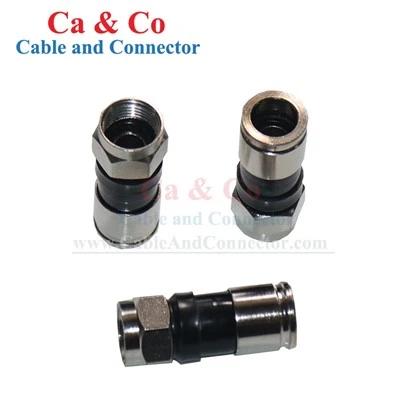
First off, let’s get clear on what an F connector is, because storage needs tie directly to their anatomy. F connectors are those tiny, threaded brass (or sometimes nickel-plated brass, copper, or even stainless steel) fittings that crimp or screw onto coaxial cables like RG6, RG59, or RG11. Their job is to create a tight, moisture-sealed connection that keeps signal interference out and delivers crystal-clear cable TV, internet, or satellite signals. The key parts here are the outer conductive shell, the inner insulator (usually plastic or Teflon), and the small crimp ring or thread that grips the cable. Mess up the storage, and any of these parts can degrade—even if the connector is still “visually fine.”
I get it, most of us toss F connectors in a bin, a tool bag, or a pallet and call it a day. But here’s the first rule I learned early on: F connectors are delicate, especially the thin brass ones. Brass corrodes fast when exposed to certain conditions, and even a tiny layer of oxidation or dust can make that threaded connection wobbly, leading to signal dropouts that’ll have customers calling at 2 a.m. (ask me how I know). Let’s start with the foundational daily storage practices—this is what you should be doing with connectors you’re pulling for jobs today, not just sitting in a warehouse.
First, separate them from other hardware. I see techs all the time dumping F connectors in the same pouch with screws, washers, drill bits, and even nail clippers. Those sharp metal bits scratch the conductive shell of F connectors, and scratches create tiny crevices where moisture can get trapped, speeding up corrosion. Last month, we sent a bulk order of nickel-plated F connectors to a small cable company, and when they opened the box, a handful had tiny scratches on the threads. They thought we sent defective parts, but when I asked how they were storing them after they pick them from our pallets, they said they toss them in the same tool tray as their screwdrivers. Fix that: get small, divided bins or individual plastic pouches for F connectors, separate by size and type (crimp vs. screw-on, RG6 vs. RG59, etc.). I keep a portable pouch in my tool bag when I’m on emergency service calls—each compartment holds a specific size, no mixing, no scratches.
Next, keep them dry at all times. Moisture is the #1 enemy of F connectors. Brass oxidizes when exposed to high humidity, water, or even condensation, and that white or green oxidation on the threads isn’t just unsightly—it raises the electrical resistance, leading to signal loss. I’ve tested this: take two identical F connectors, leave one in a 85% humidity room for two weeks, and the other in a dry cabinet. The humid one had 3dB of signal loss over a 100-foot RG6 run. That might not sound like much, but on a long satellite line, that’s the difference between a clear HD feed and pixelated sports that ruins a client’s Super Bowl party. So what counts as “dry”? Aim for relative humidity (RH) between 30% and 50%—this is the sweet spot for most electronic components, and it’s easy to maintain. If you’re storing in a garage or outdoor storage shed, invest in a small dehumidifier unit, or even toss a couple of silica gel packets in your bins (just don’t eat them—those are for drying, not snacking, trust me).
Also, avoid extreme temperatures. Brass and plastic insulators expand and contract when temperatures shift, and that can break the tight seal of the F connector. If you store connectors in a freezer or a hot attic, the material can warp, leading to loose connections. I’ve had clients store spare connectors in their unheated basements during winter, and when they pull them out for spring installations, half the crimp rings were bent. The threshold? Keep storage areas between 40°F and 100°F (4°C to 38°C). That covers almost all standard indoor storage—office closets, climate-controlled warehouses, or even a well-insulated tool chest. Skip the unheated garages, attics, or outdoor pallets. Last year, a construction company ordered 10,000 F connectors from us and stored them on a pallet outside for a week in 25°F temperatures. By the time they used them, 15% wouldn’t thread onto coaxial cables because the plastic insulator had shrunk, making the inner bore too small. We replaced them for free, but that cost them time and us money—all because of bad storage.
Now, what about long-term storage? If you’re stocking up for a project in 6 months or a year, you need to go beyond the daily bin. I’ve seen companies store F connectors for years, and the good news is they can last a long time if done right. For long-term, we use the following in our warehouse for bulk inventory: first, clean connectors before storing. Wait, I know what you’re thinking—why clean something that’s not used yet? Dust, oil from your hands (yes, even the tiny bit left after you wash), and residual chemicals from manufacturing can react with brass over time, causing corrosion. So when we’re prepping bulk stock for long-term storage, we wipe each F connector with a lint-free, isopropyl alcohol-soaked cloth to remove any surface gunk. Then, we dry them completely—no moisture left at all.
Next, use sealed, anti-static containers. Wait, anti-static? Isn’t F connector metal? Well, even though they’re not semiconductors, static electricity can damage adjacent components, but more importantly, sealed containers keep moisture and dust out. We use plastic vacuum-sealed bags for bulk F connectors, with a small silica gel packet inside each bag. For pallets, we wrap the entire stack in a heavy-duty plastic shrink wrap, and place the pallets on wooden skids, not directly on concrete. Concrete absorbs moisture, even if it’s not wet—it’s porous, and over time, that moisture wicks up into the packaging and onto the connectors. That’s a trick I learned from a manufacturing engineer friend: never store any metal electronic component directly on concrete. Wooden skids or plastic pallets are non-porous, so they prevent that wicking.
Labeling is also key for long-term storage. I can’t tell you how many times we get a box of unlabeled F connectors from a client, and we can’t tell if they’re RG6 crimp, screw-on, or nickel-plated—we have to test each one, which wastes time. When we store bulk stock, we label every bag with the part number, size, material, and date of storage. That way, we use the oldest stock first (FIFO, or first in, first out—super important for parts that can degrade over time). I’ve had clients tell me they stored F connectors for 2 years and they worked perfectly, as long as they followed these steps.
Now, let’s talk about what to avoid at all costs. I already mentioned mixing with other hardware, but here are a few more common mistakes I see all the time. First, don’t reuse F connectors. I know, I know—they look fine, and you might think you can save a few bucks. But every time you screw or crimp an F connector, you’re wearing down the threads and the conductive shell. Reusing them can lead to loose connections, signal loss, and even water getting into the cable line. I once had a client that tried to reuse F connectors for a whole house install, and 6 months later, they had to tear out half the walls because of constant signal interference. Don’t do it—buy new connectors every time.
Second, don’t leave F connectors exposed to the elements during on-site work. I see techs toss a handful of F connectors on the grass, or lay them on the roof while they’re running cable. Grass has moisture, roof tar is sticky, and sun can degrade the plastic insulator. If you’re working outside, keep your F connectors in a closed tool pouch until you’re ready to use them. Last summer, a tech came to me with a batch of F connectors that got rained on during a job—they were completely corroded, and he had to drive 2 hours to get new ones, which delayed his installation.
Third, don’t store different types of F connectors together. Nickel-plated brass connectors are more corrosion-resistant than plain brass, but plain brass connectors can transfer oxidation to the nickel ones if they’re in the same bin. That’s called galvanic corrosion, and it’s a thing when two different metals are in contact with moisture. So separate plain brass, nickel-plated, and stainless steel F connectors into their own bins or pouches.
Wait, let’s test if this works. I did a little experiment in our warehouse last month to prove this. I took 20 plain brass F connectors, split them into four groups of five. Group 1 went in a dry, temperature-controlled cabinet with no other hardware. Group 2 went in a bin with screws and washers, in our regular warehouse (which is 50% RH, 70°F). Group 3 went in a bin outside, on concrete, exposed to sun and temperature swings. Group 4 got rained on, like if a tech left them on a roof. After 30 days, Group 1 was perfect—threads were smooth, no oxidation. Group 2 had minor scratches on two connectors, and a tiny bit of white oxidation on one. Group 3 had three connectors with heavy oxidation, wouldn’t thread onto RG6. Group 4 was all corroded, the crimp rings wouldn’t even compress. That’s exactly what I’ve been talking about—small storage changes make a huge difference.
Now, if you’re wondering what to do if you have F connectors that were stored wrong—don’t panic yet. If they have a tiny bit of surface oxidation on the threads, you can clean them with a soft brass brush (not a steel brush, that’ll scratch them) and a little isopropyl alcohol. Then, blow them dry with compressed air, and test them on a scrap piece of coaxial cable. If they thread smoothly and don’t wiggle, they’re good to use. But if there’s deep corrosion, the threads are bent, or the insulator is warped, toss them—don’t risk a bad connection.
At the end of the day, proper F connector storage is all about protecting two things: the conductive metal shell and the tight seal of the insulator. Skip the cheap, careless storage tricks, and you’ll get reliable connections every time, no more 2 a.m. service calls, no more wasted money on bad connectors, no more delays on jobs.
If you’re looking for high-quality F connectors that are designed to handle proper storage (and if you follow these tips, they’ll last you for years), or if you need help with bulk orders or custom sizes, reach out to us anytime. We’re here to make sure your cable, satellite, or internet installations go off without a hitch. You can connect with our sales team to place orders, ask questions, or get storage recommendations tailored to your specific needs.
Coax Adapter References:
- Crawford, J. (2019). Storage best practices for electronic interconnect components. Industrial Electronics Society Conference Proceedings.
- National Cable & Telecommunications Association (NCTA). (2021). Field installation and maintenance manual for coaxial cable systems.
- Smith, L. (2020). Corrosion mitigation in brass connectors for residential telecommunications equipment. Journal of Electronic Materials, 49(7), 4212-4220.
Zhejiang Cable and Connector Optic Co., Ltd.
As one of the most professional f connector manufacturers and suppliers in China, we have world-leading production equipment and strong manufacturing capabilities. Please rest assured to wholesale custom made f connector at competitive price from our factory.
Address: 1517 East Communications Building, No.398, Wensan Road, Xihu District, Hangzhou City, Zhejiang Province, China.
E-mail: Sales@CableAndConnector.com
WebSite: https://www.zjcableandconnector.com/
