If you’ve ever stood in a busy warehouse, a retail stockroom, or a manufacturing floor, you’ve likely seen a hand pallet truck in action. These unassuming workhorses move pallets of goods across concrete floors, lift heavy loads with a simple hydraulic pump, and keep operations running smoothly. But if you’re like many operators, new warehouse managers, or even business owners who occasionally handle inventory, you’ve probably wondered: what’s the maximum weight a standard hand pallet truck can actually carry? As a hand pallet truck supplier with years of working directly with warehouses, small businesses, and logistics teams, I’ve fielded this question hundreds of times—often from people who’ve either overloaded a truck and caused damage, or underutilized one and wasted money on equipment that couldn’t keep up. Today, I’m breaking down the facts, cutting through the misinformation, and explaining why this specification matters more than you might think. Hand Pallet Truck
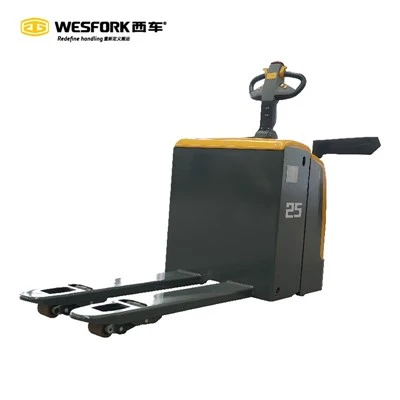
First, let’s clarify what a “standard” hand pallet truck even is. When I talk about standard, I’m referring to the common, non-customized models that make up 80% of the hand pallet trucks sold globally. These are the trucks you’ll find at most industrial supply stores, stocked by rental companies, and used for general material handling. Standard models are defined by their basic dimensions: most have a fork length of 48 inches (122 cm), a fork width of 27 inches (68.5 cm) to fit standard 48×40 GMA pallets, and a hydraulic lifting system designed for consistent, everyday use. The key number here is the load capacity—this is the maximum weight the truck is engineered to lift safely.
So, what is that maximum weight? For a standard hand pallet truck, the answer is 5,500 pounds (2,500 kilograms). But before you run out and load a pallet of 5,000 pounds onto a truck, let’s pause. That number isn’t a random figure stamped on a label; it’s the result of rigorous testing and industry standards set by organizations that focus on material handling equipment safety. I remember early in my career, a customer called me panicking because he’d loaded his standard hand pallet truck with a 5,800-pound pallet of construction supplies and the hydraulic pump seized mid-lift, leaving a $1,200 pallet of materials stuck in his stockroom. When we checked, his truck’s label clearly said 5,500 lbs, but he’d skipped the fine print.
That’s where context matters. The 5,500-pound rating is the maximum static load capacity—meaning the weight the truck can lift when it’s stationary, on a flat, level surface, with properly centered weight on the forks. Even small deviations from that scenario can change what’s safe. For example, if you’re lifting a pallet where the weight is off-center, one side of the forks might carry 6,000 pounds, exceeding the truck’s rating and causing the frame to bend. Or if you’re navigating a slight ramp or uneven floor, the strain on the hydraulic system and wheels increases dramatically. I always tell customers: treat 5,500 pounds as a hard limit, and never come within 10% of that number if you’re moving the truck, not just lifting it.
Now, you might be thinking, “Why don’t I see higher capacity standard models?” The answer is cost and practicality. A standard hand pallet truck isn’t built for extreme heavy loads—its frame is made of mild steel, the hydraulic pump is a compact unit designed for regular use, and the wheels are polyurethane, which wears quickly under constant heavy weight. If you need to move 10,000-pound loads, you’ll need a heavy-duty or extra-heavy-duty hand pallet truck, not a standard one. But for 90% of small to mid-sized businesses—retailers, food distributors, auto parts shops, and small manufacturing facilities—5,500 pounds is more than enough. The average pallet of consumer goods, for example, weighs between 2,000 and 4,500 pounds, so a standard model is perfect for that.
I’ve seen a lot of confusion when customers start comparing different brands’ standard hand pallet trucks. Some will advertise a 6,000-pound capacity, but when you look at the fine print, it’s a dynamic capacity (weight moved at slow speeds) or a test weight that only applies in lab conditions, not real-world use. As a supplier, I only sell models that meet ANSI/ITSDF B56.1, the American National Standard for Industrial Truck Safety, or ISO 5719, the international standard for hand pallet trucks. These standards require manufacturers to test each model repeatedly to ensure the rated capacity is safe for 10,000+ cycles of use—meaning you can lift 5,500 pounds thousands of times without the truck failing.
Another common mistake I see is people assuming their standard hand pallet truck can handle the weight of a full pallet plus the pallet itself. Most wooden GMA pallets weigh between 30 and 50 pounds, so that’s negligible, but some custom pallets made of metal or heavy plastic can weigh 100 pounds or more. So if your pallet is 100 pounds, you only have 5,400 pounds of product left to load—another reason to stick close to the 5,500-pound limit, not exceed it.
Why does all of this matter? Overloading a hand pallet truck doesn’t just damage the equipment, it’s a major safety hazard. Last year, a customer told me their employee was moving an overloaded pallet with a standard hand pallet truck, the front wheels locked up, and the truck tipped over, sending a 4,000-pound pallet of bottled water crashing into a shelf, injuring two workers and causing $15,000 in damage. That’s the kind of story that sticks with me—safety should always come before trying to fit one piece of equipment to all jobs.
As a hand pallet truck supplier, my job isn’t just to sell you a truck—it’s to help you pick the right one for your needs. If you’re a small boutique that only moves small pallets of clothing, a standard 5,500-pound truck is perfect, and you’ll save money without buying unnecessary capacity. If you’re a construction company moving pallets of bricks or steel parts, you’ll need a heavy-duty model rated for 8,000 pounds or more, because standard trucks won’t hold up to that kind of load day after day.
I’ve also seen customers ask if they can modify a standard hand pallet truck to carry more weight. Let me be clear: modifying any material handling equipment to exceed its rated capacity is extremely dangerous and voids all safety certifications. The frame, hydraulic system, and wheels are all engineered to work together for a specific load. Changing one part—like using a stronger pump—would put stress on the other parts, leading to sudden failure. I always advise customers against any kind of modification; it’s not worth the risk.
Now, let’s talk about how to actually use a standard hand pallet truck safely, beyond just the weight limit. First, center the load perfectly on the forks. Most trucks have a guide in the middle of the forks to help with this—use it. Next, when lifting, pump the handle slowly until the forks are just high enough to clear the floor (usually 4 to 6 inches). If you lift too high, the center of gravity shifts, making the truck more likely to tip. Finally, when moving, keep the load low to the ground, and avoid sharp turns or sudden stops—these add extra strain that can push a nearly overloaded truck past its limit.
As we’ve worked with more customers over the years, I’ve noticed a trend: many businesses underinvest in the right hand pallet truck, leading to downtime, repairs, and safety incidents. A good standard hand pallet truck lasts 5 to 10 years with regular maintenance—and that’s for a $500 to $800 model. Compare that to the cost of an accident, or the cost of renting a truck because yours broke down, and it’s clear that buying the right one from the start is smarter.
If you’re not sure what capacity you need, don’t guess. We help customers every day figure out the right hand pallet truck for their operation. Just give us details like the average weight of your pallets, the type of floors you’re moving on, and how often you’ll use the truck, and we can recommend a standard or heavy-duty model that fits your needs and budget.
At the end of the day, the maximum weight for a standard hand pallet truck isn’t just a number on a label—it’s a safety standard, a performance limit, and a key part of keeping your warehouse running smoothly. I’ve spent my career working with material handling equipment, and I can tell you that the best way to avoid accidents, extend the life of your equipment, and keep your team safe is to respect that number, and choose the right truck for your job.
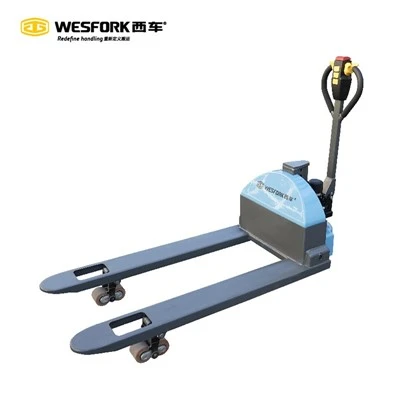
If you’re in the market for a reliable standard hand pallet truck, or you have questions about load capacities, maintenance, or finding the right model for your business, we’re here to help. Contact us to discuss your needs, and we’ll connect you with the equipment that’s perfect for your operations.
Ride Reach Truck References
ANSI/ITSDF B56.1-2020, Safety Standard for Industrial Trucks
ISO 5719:2018, Hand-operated lift trucks — Non-power driven pallet trucks
Material Handling Industry Association (MHIA), 2022 Hand Pallet Truck Safety Report
Occupational Safety and Health Administration (OSHA), 2021 Material Handling Equipment Guidelines
WESFORK Industries (Zhejiang) Co., Ltd.
As one of the most professional hand pallet truck manufacturers and suppliers in China, we also support customized service. Please feel free to wholesale high quality hand pallet truck for sale here from our factory. For price consultation, contact us.
Address: 277#Yinhu Road,Yinhu Street,Fuyang District,Hangzhou City,Zhejiang Privince,China
E-mail: sulin@wesfork.com
WebSite: https://www.wesforkintl.com/
