If you’ve ever shipped cross-border goods, you’ve probably run into a question that feels like a secret code only customs agents know: what the heck is a general commodities code? As someone who’s spent years as a general commodities supplier, I can tell you it’s not just a random set of numbers—it’s the backbone of moving any non-specialized stuff (think everyday hardware, office supplies, small home goods, and more) across borders without getting stuck at customs. Let’s break this down so you’re not left guessing, and you’ll understand why it matters for anyone working with general commodities. General Commodities
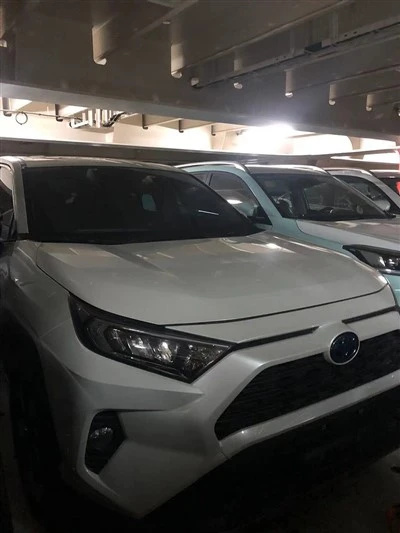
First, let’s clear up the basics. General commodities codes are actually part of the Harmonized System (HS) code, the global standard for classifying traded goods. Think of HS codes as a universal language—over 200 countries use this system to sort every product imaginable, from a metal nail to a plastic water bottle. The “general” part just refers to goods that don’t fit into niche, specialized categories (like pharmaceuticals, dangerous chemicals, or motor vehicles). So for a general commodities supplier, your goods fall into the broad, middle-of-the-road HS codes, usually between 01 to 97, with 6 to 10 digits depending on the country you’re shipping to.
Here’s where it gets relatable: I’ve seen too many new clients mess this up. Last year, a small business owner shipped a batch of bulk wooden cutting boards as “miscellaneous wood products” and put down a generic HS code. Customs in Germany flagged it, holding up the shipment for 10 days and charging extra fees because the code was too vague. That mistake costs her thousands in lost sales. For general commodities, specificity matters—you can’t just use a “one-size-fits-all” code. Let’s use a common example for general commodities: say you’re selling disposable plastic food containers. The global base HS code is 3924.10, but the U.S. adds two more digits to make it 3924.10.0000, while the EU uses 39241000 (no spaces). That tiny difference is what keeps shipments moving smoothly.
Why does this matter so much for general commodities suppliers? Let’s list the real-world headaches if you get it wrong. First, duty rates: each HS code has a different tax attached. A wrong code could mean you pay way more duties than you should, eating into your profit, or even not pay enough (which leads to fines later). Second, customs clearance delays—if your code doesn’t match the product, agents have to inspect every item, slowing down delivery to your customers. Third, compliance rules: some goods (even general ones like small toys or stationery) have specific labeling or testing requirements tied to their HS code. Get the code wrong, and you’re hit with penalties. I once had a client ship bulk office pens with the wrong HS code for writing instruments; they didn’t realize the EU required a plastic safety test for that code, so the entire shipment was rejected at the border. Not fun for anyone.
Now, how do you find the right general commodities code for your goods? As a supplier, I don’t make my customers guess—we walk through this together. First, start with the official HS database for your destination country. For the U.S., that’s the U.S. International Trade Commission (USITC) HTSUS database; for the EU, it’s the EU’s Combined Nomenclature; for Canada, it’s the Canada Border Services Agency (CBSA) database. These are free, searchable tools, but they can be overwhelming (I’ve spent hours scrolling through hundreds of product categories to find the right one for a new product line).
A few pro tips from a general commodities veteran: Don’t just go for the closest category—match the product’s key material and use. For example, a metal gardening trowel isn’t the same as a metal kitchen spatula, even though both are general metal goods. Their HS codes are different because of the intended use. If you’re stuck, check the “notes” section of the code—most databases explain exactly what products fit, so you don’t mix up similar items. And if you’re trading in multiple countries, remember that the 6-digit base HS code is the same everywhere, but the extra digits (called national tariff items) change by country. That means your general commodities code for the U.S. will be a few digits different from the one you use in Japan, but the first six digits (the universal part) are identical.
Wait a second—what about “general” vs. other HS code categories? People often mix this up. Specialized goods (like pharmaceuticals, electronics, or industrial machinery) have their own, very specific codes. General commodities are the catch-all for goods that are used in everyday life, small-scale businesses, or construction, with no unique regulatory rules beyond standard product safety. So a bag of bulk steel screws is general commodities, a factory’s heavy-duty industrial bolt is specialized. A pack of office sticky notes is general, a sensitive electronic circuit board is specialized. That’s the line to remember.
I’ve also seen clients ask: do I need a separate code for each product? For general commodities, usually yes, but if you have similar products, you can group them into the same broad category. For example, if you sell three types of disposable cups (paper, plastic, compostable), their base HS code might be the same, but the national digits might differ slightly—still general commodities, just minor variations. The key is that none of these are so niche they require a specialized code.
Another point: as a general commodities supplier, we take the guesswork out of HS codes for our partners. A lot of small business buyers don’t have a logistics team, so we provide the correct codes right on our invoices and shipping documents. That’s one of the biggest benefits of working with a reliable general commodities supplier—we handle the regulatory stuff so you don’t have to. I can’t tell you how many times a new client has come to us after a bad experience with another supplier who dumped the HS code responsibility on them, leading to delays and fees. We make it easy.
Let’s talk about common mistakes with general commodities codes, because they’re so avoidable. First, using outdated codes—HS codes get updated every five years, so if you’re using a code from 2017 for a 2024 product, that’s a recipe for trouble. The latest update was 2022, so make sure you’re using the current version. Second, overgeneralizing—calling all general commodities “miscellaneous” or “other” in your code. Customs agents hate that, because it doesn’t give them the info they need. Third, not checking country-specific rules—like I said earlier, the base code is universal, but each country adds its own rules. For example, Australia’s general commodities code for small kitchenware has a separate entry for items made from recycled materials, which other countries might not have.
Now, I know this sounds like a lot, but it doesn’t have to be intimidating. If you’re a small business owner buying general commodities, your supplier should be willing to help you with the right code. As someone who’s been in this space for years, I’ve built my business on making cross-border shipping simple for my clients. We don’t just sell general commodities—we provide support, from picking the right product to making sure the customs process goes smoothly.
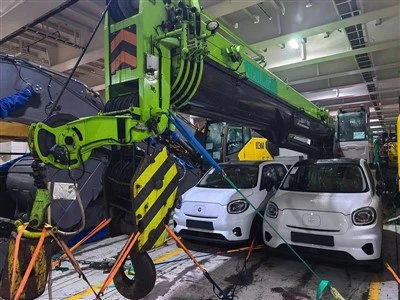
If you’re a buyer looking for a general commodities supplier that gets the ins and outs of customs codes, or if you have questions about how to get the right code for your next shipment, reach out to our team for a no-pressure chat. We’re here to make your supply chain easier, no jargon, no hidden fees, just straightforward help with whatever you need.
Africa Inland Logistics References:
- World Customs Organization. (2022). Harmonized System Nomenclature (2022 Edition).
- U.S. International Trade Commission. (2024). Harmonized Tariff Schedule of the United States (HTSUS).
- European Commission. (2024). Combined Nomenclature (CN) Database.
- Canada Border Services Agency. (2024). Canadian Customs Tariff.
- United Nations Conference on Trade and Development. (2023. International Trade Classification Practices for Small and Medium Enterprises.
Speed Supply Chain (Guangzhou) Co., Limited
Speed Supply Chain (Guangzhou) Co., Limited is a licensed NVOCC and first-level freight forwarder in China. With a professional team, we deliver reliable, efficient and cost-effective general commodities service for global customers. If you have any enquiry about quotation, please feel free to email us.
Address: Room 2001-2002, Dongzhao Building, No. 515 Dongfeng Middle Road, Yuexiu District, Guangzhou, Guangdong, China
E-mail: mika.li@speedsucc.com
WebSite: https://www.speedsupplychain.com/
