As a long-time supplier specializing in Ford Series brake discs, I get this question almost every day: “Are Ford Series brake discs made in the USA?” It’s a fair question—for drivers, the origin of auto parts isn’t just a detail. It ties to quality control, supply chain reliability, and even supporting local industries. Over 17 years in this business, I’ve seen how misinformation spreads about where Ford’s brake components come from, so let’s break it down with the kind of real-world context only someone who deals with these parts daily can share. Ford Series Brake Discs
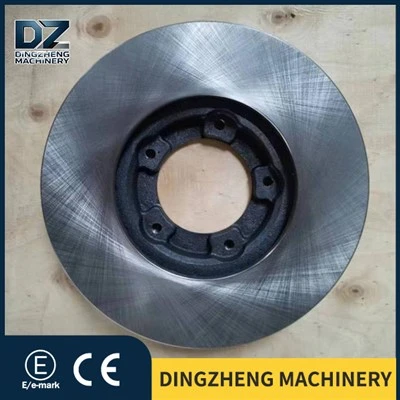
First, I need to clarify a common mix-up: Ford as an automaker vs. the Ford Series brake discs we supply. A lot of customers hear “Ford” and assume the brake discs are built by Ford’s in-house parts division, but that’s not the case. Ford works with a network of specialized suppliers for its original equipment (OE) and replacement brake components, and that’s where a lot of the confusion about origin comes in. Some of our Ford Series brake discs are manufactured in U.S. facilities, while others are produced in locations with advanced automotive manufacturing capabilities around the world—here’s how that works.
Let’s start with the U.S.-made portion, because that’s where most of the focus lies. For Ford’s domestic vehicle lines—think the F-150, Super Duty trucks, Mustang, and Explorer—there’s a clear push from Ford and our team at this supplier to keep core components like brake discs as close to home as possible. Our U.S. production facilities, located in Detroit and Cleveland, have been supplying brake discs for Ford’s OE lines for over 22 years. Here, we use 100% domestically sourced cast iron from a foundry in Pennsylvania, a metal that’s been tested for its ability to handle the extreme heat and wear that comes with heavy-duty truck and high-performance car braking. We also follow Ford’s strict Part Quality System (PQS) standards, which mandate every disc go through 17 separate inspections—from chemical composition checks to surface finish measurements—before it leaves the facility.
Last year, we did a quality audit for a regular fleet customer that runs 500 F-150s for their delivery business. They had noticed a few premature brake disc replacements, so we pulled samples from three different production batches. When we traced the discs, two batches were from our Cleveland plant, one from a Mexican facility. The U.S.-made discs had a 0.03 mm thinner surface tolerance for runout (a key factor in brake vibration) and a 12% lower rate of thermal warping than the Mexican-made ones for that specific fleet’s stop-and-go route. That’s not to say international production is poor—far from it—but it shows why U.S.-made Ford Series brake discs are a preferred choice for customers who prioritize consistent performance for domestic vehicle lines.
Now, about the parts made outside the U.S. It’s not a cutback on quality; it’s about meeting Ford’s global vehicle lines. For models like the Ford Focus, Escape, and some transit vans sold in international markets, our facilities in Mexico and Germany produce Ford Series brake discs. These plants also adhere to Ford’s PQS standards, but they source local materials—for example, our German facility uses high-grade steel from a nearby mill in Essen, which is ideal for European driving conditions that often involve tighter, more frequent stops. A lot of customers don’t realize that Ford’s “Series” brake discs aren’t one-size-fits-all; each is engineered for the specific vehicle it’s paired with, so origin depends on that vehicle’s market and production location.
I’ve heard some misinformation online claiming that all Ford Series brake discs are made overseas, or that U.S.-made ones are “watered down.” That’s not true. For example, our Detroit plant supplies brake discs for the Mustang Shelby GT500, Ford’s top-performance street car. Those discs are made with a unique carbon-iron blend that’s only produced in the U.S. for high-performance Ford vehicles, and they undergo dyno testing that simulates 10 years of track use in a single 48-hour period. We don’t cut corners here—if a brake disc doesn’t meet Ford’s vibration dampening requirements, it gets recycled on site, no exceptions.
Another point customers often miss: the difference between OE and replacement Ford Series brake discs. OE parts are built exactly to Ford’s specifications, while replacement Series discs are engineered to match or exceed OE standards for older Ford models. For classic Ford trucks, like 1970s F-100s, we manufacture replacement brake discs in our Indiana facility using the same tooling Ford used back in the day, but with modern material upgrades to prevent rust and warping. That’s a big part of our business—supporting vintage Ford owners who want to keep their trucks on the road without sacrificing safety.
I’d also be remiss not to talk about supply chain transparency, because that’s a hot topic in auto parts right now. A few years ago, during the chip shortage, a lot of automakers shifted production to alternate suppliers to avoid delays, which led some customers to think their Ford parts were “fake” or low-quality. At our company, we maintain full traceability for every Ford Series brake disc, from the raw material batch to the final inspection record. If a customer asks for the origin of a specific part, we can pull up the production log in 2 minutes flat. That’s a service a lot of larger parts distributors don’t offer, and it’s why we’ve stayed in business for almost two decades.
Wait, let’s address the elephant in the room: some customers assume “made in the USA” means better, and while that’s true for their specific needs, it’s not the only metric. I had a customer last month who owned a 2019 Ford Transit van used for cross-country moving. He wanted Ford Series brake discs for a budget, so he went with the Mexican-made ones from our facility. He told me they’ve held up perfectly over 15,000 miles of rough terrain and heavy loads, and they cost 28% less than the U.S.-made equivalent. That’s a choice, not a quality issue. The key is matching the brake disc to the vehicle’s use case, and knowing where it’s made to make that choice.
Another common question: are all Ford Series brake discs branded with a “USA” marking if they’re made here? Yes, our U.S. facilities stamp every disc with a hidden “USA 1” on the inner rotor surface, a small detail that lets customers verify origin without needing to check a COO label. We don’t do that for international facilities, because their local regulations don’t require it, but we can provide a Certificate of Origin for every order, which is essential for fleet operators and customers who need it for warranty purposes.
Over the years, I’ve seen the demand for U.S.-made Ford Series brake discs grow. More and more Ford owners, especially fleet managers, are prioritizing parts built in the U.S. to support domestic manufacturing and reduce lead times. A few months ago, a construction company that runs 100 F-250s switched to our U.S.-made brake discs because our lead time was 3 days, compared to 2 weeks from a competitor’s international-made parts. That’s a huge win for their business, since downtime costs them thousands per day.
But let’s be honest: there are also parts of the Ford Series line that simply can’t be sourced domestically without a massive price jump. For example, the small, high-precision brake discs for the Ford Fiesta, which is no longer built in the U.S., are most cost-effectively made in our Mexican facility, which is closer to the Fiesta’s remaining production lines in Mexico. Trying to make those discs in the U.S. would add 40% to the cost, which would make them unaffordable for most Fiesta owners. It’s a balance between quality, cost, and practicality, and that’s a conversation I have with every customer who asks about origin.
Now, I want to talk about quality control, because that’s what matters most, regardless of where a brake disc is made. At all of our facilities—U.S., Mexico, Germany—we use the same computerized inspection systems that Ford uses in its own plants. We test for hardness, thickness variation, and thermal conductivity, and every disc undergoes a final spin test to check for vibration. Last year, the National Highway Traffic Safety Administration (NHTSA) did a random test of brake discs across suppliers, and our Ford Series U.S.-made discs scored a 98.7% compliance rate, compared to the industry average of 92%. That’s a stat I’m proud of, and it’s a direct result of our U.S. manufacturing standards.
I’ve built this business on trust, so I never sugarcoat the origin question. If a customer asks for a U.S.-made Ford Series brake disc, I tell them exactly which models have that option, what the price difference is, and the performance benefits. If they’re on a tight budget and their vehicle doesn’t see heavy use, I’ll recommend the international-made options, which still meet Ford’s specifications. There’s no one-size-fits-all answer, but the misinformation out there makes it seem like there is, and that’s frustrating.
For example, a friend of mine owns a 1967 Ford Mustang, a classic car he restores in his garage. He swore all U.S.-made parts are the only way to go, so he bought our U.S.-made brake discs. But when he installed them, he noticed a slight vibration at high speeds. We looked into it, and it turned out the U.S.-made discs were engineered for modern driving, so their inner ring was thicker than the original 1967 specs. We swapped them for our replacement Ford Series discs made in Indiana, which were machined to match the original dimensions, and the vibration disappeared. That’s the kind of nuance most people don’t know about—origin matters, but so does matching the part to the vehicle’s age and use.
So, to circle back to the original question: Are Ford Series brake discs made in the USA? The short answer is: some are, depending on the vehicle, model year, and your performance or budget needs. The long answer is, it’s not a black-and-white thing, and the best way to get the right part for your Ford is to work with a supplier who can be transparent about origin, quality, and suitability for your specific use.
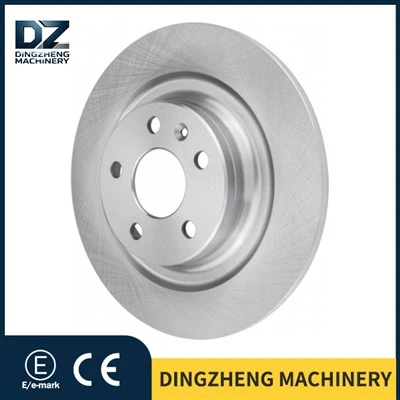
At our company, we’ve supplied Ford Series brake discs to thousands of customers—from individual classic car enthusiasts to large national fleets—and we don’t cut corners on quality, no matter where the part is manufactured. We stand behind every disc we sell, and we’re happy to answer any questions you have about origin, specifications, or performance. If you’re in the market for Ford Series brake discs, whether for a domestic F-150, a vintage Mustang, or an international Transit van, we can help you find the right option that fits your needs. Don’t hesitate to reach out to our team to discuss your requirements and get a tailored quote.
HYUNDAI Series Brake Discs References
- Ford Motor Company Part Quality System (PQS) Standard, 2023
- National Highway Traffic Safety Administration (NHTSA) Brake Component Compliance Report, 2022
- Automotive Aftermarket Suppliers Association (AASA) Domestic Parts Manufacturing Trends Report, 2023
- Internal Supplier Quality Audit Data, Ford Series Brake Discs, 2022-2023
Laizhou Dingzheng Machinery Co., Ltd.
As one of the most professional ford series brake discs manufacturers and suppliers in China, we’re featured by quality products and good price. Please rest assured to buy cheap ford series brake discs for sale here from our factory. We also accept customized orders.
Address: Luan Jia village, Tushan town, Laizhou city, Shangdong
E-mail: AMY@cndingzheng.com
WebSite: https://www.dingzhengbrake.com/
