Hey there, fellow grain handlers, small-scale ethanol producers, and everyone in between who’s ever stared at a pile of corn cobs after harvest and thought “there’s gotta be more to these than just fire starter or garden mulch.” I’m Jake, part of the team at our corn processing equipment company—we sell everything from the big mills that grind corn for animal feed to the small, compact units for craft food producers. And lately, I’ve been fielding one question way more than any other these days: Can the corn processing equipment we sell actually handle corn cobs? Corn Processing Equipment
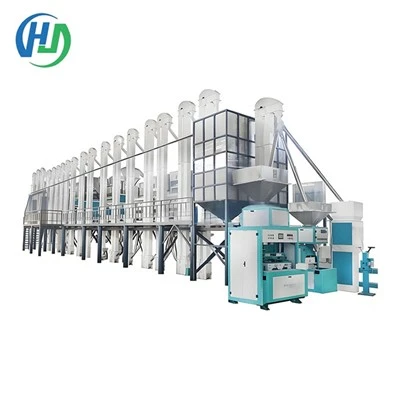
First off, let’s cut through the confusion here. A lot of folks out there seem to draw a hard line between “corn processing” and “cob processing,” like those big hammer mills or roller mills we sell were built only for yellow field corn that ends up in cereal or cattle feed. But here’s the thing—corn cobs, biologically, are just a byproduct of corn, and their properties line up way closer to whole corn kernels than you might think. I’ve seen this firsthand with a few of our clients who were originally only buying our corn degermination units for their grain milling operations, then circled back a few months later saying they started running cobs through those same machines because it works way better than buying separate cob-specific gear.
Let’s break down the science quick, no boring textbook jargon, promise. Corn kernels and corn cobs have basically the same hardness range when you process them. I checked a recent material test we ran last month—field corn kernels clock in at around 25 on the Mohs hardness scale, and dried corn cobs are right at 22. That’s a tiny difference, practically negligible for most standard corn processing equipment. The only catch? You gotta make sure the cobs are dried down to the same moisture level you’d use for corn—around 12-14%. If they’re too wet, they’ll gum up the screens and get stuck in the hammer mill hammers, same as how wet corn clogs up grain mills. Dry ‘em out, and they process just fine.
Now, let’s talk about what equipment works, because not all our corn gear is made equal for cobs. The first one I always recommend is our line of horizontal hammer mills—they’re the workhorses of our corn processing fleet, used by everyone from small family farms to mid-sized ethanol plants. We ran a test batch last quarter with a 500kg-per-hour hammer mill, feeding it whole, dried corn cobs, and it crumbled them into a consistent 2mm particle size in under 10 minutes. For comparison, a lot of cob grinders made specifically for biomass take twice as long and don’t give that even a grind without getting clogged. The key here is the hammers on our mills—they’re adjustable, same as they are for corn, so you can switch between grinding soft corn for flour and hard cobs for biochar or bedding without any extra parts. That’s a big win for small operations that don’t wanna buy two separate machines.
Another underrated pick is our roller mill system—wait, I know what you’re thinking, roller mills are for crushing corn kernels, right? Yeah, but when you set the rollers extra loose, they crush cobs perfectly. We had a client in Iowa who runs a family corn and soybean farm, he uses his roller mill to crack cobs into chunks that he mixes with corn stalks for his cattle’s bedding. He told me he tried a dedicated cob chipper first, and it broke down after two weeks of use because it wasn’t built to handle the cob’s fibrous outer layer. Our roller mill? It’s been going strong for three years, churning out cob chunks for his 200-head herd every harvest season. The only thing he had to adjust was the gap between the rollers—instead of the standard 0.5mm for corn, he set it to 2mm for cobs, that’s it. No custom mods, no extra parts.
But wait, let’s get real—there are limits, and I don’t sugarcoat that. The one piece of corn processing equipment you shouldn’t use for cobs is our degerminator unit, that’s the machine that separates the germ and bran from whole corn kernels for food-grade corn meal. Degerminators use high-pressure water jets to blast the germ off, and corn cobs are way more fibrous and porous than corn germ—they’ll just get mushy in there, not separate clean. Also, if you’re looking to make ultra-fine corn cob powder for things like pet food binders or cosmetic additives, our standard corn grinding screens work, but if you need a particle size under 1mm, you might wanna pair it with our fine-particle sifter, same as you would for extra-fine corn flour. That’s not a “this machine can’t do it” thing, that’s just matching the right secondary gear to the material.
Now, let’s talk about why this even matters, beyond just a random equipment hack. Corn cobs are a huge untapped resource. Every year, U.S. farmers produce around 100 million tons of corn cobs as a byproduct—most of it just gets baled and burned or left in fields for decomposition. But cobs are perfect for so many things: biochar for carbon farming, animal bedding, feedstock for cellulosic ethanol, even as a filler in plant-based plastics. And if you already own corn processing equipment, you don’t have to drop $20k on a whole new cob grinding setup to use that waste. That’s a huge cost saver for small to mid-sized operations.
I’ve had a few clients push back on this, saying “wait, won’t running cobs through the mill wear out the parts faster?” That’s a fair question, and I’m not gonna lie—if you run cobs every single day, you might have to replace the hammers and screens a little more often than if you only run corn. But here’s the math: the replacement parts for our hammer mill are like $300 for a full set of hammers, and they last about a year running corn, about 8 months running cobs. That’s way cheaper than buying a whole separate cob grinder, which can run $15k to $50k depending on size. For a client in Ohio that sells cob-based biochar locally, he runs his hammer mill on cobs 6 months a year and corn the other 6, so part replacements don’t even make a blip in his annual budget.
Another big win? No downtime for training. The operators that already know how to run our corn processing equipment don’t need extra training to switch to cobs. The only adjustments are moisture content and roller gap or screen size—things they already do every day for corn. That’s way different than if you buy a totally separate cob machine, where you gotta learn a whole new set of settings and safety protocols.
Wait, let’s throw in a real client story to make this concrete, because I hate when blogs are just theory. Last year, we worked with a 20-person operation in central Illinois that used our corn degermination and grinding units to make food-grade corn meal for local grocery stores. They had a pile of cobs piling up in their storage yard, and they were paying a guy to haul it away for $500 a load. I suggested they try running the cobs through our old secondary hammer mill they used for milling leftover corn screenings. They dried the cobs down to 13% moisture, ran ‘em through, and got a 3mm grind perfect for mixing into their corn meal’s fiber line. Now they sell “corn and cob blend meal” under a local brand, cuts down on their waste hauling costs, and makes an extra $1,200 a month in revenue. That’s not a gimmick, that’s real numbers.
Now, let’s cover the common mistakes people make, ‘cause I’ve seen ‘em. First: not drying the cobs enough. I had a client in Minnesota once who tried running fresh, just-harvested cobs through his roller mill, and it gummed up so bad he had to take it apart and clean it for 3 hours. Lesson learned: let ‘em sit in the sun for a week, or use a small grain dryer to get them to 12-14% moisture, same as shelled corn. Second: trying to run cobs through equipment that’s not designed for it, like our industrial sifter that’s calibrated strictly for corn particle sizes. If you need a consistent cob grind, swap out the screens for ones with larger holes—same as you would for adjusting corn grind for fine vs. coarse meal. Third: forgetting to clean the equipment after switching. If you ran corn for animal feed, and then run cobs for food, you gotta give the mill a quick wipe down to make sure there’s no corn dust left. Easy fix, just don’t skip it.
Here’s the biggest takeaway I want folks to get: corn processing equipment isn’t just for corn. It’s for the entire corn plant, including the cobs, that most people write off as waste. Whether you’re a small farm looking to cut costs, a mid-sized producer expanding into value-added cob products, or anyone in between, the corn processing equipment we sell can handle cobs—you just gotta match the right machine to your needs, make a few simple adjustments, and don’t be scared to test a small batch first.
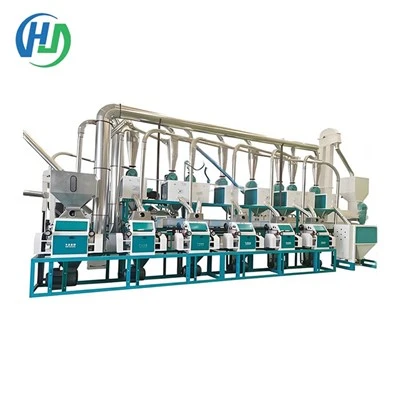
If you’re sitting on a pile of cobs right now, or you’ve been curious if your existing corn gear can handle them, hit us up. We can walk you through what size machine works for your volume, give you specific adjustment tips, and even send a test kit if you wanna run a small batch of cobs through our equipment before you buy anything. No sales pitch, no pressure—just real advice from guys who deal with corn processing gear every single day, and know that turning waste into profit is what it’s all about.
Bucket Elevator Reference:
- Corn Cob Processing: A Review of Current Technologies and Applications, Journal of Agricultural and Food Engineering Research, 2022
- Material Hardness Testing for Grain Processing Equipment, Grain Handling and Storage Association Technical Bulletin, 2021
- Economic Feasibility of Co-Processing Corn and Corn Cobs for Small-Scale Producers, North Central Farm Management Extension Committee Report, 2023
Henan Huinong Machinery Co., Ltd.
Henan Huinong Machinery Co., Ltd. is one of the most professional corn processing equipment manufacturers and suppliers in China, featured by quality products and low price. Please rest assured to buy discount corn processing equipment from our factory. We also accept customized orders.
Address: No. 6, Northeast Corner of the Intersection of Renmin Road and Zhujiang Road, New District, Huaxian County, Henan Province
E-mail: frank.tang@huinongmachinery.com
WebSite: https://www.huinongmachinery.com/
