Hey folks, if you’ve been scrolling around for a reliable, zippy 3 wheeler electric mini car for personal use, a small business fleet, or even just to zip around tight city streets, you’ve probably wondered at some point: how much does this thing actually cost? As the owner of a 3 wheeler electric mini car supplier, I get this question every single day—whether it’s from a young couple chasing a second car to skip gas, a local coffee shop looking to add a delivery rig, or even a college town trying a tiny zero-emission shuttle for their campus. The truth is, there’s no one flat rate, and that’s on purpose. A lot goes into what you’re paying for, and I’ve seen way too many people get sticker-shocked because they compared a no-frills model to one with all the bells and whistles. Let me break this down like I’d break it down for a guy who’s looking to stop wasting money on gas and start driving something that actually fits his life. 3 Wheeler Electric Mini Car

First off, let’s get the basics straight: a 3 wheeler electric mini car isn’t the same as that little gas-powered three-wheeled scooter your uncle drove to the grocery store back in the day. These are fully enclosed, road-legal vehicles—most are classified as low-speed vehicles (LSVs) in the US, or light electric vehicles (LEVs) in a bunch of other countries—so they have seatbelts, windshield wipers, headlights, turn signals, and all that boring stuff you need to actually drive on public roads. That means they’re built to last, not just to tool around a backyard. But even with that, the price tag shifts super wide depending on what you want out of the car.
Let’s start with the entry-level models, the ones I call the “get you from Point A to Point B without the monthly gas panic” options. These are for folks who don’t need a ton of fancy extras, just something that charges fast, fits 2 people (maybe a small kid or a dog in the back if you’re lucky), and doesn’t break the bank. Right now, my entry-level 3 wheeler electric mini cars land around $7,500 to $10,000, depending on the region and any little add-ons you might nudge in. Wait, I know, that sounds like a jump from a scooter, but here’s the kicker: you’re not buying gas for this. The average person drives 1,000 miles a month, and at 10 cents per kilowatt-hour, that’s like $10 a month to charge, not $150+ for gas for a regular car. Those entry-level models top out around 25 mph, which is perfect for residential streets, small town roads, or even the side streets around a big city—no highway speeds, but if your commute is 5 miles to work, you’re golden. They usually have a range of about 40 miles on a full charge, too, which is more than enough for a week of running errands and a few trips to the store. I’ll be real with you, these don’t have leather seats or touchscreens, but they get the job done, and they’re way cheaper than a used sedan that’s gonna cost you a fortune in repairs in 2 years.
Now, if you need a little more oomph or space, we’re in the mid-range territory, which is where most of our customers land. That’s $11,000 to $16,000, and for that, you’re getting a lot more flexibility. First, the speed jumps up to 45 mph, which means you can actually hop on some main roads without feeling like a sitting duck, and that range? We can get you up to 80 miles on a single charge if you go with a slightly bigger battery. Some mid-range models can even fit 3 people now, which is a game-changer for small families or roommates carpooling to work. Extras here start getting fun, too: backup cameras so you don’t scrape the bumper when you park in tight spots, Bluetooth connectivity so you can play your playlist without holding your phone, climate control (AC and heat, which is a huge one for people who live in places with extreme weather), and even a little trunk space that fits a weekly grocery run or a couple of backpacks. A lot of our small business customers go for this range—local florists picking up supplies, food vendors zipping between events, neighborhood delivery services for packages—because they’re compact enough to squeeze into parking spots that a regular van can’t touch, and way cheaper to operate than a full-sized work truck. I had a café owner in Phoenix pick up two mid-range models last month for their delivery; he told me he saved $400 a month on gas alone, plus he didn’t have to pay for a commercial vehicle registration, which was a win-win for him.
Then there’s the premium tier, the “I want all the nice stuff and maybe a little luxury” side of things, which runs from $17,000 to $25,000. These are the models for people who want something that’s not just a utility vehicle, but feels like a real car. We’re talking top-of-the-line batteries that can get up to 120 miles on a charge, so you could even take a day trip to the next town over without worrying about charging. Some premium models have solar panels on the roof that trickle charge the battery while you’re parked, which is perfect for someone who lives in a sunny area and wants to cut their charging costs even more. You get things like power windows, keyless entry, upgraded seating, even touchscreen infotainment systems that integrate with your phone, and sometimes extra storage space for longer trips. We also make a few custom premium models for companies that want to brand their 3 wheelers—like a local brewery that had us put their logo on the side for their beer delivery runs, or a town that got a couple as small shuttle vehicles for their downtown area. The build quality here is a step up too; we use better materials for the frame and the body, so they last longer and hold up better to rough roads or frequent use.
Wait, but before you start adding up numbers, there are a bunch of hidden factors that change the price, and I don’t want you to get blindsided by any of them. First, location and shipping. If you’re in a country where we don’t have a local distribution hub, shipping can add anywhere from $500 to $1,500, depending on how far you are. We always quote that upfront, no surprise fees, but it’s something to keep in mind. Then there’s the charging setup: if you need a 220V charger installed at your home or business, that can add $300 to $1,000, depending on your electrician and how much work your space needs. Some areas also have tax credits or incentives for electric vehicles, which can knock 10% to 30% off the price—last year, customers in Oregon saved almost $2,000 on average because of their state’s EV rebate, so it’s definitely worth looking into what your area offers.
Another big one: whether you’re buying for personal use or as part of a fleet. If you’re a small business that needs 5, 10, or even 20 of these, we do bulk pricing that cuts the per-unit cost by a lot—sometimes $1,000 to $2,000 per unit, which adds up fast. A lot of our regular clients are recurring businesses, and we work with them to build a package that fits their needs, whether that’s maintenance plans, charging support, or even custom modifications for their specific work. I once worked with a landscaping company that wanted to add tool racks to their 3 wheelers for carrying small equipment; we modified them for a fraction of the cost of buying a separate work truck, and they saved over $10,000 in the first year alone compared to their old gas-powered fleet.
Let me also talk about what you’re not paying for with these, because that’s where the real value is. Unlike a regular gas car, there’s no oil changes, no tune-ups, no exhaust system to replace, and way fewer moving parts that can break. Maintenance for these 3 wheelers is super minimal—just a tire rotation every 6 months, a brake check, and a quick battery inspection, which usually costs less than $100 a time. And when you add up the gas savings, insurance is cheaper too—these smaller vehicles have lower insurance rates because they’re less expensive to repair if they get in a fender bender. A lot of our customers tell us they pay 20% to 30% less for insurance on these vs. a regular sedan.
Wait, I know what some of you are thinking: “Is it worth it?” Let me give you a real example. A customer of mine, Sarah, lives in Chicago. She commutes 7 miles each way to work, and she used to pay $180 a month for gas and $45 a month for insurance on her old Honda Civic. She bought an entry-level 3 wheeler last year for $8,200, plus $300 for a home charger. Her monthly charging bill is $12, and her insurance is $30 a month. She’s saved over $2,000 in the first 10 months, and she doesn’t have to sit in traffic in her big car anymore—she can zip down side streets and park almost anywhere. That’s the kind of math that makes these things make sense, not just the sticker price.
Of course, no car is perfect. These 3 wheelers aren’t for everyone. If you’re driving 100+ miles a day, you’ll want something with a longer range, and if you regularly drive on highways at 65 mph, these probably won’t fit your needs—they’re built for urban and suburban use, not cross-country trips. But if you’re in that market of people who want a second car, a delivery vehicle, or a small family car for short trips, this is a no-brainer.
At the end of the day, the cost of a 3 wheeler electric mini car isn’t just a number you see on a price tag. It’s about what you get: lower monthly operating costs, less hassle with gas and maintenance, a smaller carbon footprint, and a vehicle that fits your life instead of forcing you to adjust to it. I’ve been in this business for 5 years, and I’ve seen how these things change for the better for people—single parents saving money on childcare gas runs, small businesses growing without breaking the bank on transportation, college students getting around campus without dealing with parking fees.
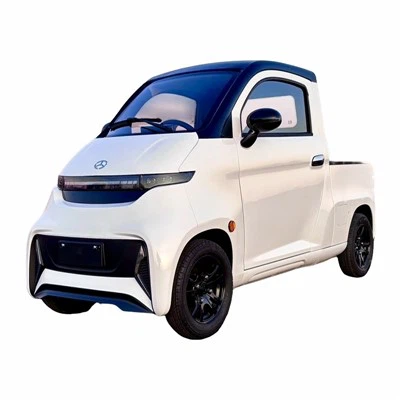
If you’re ready to take the next step and figure out which model fits your needs, don’t hesitate to reach out to our team for a customized quote. We can walk you through all the options, explain any incentives in your area, and work with you to build a plan that works for your budget. No pressure, no salesy tactics—just straight talk about what you’ll get and what you’ll pay.
Four Wheel Delivery Electric Vehicle References:
- International Energy Agency. (2023). Global Electric Vehicle Market Outlook.
- National Highway Traffic Safety Administration. (2022). Low-Speed Vehicle Safety and Usage Data.
- U.S. Department of Energy. (2023). Electric Vehicle Cost and Savings Calculator.
- Local Government Energy Office Data. (2023). State and Local EV Incentive Programs by Region.
Taizhou Xiangyuan New Energy Technology Co., Ltd.
As one of the leading 3 wheeler electric mini car manufacturers and suppliers in China, we warmly welcome you to wholesale cheap 3 wheeler electric mini car for sale here from our factory. All customized products are with high quality and low price. Contact us for pricelist.
Address: NO.7 HUANGJIN ROAD, METAL RESOURCES RECYCLING INDUSTRY BASE, LUQIAO, TAIZHOU, ZHEJIANG
E-mail: order@jiajiev.com
WebSite: https://www.jiajiev.com/
