Hey folks, let’s cut to the chase—if you’re here, you’ve probably already realized that a trampoline with a safety net is way better than a plain one. But have you ever stopped to ask, “Wait, what shape actually works best here?” Because turns out, it’s not just about looks. I’m part of a small, hardworking crew that supplies these exact trampolines, and we’ve spent years hearing from parents, backyard hobbyists, and even small bounce gym owners who’ve gone “oops” by picking the wrong shape. Let’s break this down like we’re chatting over a coffee—no stuffy engineering jargon, just real stuff we’ve seen firsthand. Trampolines with Safety Nets
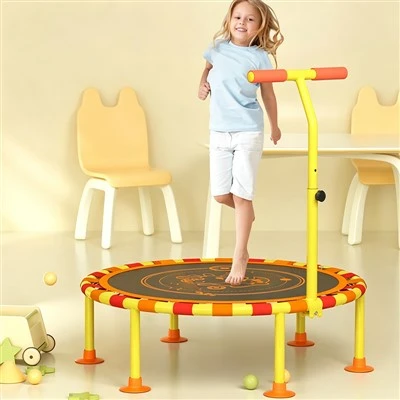
First off, let’s get one thing straight: safety nets aren’t just a “add-on”—they’re a barrier that’s built around the jumping mat, so the shape of the net can’t be separated from the shape of the trampoline itself. When we started out, we sold mostly round ones because that’s what everyone knew, but over time, we’ve tested other shapes, and let’s be honest, round, rectangular, and octagonal are the big three that matter here. Let’s start with round because that’s where most people dip their toes first.
Round trampolines (with their matching round safety nets) were the OG for a reason—they’re super forgiving. Why? All the springs (wait, don’t freak out) pull evenly around the mat, right? The distance from the center of the mat to any edge is the same, so when you jump, that tension is uniform. For new jumpers—like kids under 10, or adults who haven’t bounced since they were teens—this is huge. If you’re a beginner, you don’t have to fight weird pull directions that could yank you off balance. The safety net for a round trampoline? It’s curved all the way around, no sharp corners where you might catch an ankle if you slip. We sold a ton of these for backyard use because parents love that the risk of a “hard” fall (not a soft tumble) is way lower. But wait, round ones have a downside: the total jumping space is smaller than other shapes for the same overall size. If you get a 12ft round trampoline, your actual jumping mat is more like 10ft across—those extra inches get eaten up by the curved edges and the net. That’s a bummer if you want to do flips or play games like trampoline tag with a bunch of kids.
Now, let’s talk octagonal. This is the middle kid, right? We started offering octagons about 5 years ago, and they’ve become a fan favorite for people who want a bit more space without ditching the forgiving vibes. Octagons have 8 sides, so they’re not as curved as a circle, but way less angular than a rectangle. The spring tension here is still pretty even—no weird tight or loose spots, like you might get with some other odd shapes. The safety net for an octagon? It’s got 8 straight panels, so it’s easier to manufacture (and less expensive than a custom round net, which is a win for us passing savings to customers). The best part about octagons? You get almost 15% more jumping space than a round trampoline of the same overall diameter. That’s enough room for a couple of kids to bounce together without crowding, but still small enough to fit in most backyards—no having to clear out a whole section of lawn for it. We’ve had customers tell us octagons work perfect for both home use and small bounce classes, because they balance safety, space, and cost. The only con? It’s still not as much space as a rectangular trampoline, so if you’re planning on doing a lot of flips or tricks, you might want to keep reading.
Which brings us to rectangles—this is the big dog for performance, especially if you’re older or want to do tricks. Wait, but hold on—rectangular trampolines with safety nets have a different design than the old rectangular ones you might see at a gym. The key here is the spring layout: instead of pulling evenly around a curve, rectangular ones have springs that are spaced tighter along the short sides (the “end” of the mat) and looser along the long sides. That means the jumping mat is tauter in the middle, so you get way more lift—like, 20-30% higher bounce than a round one of the same size. But here’s where the safety net part matters: rectangular nets have straight, vertical poles along the long sides and shorter poles on the ends, right? No rounded corners here, so you have to make sure the net is properly tensioned—no sagging that could make you trip if you lean against it.
Now, let’s get real about safety, because that’s why we’re all here. I’ve seen way too many people write off rectangles as “too risky” because they look like a skate park ramp or something. But here’s the secret: when you pair a high-quality rectangular trampoline with a proper safety net (the kind that’s stretched tight, not loose), the risk of falling out is actually the same as a round one—if not lower, because the net is straighter and doesn’t have those curved edges that some people misjudge. The big safety win for rectangles? The rectangular mat’s shape means you have a defined “landing zone”—if you’re jumping, you stay in the middle, not drifting toward the edges like you might on a round one. That said, rectangles are better for experienced jumpers. If you have a 5-year-old who’s never bounced before, a rectangle might feel overwhelming because of the higher lift and defined spaces. We always tell parents: if it’s just your family (2-3 kids max), go octagon. If you’re running a small business or have older kids who want to do tricks, rectangle is the way to go.
Wait, let’s also talk about size, because shape and size go hand in hand. Let’s take the most popular size for homes: 10ft to 12ft overall. A 10ft round gives you ~80 sq ft of jumping space, a 10ft octagon gives ~92 sq ft, a 10ft rectangular gives ~105 sq ft. That’s a huge difference when you’re cramming two kids (and a dog, let’s be real) on there. For commercial use, like a small bounce studio or a play center, rectangles are almost always preferred because they can fit more people without crowding, and the safety nets for commercial rectangles are reinforced way more than home ones—they can handle heavier use, too.
But here’s a mistake a lot of first-time buyers make: they pick a shape based on what’s “cool” instead of their actual needs. We had a guy come to us last year, he was a teen who wanted a rectangle because his friend had one, but his mom wanted it for his little sister. We talked him into an octagon, and he later told us it was perfect—he could do small tricks, and his sister had enough space to bounce without being scared of the sharp corners (even though octagons don’t have sharp corners, just straight ones that are less curved). Another time, a local day care came to us looking for 3 trampolines for their backyard. We recommended octagons—they needed enough space for 10-12 kids at a time, and octagons fit into their existing play area way better than rectangles, and the safety nets were easy to secure to the ground without blocking other play structures.
Let’s also cover some other shapes people ask about—like hexagons, squares, or oval ones. Hexagons are sort of a hybrid between round and octagon, but most people don’t like them because the 6 sides mean uneven spring tension. You’ll get a tight spot on one side and a loose spot on another, which can make you veer when you jump. Squares? I’ve seen a few, but their corners are really hard, and the safety net has to be shaped around sharp angles, which means more gaps where a small kid could squeeze out. Ovals are similar to rectangles but rounded—they’re popular for gymnastics, but again, they’re way more expensive, and most home users don’t need that extra performance. We stopped stocking hexagons and squares a couple years back because customers kept coming back saying they weren’t as safe or fun as the big three.
Now, let’s get to the safety net part specifically, because that’s our whole deal. No matter what shape you pick, the safety net needs to match the trampoline’s frame exactly. A lot of cheap brands sell “universal” safety nets that fit multiple shapes, but those are garbage—they sag, they don’t line up with the poles, and they can tear after a few months. When we sell a trampoline, we always make sure the net is custom-cut for the shape and size. For round nets, we use extra-thick mesh that stretches just enough to not bunch up. For octagons, each panel is sewn to fit a side, so there’s no gap at the corners. For rectangles, we add reinforced stitching along the vertical poles, because that’s where most of the tension is when people lean on the net.
Wait, let’s address a common concern: space in the backyard. If you have a tiny backyard, a round or octagon is usually better, because they’re symmetric and you don’t have to worry about leaving extra space on the long sides of a rectangle. A 12ft round takes up about 12ft x 12ft of yard space, while a 12ft rectangle takes up 14ft x 10ft—so you need a bit more room for the rectangle. But if you have a medium or large yard, the rectangle’s extra space is totally worth it. We had a customer in Texas who had a big backyard, got a 14ft rectangular trampoline with a safety net, and told us it’s the best purchase they’ve made—their kids have friends over every weekend, and no one complains about being crowded.
Another thing we’ve noticed: age is a big factor. Kids under 8 usually do best with round or octagonal. Their balance is still developing, and the forgiving tension of round/octagon means they’re less likely to trip over a tight spring spot. For kids 8 and up, or teens and adults, rectangles are great because they can handle higher jumps and tricks, as long as the safety net is properly installed. We always include a step-by-step installation guide with every trampoline, and we have a support team that can walk you through setting up the net if you run into trouble—no waiting on hold for hours, just a real person who’s been there.
Let’s wrap this up with a quick breakdown, so you don’t have to take notes (I promise):
- If you’re a beginner, have small kids, or tight on yard space: Go round. It’s safe, low-cost, and forgiving.
- If you want a balance of space, safety, and cost: Go octagon. It’s our bestseller for a reason—works for most people.
- If you’re experienced, want tricks, or need lots of space for multiple jumpers: Go rectangle. It’s the performance pick, with the right safety net to match.
Wait, but let’s be honest—there’s no “perfect” shape, only the best shape for your needs. We’ve seen people make every choice, from round for a single toddler to rectangle for a bounce gym. The worst mistake isn’t picking a shape, it’s picking one that doesn’t fit how you actually use the trampoline. If you’re not sure, just hit up our team—we can ask you a couple quick questions (how many jumpers, age of the people, size of your yard) and point you in the right direction.
And for the record: no matter what shape you get, always make sure the safety net is properly secured to the ground with the anchors we include. That’s the number one rule—no net is safe if it’s not anchored. We see people skip that step all the time, and it never ends well.
If you’re ready to browse options or want to talk through your specific setup, just reach out to our team for a procurement chat. We’re here to help, not push a product that doesn’t fit you.
Children’s Trampolines References:
- American Academy of Pediatrics. (2021). Trampoline Safety Guidelines for Children and Adolescents. Pediatrics Journal.
- International Safety Organization for Recreational Activities. (2022). Performance and Safety Comparison of Trampoline Shapes with Enclosure Nets. Recreational Equipment Standards Report.
- Journal of Sports Engineering and Technology. (2020). Effects of Trampoline Mat Shape on Jump Dynamics and User Balance.
- Trampoline Industry Association. (2023). Home and Commercial Trampoline Shape Popularity and Customer Satisfaction Survey.
- Consumer Product Safety Commission. (2022). Trampoline-Related Injuries and Mitigation Strategies for Enclosure Systems. CPSC Safety Bulletin.
Zhejiang Aidi Industrial & Trading Co., Ltd.
As one of the most professional trampolines with safety nets manufacturers and suppliers in China, we also accept customized orders. We warmly welcome you to wholesale bulk durable trampolines with safety nets in stock here from our factory. If you have any enquiry about quotation and free sample, please feel free to email us.
Address: Yongkang City, Zhejiang Province
E-mail: Sales1@ykaidy.com
WebSite: https://www.cndibo.com/
