When I started selling fermentation compost equipment back in 2014, I thought the main draw would be the “green” angle—cutting down landfill waste, turning food scraps and agricultural byproducts into nutrient-rich soil. But over the years, I’ve sat across from countless warehouse managers, farm owners, and municipal waste directors, and the question that always comes first isn’t “Is this sustainable?” It’s “Can this actually save me money on waste disposal costs?” For too long, waste management has been a line item that feels impossible to shrink: hauling away trash, paying per ton at landfills, dealing with rising fees as communities run out of space. The answer, I’ve seen firsthand, is yes. Fermentation compost equipment doesn’t just do good for the planet—it directly cuts down the costs that sink small and large operations alike. Fermentation Compost Equipment
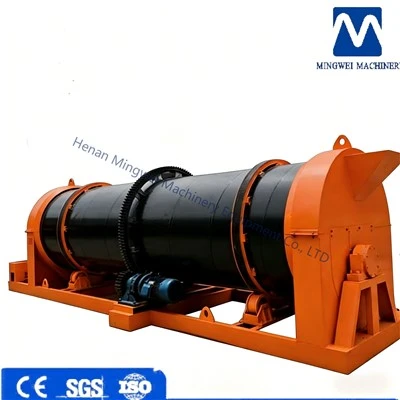
Let’s start with the basics that most people don’t realize: every time you send organic waste to a landfill, you’re paying two separate fees. There’s the collection fee—trucks coming to pick up your scraps, often charged by volume or frequency. Then there’s the landfill tipping fee, the cost per ton to dump that waste. Tipping fees have climbed steadily over the past two decades, and it’s not hard to see why. Landfills take up land, they produce methane (a greenhouse gas 25 times more potent than CO2 over a 100-year period), and regulatory costs to operate them keep going up. In 2000, the average U.S. landfill tipping fee was around $22 per ton; by 2023, that number jumps to $53 per ton, with some regions charging over $100 per ton. For a restaurant that throws out 10 tons of food waste a month, that’s $5,300 a month just in tipping fees—before you add collection costs. That’s a huge expense for a small café or a family-run farm.
Here’s where fermentation compost equipment changes the game. Let’s say you own a 500-acre vegetable farm in the Midwest. Last year, you paid $48 per ton for tipping fees, and you sent 12 tons of crop residues (stalks, leaves, spoiled produce) to the landfill each month. That’s $576 a month in tipping fees, plus $200 a month in collection fees, totaling $9,312 a year. When you switch to a small-scale fermentation compost system, you process all 12 tons of crop residues on-site in a matter of weeks. No more paying to haul waste off; you eliminate the collection fee entirely. Instead, you might spend $800 a year on electricity to run the equipment, plus $1,200 on bulking agents (like wood chips to balance the carbon-nitrogen ratio in your compost) and a little labor to monitor the system. That’s a total of $2,000 a year, compared to the $9,312 you were paying before. That’s an annual savings of over $7,300—money you can put back into seeds, equipment, or hiring extra help. I’ve seen this exact scenario play out with a farm in Ohio; they told me their first year using our equipment, they saved enough to buy a new irrigation system for their berry rows. It’s not just a theoretical number; it’s real money that changes businesses.
Wait, you might be thinking, “Can that equipment really process that much waste on-site?” The answer is, yes, when you use the right fermentation compost system. Traditional composting is slow, takes months, and relies on natural microbes that can be unpredictable. Fermentation compost equipment controls temperature, moisture, and oxygen levels to speed up the process—most systems turn organic waste into finished compost in 14 to 21 days, compared to 3 to 6 months for traditional composting. For a large grocery chain that throws out 50 tons of food waste a week, a mid-sized fermentation system can handle that volume on-site, so you don’t have to contract with a third-party waste hauler. Third-party haulers often charge premium rates because they have to drive to your location, separate different types of waste, and transport it to the landfill. When you process waste on-site, you cut out those middleman costs entirely. That’s a saving that adds up fast for businesses with consistent waste streams.
There’s another cost that’s easy to overlook: waste disposal compliance fees. Many cities and states have strict regulations on organic waste because of landfill methane emissions. For example, California’s SB 1383 requires businesses to divert 75% of their organic waste from landfills by 2025, with heavy fines for non-compliance—some fines are up to $10,000 per day. For a grocery store chain that’s already pushing the limits of their current hauler’s capacity, that’s a huge risk. Fermentation compost equipment lets you meet those diversion requirements in-house, no need to rely on a hauler to track your waste. You can prove you’re diverting waste by weighing the input (your crop residues or food scraps) and the output (finished compost), and the system’s tracking logs make it easy to report to local regulators. I’ve had clients in Los Angeles tell me they avoided $20,000 in potential fines last year by switching to our equipment; they were able to hit their 2023 diversion target six months ahead of schedule, which let them renegotiate their hauler contract for even lower rates.
But what about the upfront cost of the equipment? It’s a fair question, and it’s the one I get most often from new customers. A small-scale system for a restaurant or small farm might cost between $5,000 and $15,000, while a mid-sized system for a grocery chain or municipal compost program can run $50,000 to $150,000. It’s a big investment, but when you run the numbers, the payback period is usually short—often between 12 and 24 months. Let’s take a mid-sized restaurant that throws out 4 tons of food waste a month. They were paying $50 per ton in tipping fees, plus $150 a month in collection fees: total of $2,550 a month, or $30,600 a year. If they buy a $12,000 small fermentation system, their monthly costs drop to $100 for electricity and $50 for bulking agents, totaling $150 a month, or $1,800 a year. Their annual savings are $28,800, so they pay off the equipment in less than 5 months. After that, every dollar they spend on the system is pure profit, on top of the sustainable benefit of diverting waste from landfills.
I also tell customers to look beyond the direct savings. The finished compost from fermentation systems isn’t just soil—it’s a saleable product. A lot of our clients sell their compost to local garden centers, nurseries, or even back to farmers in their area. That turns a cost center into a revenue stream. A family farm in Indiana sells their finished compost for $30 per cubic yard, and they make an extra $12,000 a year from sales—money that comes directly from waste they used to pay to dispose of. That’s the magic of fermentation compost equipment: it turns something you have to pay to get rid of into something you can make money from.
Of course, it’s not one-size-fits-all. A 24-hour diner that throws out a lot of grease or meat scraps will need a system designed to handle those materials, and a large city compost program will need a different setup than a small-scale farm. That’s why I always take the time to talk through a customer’s specific waste stream, their volume, and their goals before recommending equipment. For example, if a customer has a lot of high-nitrogen waste (like food scraps), we’ll suggest a system with extra aeration to balance the moisture, and if they’re in a dry climate, we’ll add a small misting system to keep the microbes active. It’s not just about selling equipment—it’s about finding a solution that works for their unique situation.
I’ve seen a lot of skepticism over the years. A few years back, a landfill manager told me “composting is a fad, and equipment like yours is too expensive for small businesses.” But a year later, he came back to me because his tipping fees had gone up 20%, and three of his largest industrial clients had dropped him because they wanted to process waste on-site to meet new regulations. Now he’s working with us to set up a municipal compost program that uses fermentation equipment to process yard waste and food scraps from local households. That shift has saved the city $180,000 a year in landfill costs, and it’s created a local revenue stream from selling compost to local residents.
The key takeaway here is that waste disposal costs aren’t fixed. For too long, businesses have accepted that hauling trash to landfills is just a cost of doing business. But fermentation compost equipment changes that equation. It eliminates middleman fees, cuts compliance costs, turns waste into a sellable product, and gives businesses control over their waste stream. For anyone who’s tired of watching their waste line item grow every year, it’s not just an environmental choice—it’s a smart financial choice.

If you’re ready to see how fermentation compost equipment can reduce your waste disposal costs, we can walk you through your specific numbers, answer any questions about the equipment, and help you find the right solution for your operation. Don’t let rising waste costs eat into your profits—reach out to start a conversation today.
Crushing and Grinding Machines References
- U.S. Environmental Protection Agency. (2023). Advancing Sustainable Materials Management: 2020 Facts and Figures Report.
- National Solid Wastes Management Association. (2022). 2023 State of Garbage in America.
- California Department of Resources Recycling and Recovery. (2022). SB 1383 Organic Waste Diversion Compliance Guidelines.
- American Society of Agronomy. (2021). Compost Production and Economic Benefits for Agricultural Operations.
- Food and Agriculture Organization of the United Nations. (2020). Global Status of Composting and Organic Waste Management.
Henan Mingwei Machinery Equipment Co., Ltd.
As one of the most experienced fermentation compost equipment manufacturers in China, we have world-leading production equipment and strong manufacturing capabilities. Please rest assured to buy durable fermentation compost equipment for sale here from our factory. For price consultation, contact us.
Address: No.461 Qudong Jinsui Avenue, Hongqi District, Xinxiang City, Henan Province, China
E-mail: info@hnmwm.com
WebSite: https://www.hnmwmequip.com/
