If you’ve ever shopped for slotted perforated metal—whether for architectural facades, industrial filtration, or agricultural machinery—you’ve probably found price quotes varying wildly. A small sheet might cost $50, while a custom engineered panel could run $500 or more. As a supplier with 12 years of working directly with fabricators, contractors, and small business owners, I’ve lost count of how many times someone’s asked, “Why is there such a big gap? Is there a standard ‘price’ for slotted perforated metal?” The short answer is: there isn’t one. But breaking down the factors that shape cost can help you understand exactly what you’re paying for, and how to get the right value for your project. Slotted Perforated Metal
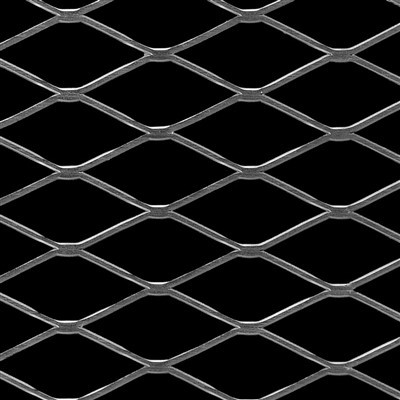
First, let’s get clear on what slotted perforated metal actually is, because that baseline matters. Unlike round perforated metal, which uses uniform holes punched in any shape, slotted perforated metal uses elongated, straight slots that run either lengthwise or crosswise across a metal sheet. These slots aren’t cut from a single tool; they’re formed using a custom die, which is one of the first big drivers of cost. A 1-inch round hole die might work for hundreds of sheets, but a 0.5-inch wide, 2-inch long slot die is a specialized piece of equipment that costs thousands of dollars to design and manufacture. That one-time tooling expense is almost always passed on to small orders, but for large runs, it gets spread out so thin it barely affects per-unit pricing.
Let’s start with the most basic variable: the base metal itself. Slotted perforated metal is made from all the same metals as standard sheet metal, and each has a drastically different price per pound. Carbon steel, the cheapest option, usually runs $0.50 to $1.50 per pound, depending on grade (A36 vs. hot-rolled, for example). Galvanized steel, which is coated to resist rust, adds about $0.20 to $0.50 per pound on top of that. Aluminum is next, typically $1.20 to $2.80 per pound, with thin-gauge aluminum (common for architectural trim) sitting at the lower end and thick, structural aluminum (used in truck beds or load-bearing panels) at the higher end. Stainless steel, the most corrosion-resistant option, is the priciest: 304 stainless (the most common grade for food processing, medical equipment, and outdoor architecture) runs $2.50 to $4.50 per pound, while 316 stainless (used in marine or chemical environments) can be 20% to 30% more expensive still. Brass and copper, while less common, are even pricier—sometimes $5 to $10 per pound—used mostly for decorative projects where color or patina is a priority.
Thickness of the base metal is another make-or-break factor. Most slotted perforated metal orders fall into gauges 12 to 22, but gauge is a backward scale: a lower gauge number means a thicker sheet. A 22-gauge carbon steel sheet is thin, bendable, and lightweight, perfect for wall panels or window screens. It might weigh 1.5 pounds per square foot, so a 4×8 foot sheet would be 48 square feet, or 72 pounds total. At $1 per pound for carbon steel, that sheet’s raw metal cost alone is $72. A 12-gauge carbon steel sheet, by contrast, is thick, rigid, and able to hold heavy loads—great for industrial machine guards or structural grates. It weighs about 3.8 pounds per square foot, so that same 4×8 sheet would be 182.4 pounds, costing $182 in raw metal alone. The difference in metal weight is huge, and that’s before adding the cost of perforating the slots.
Speaking of perforating: the slot dimensions and pattern itself is the second big cost driver. Let’s compare a simple, standard slot pattern to a custom one. A common “1:2 aspect ratio” slot (0.25-inch wide, 0.5-inch long) spaced 1 inch apart is a pattern we can punch with a single, high-volume die that runs quickly on our manufacturing line. For that pattern, the labor to punch 50 sheets of 22-gauge aluminum is minimal, so the per-sheet cost might be $30 to $50 on top of raw metal. But if you need a unique slot shape—say, 0.75-inch wide, 6-inch long, or staggered instead of straight—or a very tight slot spacing (like 0.125 inches apart, which is almost as close as you can punch without warping the sheet), that requires slower, more careful processing. Tight spacing means the machine can’t move as fast, and there’s a higher risk of the metal cracking during punching, so we have to account for more waste. I once worked with a customer who needed 3,000 custom 1-inch long slots spaced 0.25 inches apart for a custom grill design; their perforation labor alone added $120 per sheet, double the cost of a standard pattern.
Then there’s the finish and post-processing, which people often overlook but can add 10% to 50% to the total cost. Most standard slotted perforated metal is sold “mill finish,” meaning it’s straight from the mill with no coating or polishing. But if you need a powder coat for outdoor use, that’s an extra $0.15 to $0.30 per square foot. A polished stainless steel finish for a restaurant kitchen might add $0.50 per square foot. For architectural projects, sometimes customers ask for a custom anodized finish on aluminum, which can run $0.30 to $0.80 per square foot depending on the color and texture. Even simple processes like trimming the sheet to a custom size, instead of selling standard 4×8 or 5×10 foot sheets, can add $10 to $20 per sheet for our shop labor. We also offer edge treatments: beveled edges for safety, burr removal to prevent cuts, or reinforced edges for structural panels—each of which adds a small, but noticeable, cost.
Another factor that surprises a lot of first-time buyers is order volume. Small orders, like a single 2×2 foot sheet for a home project, have much higher per-unit costs because we have to set up our die, load the material, and run a small batch, which isn’t efficient. A single 22-gauge 0.5×1 inch slot carbon steel sheet might cost $40 to $60, depending on size. But if you order 50 sheets, that setup cost gets spread out, so the same sheet could drop to $25 to $35 each. For large commercial orders—say, 10,000 square feet of slotted perforated metal for a warehouse mezzanine—the per-square-foot price can drop even more, often by 20% to 30% because we’re running the die at full capacity, minimizing waste, and negotiating bulk pricing on raw metal from our suppliers. I’ve had customers come to me with a $1,000 budget for a small project, and another with a $100,000 budget for a large construction job; the same slotted pattern can cost 2x more for the small order simply because of batch size.
Wait, but what about people who get quotes that seem too low—or too high? I’ve seen companies advertise slotted perforated metal for $1 per square foot, but that’s almost always for thin, low-grade carbon steel with a basic slot pattern, no finish, and standard 4×8 sheets. That’s a bare-bones product, often with hidden costs like cutting fees or delays. On the other end, I’ve had customers think a $500 price tag for a custom facade panel is overpriced, but when I break it down: 10-gauge 316 stainless steel ($4 per pound, 2.5 pounds per square foot = $100 for raw metal), custom die design ($1,200 one-time tooling fee spread over 20 panels = $60 per panel), custom slot pattern and edge treatments ($120 per panel), and a marine-grade powder coat ($30 per panel), that $500 adds up fast. It’s not just for the metal—it’s for the engineering, the tooling, and the quality control that ensures the panel doesn’t rust or crack in a coastal environment.
So how do you get an accurate price for your slotted perforated metal, instead of a vague quote? First, be specific about your needs: what metal, what gauge, what slot dimensions, what pattern, what size sheets, what finish, and how many units you need. The more details you can provide, the better I can give you a fair, transparent quote, no hidden fees. For example, a contractor working on a retail facade needs 100 4×10 foot panels of 16-gauge 304 stainless steel, with 0.375×1.5 inch slots, a brushed finish, and a matte powder coat—my quote for that would be based on bulk pricing for metal, shared tooling cost, and efficient setup, so it’s a fair price for a high-quality product. A homeowner looking for a single 2×3 foot panel for a garden gate would get a different quote, tailored to their smaller order.

At the end of the day, the “price” of slotted perforated metal isn’t a single number—it’s a value based on your project’s unique requirements. You’re not just paying for a sheet of metal; you’re paying for the right material to fit your application, the right slot design to meet your needs, and the quality and reliability to ensure it lasts for years. If you’re planning a project, large or small, and want a transparent quote tailored to your needs, feel free to reach out to discuss your requirements.
Decorative Expanded Metal References
- Steel Perforators Association. (2022). Cost Drivers for Perforated Metal Products. Retrieved from industry trade publications on metal fabrication and architectural materials.
- American National Standards Institute. (2021). Standard Specifications for Slotted Perforated Metal Gauges and Dimensions. ANSI B18.12-2021.
- Industrial Metal Supply Association. (2023). Bulk Pricing Trends for Carbon Steel, Aluminum, and Stainless Steel Sheet Metal.
Anping Yilida Metal Wire Mesh Co., Ltd.
Anping Yilida Metal Wire Mesh Co., Ltd. is one of the most reliable slotted perforated metal manufacturers and suppliers in China, also supports customized service. Please feel free to buy bulk high quality slotted perforated metal made in China here from our factory.
Address: Wire Mesh Development Zone, Anping, Hebei Province, China
E-mail: sales@wiremesh-yg.cn
WebSite: https://www.yilidametal.com/
