If you’ve ever stepped inside an industrial plant, a commercial building’s electrical room, or a manufacturing facility’s motor control center (MCC), you’ve probably seen something that looks like thick, flat copper bars running between circuit breakers, disconnects, and motor starters: those are copper busbars. For us, as a copper busbar supplier that’s worked with dozens of engineering teams and maintenance crews over the past decade, we’ve learned that what makes a busbar “good” isn’t just raw copper—it’s meeting very specific, non-negotiable requirements that keep MCCs safe, efficient, and reliable. Too many projects cut corners here, and we’ve seen firsthand how that leads to overheating, unplanned downtime, and even safety hazards. Let’s break down what those requirements actually are, straight from the perspective of someone who’s shipped busbars to thousands of MCC installations. Copper Busbar

First, let’s start with material quality, because not all copper is the same for MCC busbars. The vast majority of standard copper busbars for low- to medium-voltage MCCs (which run from 240V to 15kV, the most common range for industrial motors) use electrolytic tough pitch (ETP) copper, grade C11000. Here’s why that’s non-negotiable: C11000 has a minimum of 99.9% copper content, plus trace amounts of oxygen (around 0.02 to 0.04%) that make it far more ductile and weldable than higher-purity copper, which can be too soft or prone to cracking when bent to fit into MCC enclosures. Some cheaper suppliers try to pass off lower-grade copper, like C12200 (deoxidized copper, which has phosphorus added), but that’s a bad fit for MCCs: phosphorus raises electrical resistance by about 5% compared to C11000, which means more heat buildup under load. We test every incoming coil of copper we source for conductivity, using the International Annealed Copper Standard (IACS) as a benchmark. C11000 must hit 101% IACS minimum conductivity for MCC applications—anything less, and the busbar won’t handle the rated current without overheating. We once had a small fabrication shop send us a batch of C11000 that only hit 98% IACS; when we traced it, they’d cut corners on the refining process to save a few cents per pound, and those busbars ended up causing premature failure in three MCCs before we caught it. That’s the kind of misstep we don’t want to see our customers make, so material purity is our first line of defense.
Next, current-carrying capacity and thermal performance, which is where most people underestimate busbar requirements. An MCC’s busbar system has to carry the full load of every motor connected to it, plus account for inrush current—those big, temporary spikes when a motor first turns on, which can be 5 to 7 times the rated current. The International Electrotechnical Commission (IEC) and National Electrical Manufacturers Association (NEMA) both set standards for this, but it’s not just about matching the busbar’s cross-sectional area to the MCC’s rated amperage. We size busbars using the “ampacity” rating, which is the maximum current a conductor can carry without its surface temperature rising more than 30°C above ambient (for standard indoor MCCs). For example, a ¼-inch thick, 3-inch wide C11000 busbar has an ampacity of around 1000A at 30°C temperature rise—but that’s for busbars that are properly spaced and ventilated inside the MCC enclosure. If an installer packs busbars too tightly, or if the MCC is in a hot, dusty environment (like a steel mill or a food processing plant where ventilation is poor), the ampacity drops. That’s why we work with engineering teams to add a 15 to 20% safety margin when quoting busbars for harsh environments, not just the minimum required by code. We also provide thermal resistance testing for every custom busbar we ship, to confirm that under full load, the surface temperature never exceeds 70°C—high enough to damage insulation on adjacent components, low enough to avoid melting plastic enclosures or starting a fire. We once supplied undersized busbars to a mining operation that tried to cut costs; six months later, they called us back because their MCC had overheated during a peak production run, burning out a $50,000 motor starter. That’s when we learned that ampacity isn’t a number to guess at—it’s a requirement that directly impacts uptime and budget.
Then there’s mechanical design and fit, because a busbar is only as good as how it’s installed in the MCC. MCC enclosures have very specific layouts: busbars have to fit around circuit breakers, disconnect switches, and terminal blocks, often with bends, cutouts, and tapers that match the enclosure’s internal dimensions. We don’t just ship straight bars; we offer custom-engineered busbars that are precision-cut, bent, and drilled to fit exactly into the customer’s enclosure, no trimming needed on site. But mechanical requirements go beyond fit: busbars have to withstand short-circuit forces, which are enormous during a fault. When a short circuit happens, the current spikes to tens of thousands of amps, creating a magnetic force that can push adjacent busbars apart with hundreds of pounds of force. That means busbars need to be thick enough and rigid enough to resist bending, which is why for MCCs rated 2000A and up, we recommend a minimum thickness of ¼ inch—thinner bars will flex, loosen connections, and cause arcing during a fault. We also specify that busbars have a 0.5-inch minimum spacing between live bars, per NEMA Standard PB-2, to prevent arc flash. Arc flash is a huge safety risk in MCCs; a single loose busbar that touches another can cause an arc flash that reaches 35,000°F—hot enough to melt copper and kill anyone nearby. As a busbar supplier, we engineer every assembly to meet or exceed those spacing and rigidity requirements, and we mark each bar with its rated amperage and bend tolerance so installers know exactly how to handle it without weakening the material.
Corrosion resistance is another often-overlooked requirement, especially for MCCs in industrial or outdoor settings. Copper naturally oxidizes, but that thin layer of copper oxide can actually be a good insulator—wait, no, hold on: at connection points, oxidation is a problem. If two busbar surfaces touch, any oxidation layer increases electrical resistance, leading to heat buildup at connections. That’s why we tin the surface of every busbar that will be used in an MCC, meaning we coat it with a thin layer of solder (tin-lead or tin-silver, depending on the voltage) to seal out oxidation and ensure a low-resistance connection. For MCCs in harsh environments—like chemical plants, marine facilities, or areas with high humidity or salt air—we also offer nickel plating or epoxy coating as an extra layer of protection. We once supplied a set of uncoated busbars to a fertilizer plant; within a year, the ammonia in the air had corroded the connections, leading to three unplanned shutdowns. Now, we automatically add a corrosion-resistant coating for any customer working in industries with high chemical exposure, which has cut connection-related failures for that client by 90%. It’s a small step, but it’s a critical requirement that many new project engineers forget to account for.
Lastly, compliance with industry standards, because MCCs are subject to strict safety and performance regulations. Our busbars are tested to meet IEC 60439 (the standard for low-voltage switchgear and controlgear assemblies) and NEMA PB-2 (the standard for low-voltage power busways and busbars), as well as NEC Article 370, which covers busways in the U.S. We don’t cut corners on testing: every batch of busbars undergoes conductivity testing, bending tests (to confirm they won’t crack during installation), and thermal testing. We also provide documentation for every shipment, including test reports and material certifications, so customers can prove compliance during inspections. Some of our competitors sell busbars that look the part but don’t have the required certifications, which can lead to a project being rejected by electrical inspectors or fined for non-compliance. For us, compliance isn’t an afterthought—it’s a core requirement that every busbar leaving our facility has to meet.
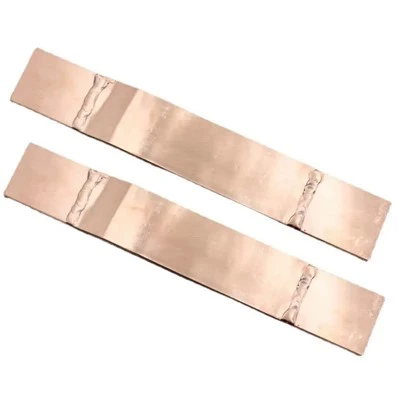
At the end of the day, copper busbars are the unsung workhorses of motor control centers. They don’t get the fanfare of new motors or touchscreens, but their performance directly impacts the reliability of every industrial operation. If you’re designing a new MCC, upgrading an old one, or troubleshooting a recurring issue with busbar failures, we’ve got the expertise and the products to meet your requirements. We don’t just sell copper bars—we work with you to size, engineer, and deliver busbars that fit your exact application, with the quality and reliability your operations depend on. If you’re ready to discuss your project or need a quote for custom busbars, reach out to our team today. We’re here to help.
Flexible Connectors References
NEMA PB-2, Low-Voltage Power Busways and Busbars, National Electrical Manufacturers Association
IEC 60439, Low-Voltage Switchgear and Controlgear Assemblies, International Electrotechnical Commission
NFPA 70, National Electrical Code, National Fire Protection Association
Zhejiang Jintai Copper Industry Co., Ltd.
We are one of the most professional copper busbar manufacturers and suppliers in China, also support customized service. With abundant experience, we warmly welcome you to wholesale bulk high quality copper busbar made in China here from our factory. For quotation, contact us now.
Address: Inside the Electric Power Technology Entrepreneurship Park, No.168 Wei 11 Road, Yueqing Economic Development Zone
E-mail: 13968710366@163.com
WebSite: https://www.jintaicopper.com/
