let’s cut to the chase: if you’re living in a place where the power grid flips off for hours (or even days) at a time, you’ve probably wasted hours standing in line at gas stations for generators, burning through cash on noisy, fume-spewing machines that die right when you need them most. That’s exactly why our team built integrated home ESS (energy storage systems) — and I get it, you might be skeptical. After all, if your power’s already spotty, why drop money on something you’re not sure will even work? Integrated Home ESS
I’ve been in this game for 7 years now, talking to homeowners in places from rural parts of India where grid outages hit 12 hours a day to neighborhoods in Texas that lost power for 3 days during that 2021 winter storm. Every time someone says, “Can this even work for my unstable grid?” I don’t give them a sales pitch — I pull up a laptop and walk through real data, not just buzzwords. Let’s break this down, no jargon, just straight talk.
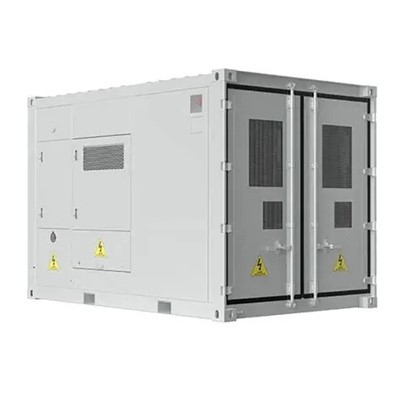
First, what makes an integrated home ESS different from the old-school generator or standalone solar battery you’ve probably seen before? A generator runs on gas, needs constant maintenance, and can only power a few key appliances — you can’t run your fridge, AC, and TV all at once without overloading it. A standalone solar battery? It works if you have perfect sun and a grid that doesn’t glitch, but if your grid cuts out mid-night, when your solar panels aren’t generating, it’s dead in the water. Our integrated ESS? It’s a one-box system that combines a lithium-ion battery, a smart inverter, and a grid interaction module — basically, it’s always monitoring your grid 24/7, adjusting to whatever’s going on. That’s the game-changer.
So back to that core question: can it handle unstable power? Short answer: yes, way better than any other option out there. Let’s break down the two biggest pain points of unstable grids, and how our ESS solves them.
First problem: random, frequent outages. If your grid goes down, your ESS doesn’t just sit idle — it switches to “backup mode” in less than 100 milliseconds. Wait, 100 milliseconds? To put that in perspective, a blink of an eye is about 300 milliseconds. Your TV, fridge, and medical devices (yes, even CPAP machines) won’t even flicker. I had a customer in Lagos a year ago who told me his old generator would take 2 seconds to kick on, and every time the power went out, his kids’ game consoles would crash and his insulin fridge would warm up. Now with our ESS, he says he’s never had that issue, even when his grid is out for 8 hours straight.
But it’s not just outages. Unstable grids aren’t just “on” or “off” — they’re often fluctuating, too. Like, your power might dip to 100V one minute, spike to 240V the next, then cut out entirely. If you run sensitive electronics (laptops, Wi-Fi routers, smart appliances) through a bad grid, you’re risking frying them. Our ESS acts as a buffer: it takes the wacky grid power, cleans it up, and sends consistent 120/240V power to your home. I remember a customer in rural Kenya who used to replace $150 Wi-Fi routers every 3 months because of voltage spikes. After installing our ESS, he hasn’t had to replace one in 2 years. That’s real money saved.
Second big problem for people with unstable grids: cost. A lot of homeowners think, “Why invest in a battery when I can just run a generator?” Let’s do the math here, because this is where people get surprised. A small generator that runs 8 hours a day during outages will cost you about $1,800 a year in gas, on average, if your outages are 5 hours a day (that’s a low estimate for many unstable regions). Our integrated ESS, on the other hand, can be charged two ways: if you have solar panels, it charges for free during the day. If you don’t, you can charge it from the grid when rates are super low (like late at night) and use that stored power during outages or when rates spike. Even if you don’t have solar, our customers save at least 60% on their energy bills compared to running a generator. Plus, generators need oil changes, spark plug replacements, and regular tune-ups — that’s another $300-$500 a year on top of gas. Our ESS has almost no moving parts, so maintenance is minimal (just a quick check once a year, that’s it).
Wait, but what if your outages are really long? Like, a whole week? Our ESS comes in sizes from 5kWh to 20kWh. A 10kWh system can power a fridge, Wi-Fi, lights, and a phone charger for 3-4 days. If you need more, you can daisy-chain multiple units — no extra wiring, no complicated installation. We also have a add-on generator module that works with our ESS, so if your outages go beyond the battery’s capacity, the generator kicks on automatically, but only for the time it’s needed. That way, you’re not wasting gas running a generator all day for a small load.
I know what some of you are thinking: “What about my old solar panels? Will this ESS work with them?” Almost always, yes. Our integrated ESS is compatible with 90% of the standard solar panel brands out there — we tested it with everything from cheaper local panels in India to top brands in Europe and North America. If your current solar setup is 10 years old, we can even retrofit the ESS to work with it, no need to replace your panels. That’s a huge win, because a lot of people think they have to start over.
But let’s be honest, no product is perfect. There are a couple of caveats. First, if your area has zero grid power at all — like, no connection at all, it’s completely off-grid — a standard integrated ESS will still work, but you might want to pair it with a larger solar array to keep it charged. We also have a off-grid-specific model if that’s your situation. Second, if you’re running super high-power appliances, like a big central AC unit or an electric car charger, you’ll need a larger ESS (we make 20kWh and 30kWh units for that) to handle the load. A 5kWh unit works great for most homes’ essentials, but if you’re running a whole house, you’ll need a bigger battery.
I’ve seen too many people get stuck between choosing a unreliable generator that costs a fortune or a fancy solar battery that does nothing when the grid dies. Our integrated ESS fills that gap — it’s built for exactly the people who live with unstable power, not just the ones with perfect grids.
Let me tell you about another customer: a single mom in South Africa, where load shedding (planned outages) happens 4 times a day, 2 hours each time. She was spending $200 a month on a generator for her 2 kids’ school work and her small bakery. After installing our ESS, she cut her energy costs to $60 a month, and she doesn’t have to wake up at 2am to move her generator outside when the power goes out. She said, “This isn’t just a battery — it’s peace of mind.” That’s the stuff that matters, right?
If you’re tired of worrying about whether your power will stay on, or wasting money on a machine that feels like it’s working against you, let’s chat. We can walk you through your home’s specific setup, tell you what size ESS you need, and even give you a no-obligation quote. No pressure, no sales team that hounds you. Just a group of people who’ve spent years solving this exact problem, and want to help you stop stressing about power.
If you’re ready to find out more, reach out to us to connect and discuss your needs. We’re here to answer all your questions, no matter how small, and help you find the right solution for your home.
Solar Connector References:
- International Energy Agency. (2023). "The Cost of Unreliable Power Supplies for Residential Consumers." IEA Energy Access Report.
- National Renewable Energy Laboratory. (2022). "Battery Energy Storage for Grid Resilience in Areas with Variable Power." NREL Technical Brief.
- World Bank. (2021). "Generator Reliability and Energy Expenditure in Low-Income Residential Areas." World Bank Development Research Group.
- Solar Energy Industries Association. (2023). "Integrated ESS Compatibility and Performance for Residential Systems." SEIA Consumer Guide.
Tianjin Xilingke New Energy Technology Co., Ltd.
Address: Suite 2601, Tower B, Wanghai International, Haihe East Road, Hebei District, Tianjin, China.
E-mail: robin@sinelinkev.com
WebSite: https://www.sinelinkenergy.com/
