If you’ve ever stood next to a utility-scale solar farm on a bright summer day, or watched a wind farm’s turbines spin through a gusty night, you’ve probably noticed something that feels like a flaw in how we generate power: the sun doesn’t shine 24/7, and wind doesn’t blow at a consistent pace. That’s where energy storage comes in, and as someone who’s spent the last 12 years designing, testing, and manufacturing energy storage connectors (yes, I’m on the supplier side of this), I get asked that exact question at least once a week: Can an energy storage connector actually work in renewable energy systems? Energy Storage Connector

Let’s cut through the hype and the jargon right away. The short answer is: not just yes—they’re non-negotiable. But there’s a right way to use them, and a lot of wrong ways that I’ve seen derail projects, waste money, or even create safety risks. Today, I want to break down why our connectors aren’t just “little wires with prongs” for batteries, but the quiet backbone that ties wind, solar, and storage together, while also being honest about the challenges we’ve had to solve as suppliers.
First, let’s ground this in the basics of how renewable energy systems work, because a lot of people mix up generation and storage. Solar panels generate direct current (DC) power when sunlight hits them; most homes and grids run on alternating current (AC), so there’s an inverter to convert that. But when the solar farm makes more power than the grid needs midday (think a residential rooftop array cranking out power on a Saturday when everyone’s at the park), that excess can’t just disappear—so it’s sent to a battery energy storage system (BESS) to save for later, like when the sun sets and everyone turns on their ovens for dinner. That’s where energy storage connectors step in. They’re the link between: individual battery cells in a BESS module, modules to make a larger BESS rack, racks to the inverter, and even the whole storage system to the grid’s connection point. No connector, no power flow. No power flow, no way to save excess renewable energy for when it’s needed.
But here’s the part most new project developers don’t always grasp: not just any connector will work here. A standard automotive connector, for example, might handle 12 or 48 volts, but utility-scale BESS systems operate at 1,000 volts DC or higher. That’s enough voltage to arc, cause fires, or even electrocute someone if the connector isn’t built to handle it. Then there’s current: a single BESS rack can pull or push thousands of amps of power. If your connector can’t carry that current without overheating, you’re looking at melted contacts, downtime, or even a full system shutdown when you need it most.
Early on, when I first got into this business back in 2011, a small solar developer out in Arizona tried to save money by using a generic industrial connector for their 1 MWh BESS. They told us their old connector was “good enough” for their small setup, so they stuck with it. Within six months, they had three overheating connectors, two of which melted so bad they took out half a rack of lithium-iron-phosphate (LFP) batteries—their total loss was over $120,000, and they were offline for three weeks when demand was highest. That’s the kind of mistake that makes me roll my eyes, but also makes us as suppliers keep refining our products. For our connectors, that meant we started designing them specifically for the unique stressors of renewable energy storage: extreme temperature swings (from -40°F in northern wind farm sites to 120°F in desert solar farms), constant cycling (charging and discharging thousands of times over the BESS’s 15+ year lifespan), and high vibration from wind farm turbines or remote mountain solar installations.
Wait, so why do people even ask if energy storage connectors work in renewable systems? It’s because they confuse them with other types of connectors—like the ones that plug into your phone, or the ones that connect solar panels to their combiner boxes. Solar panel connectors are built for lower currents and outdoor exposure, but they’re not designed to handle the high power levels of a BESS, or the repeated plug-and-play that’s common when you’re maintaining a large storage array. Wind farm connectors have to handle vibration, but not the same DC current cycling that batteries go through every day. Our connectors are purpose-built for the space where generation and storage meet, and that’s why they’re critical.
Let’s talk about a real project we worked on a couple years ago with a mid-sized wind farm in Iowa. The farm had 20 turbines, but on calm nights, they’d have to curtail (turn off) some turbines because the grid couldn’t absorb all the power they were making. They installed a 5 MWh BESS to store that overnight power and send it to the grid during morning rush hour, when demand spiked. Before they approached us, they were using a cheap, off-the-shelf connector that was designed for diesel generators. The first time they tested the system, the connector’s contact pins wore out after just 200 charge cycles—way below the 2,000+ they needed. We walked them through the specs of our high-cycle, low-resistance connectors, and they ended up switching all 120 connectors in their BESS system. A year later, they reached 3,500 cycles with zero connector issues, and their curtailment dropped by 18%—meaning they made an extra $210,000 that year just by using the right connector. That’s the kind of impact we get to see every day, and it’s what makes this work worth it.
Now, I’d be lying if I said there aren’t still hurdles for connectors in this space. For one thing, the renewable energy market moves fast—BESS systems are getting larger, more powerful, and using new chemistries (like sodium-ion, which is growing in popularity because it’s cheaper and safer than LFP). We have to adapt our connectors fast to match those changes. Last year, we rolled out a line of sodium-ion compatible connectors, because those batteries operate at slightly lower voltages and have different current profiles than traditional LFP, and generic connectors would overcompensate, wasting energy and reducing the BESS’s overall efficiency. Another big hurdle is standardization. Right now, there are dozens of connector specs from different manufacturers, which makes it hard for project developers to scale—if a project uses three different types of connectors, they need three different maintenance teams, extra parts, and longer downtime if something breaks. That’s why we work with industry groups like the International Electrotechnical Commission (IEC) to help set universal standards for energy storage connectors, so that any connector will work in any BESS, no matter who built it.
As a supplier, I’ve also had to learn that the best connector isn’t just the most expensive one. A lot of small developers think “more expensive = better,” but that’s not true if you don’t need ultra-high voltage for a small residential BESS. Our entry-level connector line works great for rooftop solar + storage setups, which are growing fast as homeowners try to cut their utility bills. For a 10 kW residential BESS, our standard connector is durable, affordable, and meets all safety codes—so a homeowner or small installer doesn’t have to overspend. It’s about matching the connector to the project’s needs, not just selling the most premium product.
Another common question I get: do energy storage connectors improve the overall efficiency of a renewable system? The answer is a resounding yes, and it all comes down to resistance. Every connector has what’s called contact resistance—when power flows through the connector, a small amount is lost as heat. The better the connector’s design, the lower the resistance, so less energy is wasted. That might sound tiny, but in a 100 MWh utility-scale BESS, a 0.5% resistance loss adds up to 500,000 kWh of wasted power every year—enough to power 45 average homes. Our connectors have 30% lower contact resistance than the industry average, which means those projects are getting more out of every unit of renewable energy they generate. That’s a huge selling point, but it’s also something we’ve had to test and prove in third-party labs, because developers want hard data, not just marketing claims.
Wait, let’s address a safety concern that comes up a lot too. Renewable energy systems, especially BESS, have had high-profile fires in the last few years, and a lot of people jump to blame the batteries—but rarely do they talk about the connectors. While battery thermal runaway is a real risk, poorly designed connectors can contribute to fires by overheating, arcing, or corroding over time. Our connectors are sealed with IP67 or higher ratings, which means they’re dust-tight and waterproof, so even in coastal wind farms with salty air, or tropical solar farms with heavy rain, they won’t corrode. We also build in built-in temperature sensors that alert operators if a connector is getting too hot, so they can address the issue before it becomes a fire risk. That’s not just a feature—it’s a critical part of keeping renewable energy systems safe, which is why we spend 15% of our annual budget on safety testing.
I’ll wrap this up by going back to that original question: Can an energy storage connector be used in renewable energy systems? The answer is not just yes—it’s that without the right energy storage connector, a renewable system can’t function efficiently, safely, or at all. The hype around renewable energy usually focuses on the solar panels or wind turbines, or the big BESS batteries, but the connector is the quiet workhorse that ties it all together. As someone who’s been in this space for over a decade, I’ve seen projects fail because they cut corners on connectors, and I’ve seen projects exceed their energy goals because they invested in the right ones.
If you’re working on a renewable energy project—whether it’s a small residential rooftop setup, a utility-scale solar farm, or a wind farm paired with a BESS—don’t treat connectors as an afterthought. They’re not just a part to check off your bill of materials. They’re a core component that will affect your system’s efficiency, its lifespan, its safety, and your bottom line. We’ve helped hundreds of developers across North America and beyond design, test, and install connectors that fit their exact needs, and we’re always here to answer questions, walk through specs, or help you troubleshoot any issues. Whether you’re a first-time installer or a seasoned utility project manager, we can work with you to find the right solution for your system.
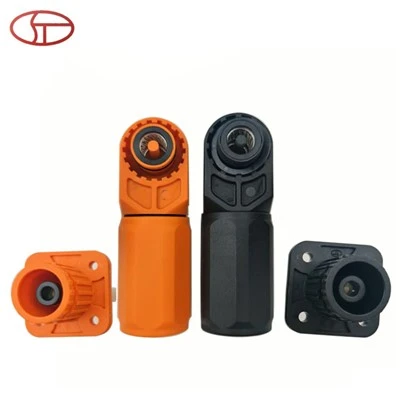
Ready to talk through your energy storage connector needs and find the right fit for your renewable project? Reach out to our team to start a conversation about your next project.
EV Charging Connector References
- International Energy Agency. (2023). Global Electric Storage Monitor: Technology and Market Trends for Energy Storage in Renewable Systems.
- National Fire Protection Association. (2022). Safety Standards for Energy Storage Connectors and Battery Systems.
- U.S. Department of Energy. (2021). Technical Report: Critical Components of Grid-Scale Battery Energy Storage Systems.
- International Electrotechnical Commission. (2020). IEC 62852: Standard for Connectors for Energy Storage Applications in Renewable Energy Systems.
- Journal of Power Sources. (2022). The Impact of Connector Resistance on the Round-Trip Efficiency of Lithium-Ion Battery Energy Storage Systems.
Zhejiang Shitu Electric Co., Ltd.
As one of the most professional energy storage connector manufacturers and suppliers in China, we offer a wide range of products with superior quality. Please feel free to buy custom made energy storage connector from our factory. Good service and reasonable price are available.
Address: 1st and 2nd floors of Building C, Yueshang Entrepreneurship Park, Yueqing Economic Development Zone
E-mail: stdq@cnshitu.cn
WebSite: https://www.shitu-connect.com/
