If you’ve ever worked with welding nuts, you know that one tiny mess-up can derail an entire project. I’ve been supplying welding nuts for over a decade now, and I swear the #1 headache every customer brings to me isn’t “will this nut hold?”—it’s spatter. You pull the weld gun away, and bam—little molten metal blobs are stuck all over the nut’s face, the base material, or even the surrounding parts. Not only does this look garbage, but it can mess up fitment, ruin paint later, or even cause the whole joint to fail under load. Today, I’m breaking down what this spatter actually is, why it happens specifically with welding nuts, and the practical fixes my team and I have tested over the years that actually work. Welding Nut
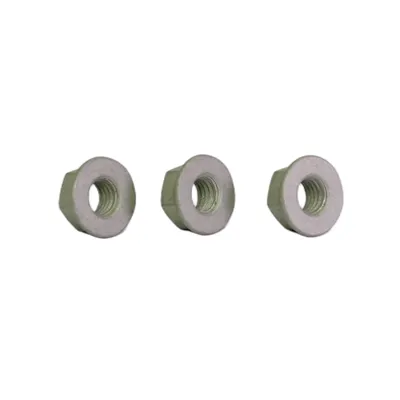
First, let’s get super real about what spatter is. It’s not just random gunk—when you weld, you’re melting both the welding nut’s base metal (usually steel, sometimes stainless or aluminum) and the workpiece it’s tacked to. For the weld to form properly, that molten metal needs to mix into a solid joint. But when the electrical arc is too hot, or the wrong settings, tiny droplets of that molten metal get blasted outside the actual weld pool instead of staying where they belong. Those droplets cool instantly into hard, tiny (or sometimes not-so-tiny) blobs, which is the spatter everyone hates. The worst part? With welding nuts, spatter is extra frustrating because they’re designed to be threaded into things, so spatter on the internal or external threads can make them impossible to screw onto a bolt later. I’ve had customers send me photos of a whole batch of automotive chassis parts where spatter on the nut threads meant they had to rework every single one—total waste of time and money.
Now, why does this happen specifically with welding nuts, not just regular spot welds? Welding nuts aren’t flat like a standard spot weld electrode contact. They have a chamfer (that angled edge on the bottom where they sit on the workpiece) and a set of projection bumps—tiny little nubs on the bottom of the nut that you weld on. Those projections are key: they concentrate the weld current so you get a strong joint without burning through the workpiece. But if those projections aren’t right, or if the current doesn’t pass through them evenly, you get inconsistent melting. For example, if one projection is taller than the others, it’ll take all the current, overheat, and blast spatter everywhere. Or if the nut isn’t seated perfectly flat on the workpiece, there’s a gap between the nut and the metal, so the arc jumps out of the gap instead of staying focused on the projections. I had a customer last month who was getting 30% spatter on their M8 welding nuts because they were just tossing the nuts onto the workpiece by hand—some were tilted, so the arc was going sideways. That’s a cheap fix, but you have to catch it.
Let’s walk through the common mistakes I see all the time, because most spatter issues are preventable if you know what to look for. First, wrong weld settings. A lot of guys crank up the amperage because they think “hotter is stronger,” but with welding nuts, too much current blows through the projections, melts the surrounding metal, and creates spatter. I’ve seen people use 1500 amps for an M6 nut when they only need 800—total overkill. Then there’s weld time: if you hold the gun on too long, the molten pool gets too big, and metal splatters. Too short, and you get a weak joint anyway, so it’s a balance. Second, dirty parts. Grease, oil, rust, or even leftover manufacturing shavings on the nut or workpiece act like insulators. The current can’t flow smoothly, so the arc is unstable, leading to spatter. I had a first-time customer call me panicking because their whole batch of weld nuts had spatter—turns out they’d washed them in a degreaser that left a weird residue, and they didn’t wipe them down before welding. Third, using the wrong equipment. Old weld guns with worn electrodes don’t transfer current evenly. If your electrode tip is pitted or dirty, it doesn’t sit flat on the nut’s face, so the current is spotty. Also, shielding gas—if you’re using MIG welding (super common for welding nuts), a too-thin gas flow lets air get into the weld, making the arc erratic and causing more spatter. Most guys use 15-20 CFH for steel, but if your shop has drafty ventilation, you might need to bump that up to 25 CFH.
Now, the good stuff: how to actually fix this stuff. These aren’t some secret tricks—they’re the stuff my team and I have tested on thousands of projects, so I know they work. Let’s start with the basics: prep your parts. No exceptions. Wipe every welding nut with a clean rag and rubbing alcohol before welding—get rid of all oil, grease, and residue. If your workpiece is rusty, grind that down first too. I even suggest keeping a dedicated bin for welding nuts that are ready to be welded, so no one grabs a dirty one by accident. Next, check your weld settings. I can’t give you a one-size-fits-all number, but as a supplier, I include a spec sheet with every welding nut order that has recommended amperage, weld time, and gas flow for different materials and workpieces. For example, M6 steel welding nuts on 1.5mm steel use ~750 amps, 0.3 seconds weld time, 18 CFH CO2 shielding gas. If you’re working with stainless steel, you’ll need a little less amperage and maybe a mix of argon and CO2 for better arc stability.
Then, make sure your projections are the right height and uniform. This is a big one for welding nuts specifically. I source welding nuts from manufacturers that do a 3-point projection design, all the same height within 0.05mm—if projections are uneven, current flows uneven, spatter happens. As a supplier, I test every batch before shipping to make sure projections are consistent, but even good nuts can get damaged in shipping, so inspect a few random nuts before putting them on the line. If a projection is bent or shorter than the others, toss that nut. Also, seating the nut correctly: use a simple jig or a vacuum fixture to hold the nut flat on the workpiece. Hand-tossing works if you’re careful, but a $50 jig that clamps the nut in place every time will cut spatter by 80% instantly. I had a customer go from 25% spatter to less than 2% just by adding a simple seating jig.
Next, upgrade your consumables. Old, worn electrodes are a spatter magnet. Keep your electrode tips clean—use a wire brush or a grinder to remove buildup after every 100 welds. Don’t wait until they’re pitted to replace them. Also, use anti-spatter spray on the workpiece and the nut’s face (not the threads, though—you don’t want stuff gunking up the threads). A good anti-spatter spray creates a thin barrier that stops molten metal from sticking, and it wipes off super easy after welding. My go-to is a water-based one, not the aerosol oily kind that leaves residue. If you’re using MIG, check your gun liner—if it’s dirty or damaged, wire feed is uneven, which causes arc instability and spatter. Change your liner every 6 months, or sooner if you see wire feed issues.
Wait, what if you’re using different welding processes? Some guys use spot welding, others use MIG, some even use TIG for precision jobs. Spatter happens with all, but the fixes adjust a little. For TIG welding, you’ll use a smaller electrode, lower amperage, and a tighter gas flow to keep the arc focused. For spot welding, make sure your electrodes are aligned perfectly—if they’re off-center, the current is uneven. Also, if you’re welding aluminum, it’s trickier because aluminum has a higher thermal conductivity, so you need more current, but aluminum spatter is way harder to remove, so prep is even more important. I recommend using a 50/50 argon/helium mix for aluminum welding nuts to keep the arc stable and reduce spatter.
Another trick: post-weld cleanup. Even if you do everything right, you’ll get a tiny bit of spatter. Don’t try to chip it off with a screwdriver—you’ll scratch the nut’s face or the workpiece. Use a spatter hammer with a rounded tip, or a wire wheel (soft brass, not steel, so you don’t scratch) to brush it off. Or, for small jobs, a spatter dissolver spray that you leave on for a few minutes, then wipe off. As a supplier, I also offer post-weld cleaning tips, because even a perfect weld nut can have spatter if you clean it wrong.
I’ve had customers tell me they’ve tried everything, and spatter is still an issue. Nine times out of ten, it’s one of the small things I mentioned. For example, a customer last year was running their weld time 0.1 seconds too long, and didn’t even notice. When we adjusted it, spatter went from 10% to less than 1%. Another was using the wrong gas flow—their shop ventilation was blowing the shielding gas away, so the arc was unstable. Bumping the gas flow up 5 CFH fixed it. The takeaway here is that spatter isn’t a “bad batch of nuts” problem, usually—it’s a setup or process problem. As a welding nut supplier, I’ve had customers blame me for spatter when it was their weld settings, and that’s why I’m super transparent about giving technical specs and helping troubleshoot, not just selling nuts.
If you’re dealing with consistent spatter on your welding nut joints, don’t waste time guessing. Reach out—my team and I can walk you through checking your settings, prep, and equipment, or send you a test batch of welding nuts with our recommended specs to see if that helps. We work with everyone from small fabrication shops to large automotive manufacturers, so we’ve seen almost every spatter scenario and have fixes tailored to your project. Whether you need standard steel welding nuts, stainless, aluminum, or custom sizes, we can hook you up, and we’ll even give you free tech support to cut down on spatter and get your welds right the first time.
Hex Flange Nut References
- Welding Nut Design and Application Guidelines, American Welding Society (AWS), 2021
- "Reduction of Welding Spatter in Resistance Spot Welding of Fasteners", Journal of Manufacturing Processes, Vol. 45, 2020
- Metal Fabrication Field Guide: Welding Nuts and Joint Preparation, Industrial Press Inc., 2022
Jiaxing Jinling Hardware Technolgy Joint Stock Co., Ltd.
As one of the most experienced welding nut manufacturers and suppliers in China, we also support customized service. Please feel free to buy bulk high-grade welding nut made in China here from our factory. For quotation and price list, contact us now.
Address: No.32, Shenjiadai, Xuyouche Village, Qinshan Subdistrict, Haiyan County, Zhejiang Province, China
E-mail: jlzxl@jinlingfstn.com
WebSite: https://www.china-nut-factory.com/
