Hey there! I’m a supplier of welded connection fittings, and today I wanna chat about the requirements for the welding environment of these fittings. It’s super important because the welding environment can have a huge impact on the quality of the welded connection fittings. Welded Connection Fittings
Temperature and Humidity
First off, let’s talk about temperature. The temperature of the welding environment plays a crucial role. If it’s too cold, the metal can become brittle, which makes it more likely to crack during welding. On the other hand, if it’s too hot, the metal can expand and warp, leading to uneven welds.
For most common metals used in welded connection fittings, like steel, the ideal welding temperature is usually between 50°F (10°C) and 100°F (38°C). When the temperature drops below 50°F, pre – heating the metal is often necessary. Pre – heating can help reduce the cooling rate of the weld, preventing the formation of hard and brittle microstructures.
Humidity is another factor. High humidity can introduce moisture into the welding process. Moisture in the air can react with the molten metal, causing porosity in the weld. Porosity is basically tiny holes in the weld, which weakens the joint. So, we generally want to keep the relative humidity below 80%. In some high – precision welding jobs, the humidity should be even lower, around 30% – 50%.
Ventilation
Ventilation is a big deal in the welding environment. When we’re welding, a whole bunch of fumes and gases are produced. These fumes can contain harmful substances like metal oxides, ozone, and nitrogen oxides. Breathing in these fumes can cause all sorts of health problems, from minor irritation to serious long – term diseases like lung cancer.
We need to have proper ventilation systems in place. There are two main types of ventilation: local exhaust ventilation and general dilution ventilation. Local exhaust ventilation is the better option. It works by capturing the fumes right at the source of the welding. This can be done using a fume extractor or a snorkel. General dilution ventilation, on the other hand, uses fans to bring in fresh air and dilute the fumes in the workspace. But it’s not as effective as local exhaust ventilation.
Cleanliness
The welding area must be clean. Any dirt, grease, rust, or paint on the metal surface can affect the quality of the weld. Dirt and grease can burn during welding, causing porosity and contamination in the weld. Rust and paint can also introduce impurities into the molten metal.
So, before we start welding the connection fittings, we need to clean the metal surfaces thoroughly. We can use a wire brush to remove rust and loose particles. Solvents can be used to clean off grease and oil. For a really clean surface, we might even use sandblasting in some cases.
Lighting
Good lighting is often overlooked, but it’s really important. When we’re welding, we need to be able to see what we’re doing clearly. Poor lighting can lead to mistakes in the welding process, such as incorrect bead placement or improper penetration.
The welding area should be well – lit. Natural light is great if possible, but in most industrial settings, we rely on artificial lighting. We need to make sure there are no shadows in the welding area. LED lights are a good choice because they provide bright, even light and are energy – efficient.
Stability and Support
The workpieces and the welding equipment need to be stable. If the workpiece moves during welding, it can cause uneven welds and even lead to welding defects. We need to use clamps, fixtures, or jigs to hold the workpiece in place.
The welding equipment also needs to be stable. A wobbly welding machine can affect the consistency of the welding current and voltage, which in turn affects the quality of the weld. So, we need to make sure the welding machine is placed on a flat and stable surface.
Protection from External Elements
The welding environment should be protected from external elements like wind and rain. Wind can blow the shielding gas away during gas – shielded welding processes. Shielding gas is used to protect the molten metal from reacting with the air. If the shielding gas is blown away, the weld can become porous and contaminated.
Rain or water can also cause problems. Water on the metal surface can cause rust and can also react with the molten metal during welding, leading to defects. So, if we’re welding outdoors, we need to set up a shelter or use weather – resistant enclosures.
Impact on Different Welding Processes
Different welding processes have different requirements for the welding environment. For example, in TIG (Tungsten Inert Gas) welding, which is a precision welding process, the requirements for cleanliness and shielding gas protection are very high. Even a small amount of contamination can ruin the weld.
In MIG (Metal Inert Gas) welding, the ventilation requirements are also quite strict because it produces a lot of fumes. And in stick welding, while it’s a bit more forgiving in terms of the environment, temperature and surface cleanliness still matter a great deal.
Meeting the Requirements
As a supplier of welded connection fittings, we always make sure that our production facilities meet these environmental requirements. We have temperature and humidity control systems to keep the working environment within the ideal range. Our ventilation systems are regularly maintained to ensure they are working effectively. And we have strict cleaning procedures for the workpieces and the welding area.
We also train our workers to be aware of the importance of the welding environment. They know how to adjust the welding parameters according to the environmental conditions and how to take proper precautions to ensure the quality of the welded connection fittings.
Why It Matters to You
If you’re in the market for welded connection fittings, understanding these environmental requirements is important for you too. High – quality welded connection fittings are made in a well – controlled environment. When you choose our products, you can be sure that they are made under the best possible conditions, which means they will have better performance, durability, and reliability.
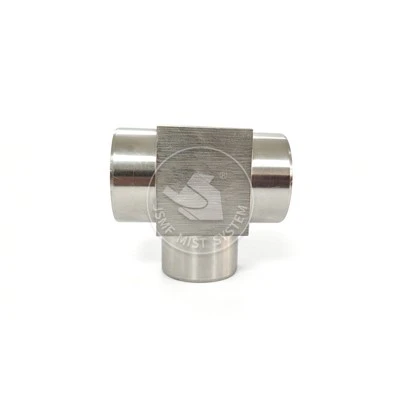
Whether you’re using these fittings in construction, manufacturing, or any other industry, the quality of the welds can make a big difference. A poor – quality weld can lead to leaks, structural failures, and costly repairs. So, by choosing our welded connection fittings, you’re actually saving yourself from a lot of headaches down the road.
Let’s Connect
Mist Generator If you’re interested in our welded connection fittings, don’t hesitate to reach out. We’re always happy to talk to potential customers and answer any questions you might have. We can provide you with detailed product information, samples, and competitive quotes. Drop us a line and let’s start a conversation about how our products can meet your needs.
References
- ASME Boiler and Pressure Vessel Code
- AWS (American Welding Society) Standards
- Welding Handbook, published by the American Welding Society
Jinsheng Mist Forest-High Pressure Mist System
Jinsheng Mist Forest-High Pressure Mist System is one of the most experienced welded connection fittings manufacturers and suppliers in China, featured by quality products and low price. Please rest assured to wholesale bulk welded connection fittings in stock here and get pricelist from our factory. Customized orders are welcome.
Address: 109 Yonghong Road, Wenjiang District, Chengdu City, Sichuan Province, China
E-mail: 18190767523@163.com
WebSite: https://www.jswsmist.com/
