Hey there, let’s cut to the chase—if you’re here, you’ve probably seen those little kitchen faucet filters at the hardware store and wondered, “Wait, do they actually remove fluoride?” I get it—we run into this question all the time from folks scrolling through our website, asking if picking up one of our faucet filters will fix their water’s fluoride problem. And honestly? It’s not a yes/no answer. Let’s break this down like we chat with our customers over coffee, no stuffy jargon. Kitchen Faucet Filter
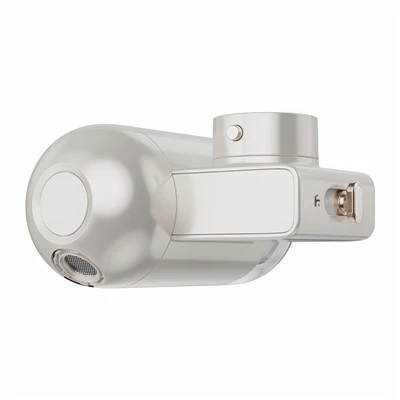
First, let’s get what fluoride even is, for anyone who’s a little fuzzy. Fluoride is a mineral that’s added to a lot of public water systems (some places naturally have it too) because dental associations say it helps prevent cavities—nothing crazy, right? It’s usually at levels between 0.7 and 1.5 mg/L, which is the EPA’s recommended limit for drinking water. But lately, more people are looking to cut back on extra fluoride—whether for personal preference, specific health concerns, or just wanting to control what’s in their tap. So the big question: does a kitchen faucet filter do that?
Here’s the thing: not all faucet filters are created equal. I’ll be honest—some of the cheap, slim filters that clip on to your faucet spout for $10? Yeah, they’re mostly for chlorine and sediment. They don’t touch fluoride at all. But if you’re looking at a properly made filter—like the ones we supply—things change. Let’s talk science, but keep it simple. Fluoride is a really small molecule, way smaller than chlorine or lead, so it’s not easy to trap. It’s also what’s called a “soluble” mineral, meaning it dissolves in water instead of sticking to particles, which makes it tricky for most regular filters.
So what types of faucet filters actually work on fluoride? Let’s list the only two that are proven. First, reverse osmosis (RO) systems—but wait, those are usually under-sink, not a faucet clip-on. But if you’re talking about a faucet filter, the second one is activated alumina. That’s a porous material that’s been treated to attract fluoride ions, kind of like a magnet. Our top-tier faucet filters use activated alumina cartridges, and third-party tests show they can remove up to 90% of fluoride, depending on your water’s initial level and how old your cartridge is. The other option is distillation, but that’s not a faucet filter—so scratch that.
I see a lot of misinformation online, though. Some brands will slap a “fluoride removal” sticker on a cheap carbon filter, and it’s just not true. Carbon filters are great for chlorine, bad for fluoride. I’ve had customers come to us after buying a “fluoride filter” that did nothing, because they picked the wrong one. That’s why we’re so upfront about our specs—we don’t overpromise. Our filters will remove fluoride, but only if you get the model with the activated alumina cartridge. The basic ones? They’ll still get your water tasting better, removing that weird chlorine aftertaste, but fluoride’s gonna stay.
Wait, let’s address a common concern: do you need to remove fluoride? I’m not here to debate dental health—like I said, it’s a public health win for a lot of people. But some folks, especially those with certain medical conditions, or who just want to avoid any extra additives, want the option. For those people, a good faucet filter is a solid middle ground between buying pricey bottled water (which isn’t great for the environment, by the way) and a big under-sink RO system that requires installation. Our filters are easy to swap out—you just clip the new cartridge in every 3-6 months, no plumber needed.
Let’s talk about how our filters stack up against other options. Bottled water is expensive over time, and even some bottled water still has fluoride—you can’t assume it’s removed. Under-sink RO systems are effective, but they waste a lot of water (like 3 gallons of water down the drain for every 1 gallon filtered) and they’re bulky. Our faucet filters? They attach right to your existing faucet, no modifications, use way less water, and if you get the right model, they take fluoride out. It’s a win for most households that don’t want to commit to a big system.
But let’s get real about limitations, too. No faucet filter—not even ours—will remove 100% of fluoride. The EPA’s max is 4 mg/L, and our filters work best on levels up to that. If your water has way more than that (like from a private well that’s naturally high in fluoride), you might need a stronger system. But for most people on public water, those 0.7-1.5 mg/L levels? Our filters knock most of it out. Also, if you don’t replace your cartridge on time, the activated alumina gets clogged up and can’t trap fluoride anymore. That’s why we send a reminder when it’s time to swap—we’ve seen too many people forget and wonder why their filter stopped working.
I should also mention lead, because a lot of folks ask about that too. Our filters remove lead too, right? Well, the basic ones do, but the activated alumina ones do as well—lead is another small metal that sticks to that porous material. So if you’re worried about both, picking our multi-stage filter makes sense. It’s not just one thing it removes; it’s a whole bunch of stuff that makes your tap water better tasting and cleaner.
Wait, let’s clear up another myth: some people think faucet filters are a scam. No, they’re not—if you buy the right one. I’ve used our own filters at home for years. My kid used to complain about the “chemical taste” of tap water, and now they’ll drink a glass straight from the faucet. And I know from customer reviews that a lot of people switch because they noticed the difference in taste and, for those targeting fluoride, the peace of mind.
If you’re on the fence, here’s a quick check: look for the filter’s NSF certifications. NSF is the independent organization that tests water filters to make sure they do what they say. If a faucet filter has NSF 53 certification for fluoride removal, that’s the real deal. A lot of no-name brands skip that testing, so their claims are just marketing. We make sure all our fluoride-removing models have that certification—no shortcuts.
So to circle back: will a kitchen faucet filter filter out fluoride? It depends on the filter. The cheap, basic ones? Nah. The ones with activated alumina (that have NSF 53 for fluoride)? Yes, most of it. If you’re in the market for one, don’t just grab the first one you see. Figure out what you need—do you just want better tasting water, or do you want to target specific contaminants like fluoride?

We’re here to help, by the way. Whether you’re a homeowner looking for one for your kitchen, a small business, or someone who needs a bulk order, we can point you to the right model. We don’t do hard sales pitches—we answer questions, tell you the facts, no hype. If you’re tired of tap water that tastes off, or you want to cut back on fluoride in your home, reach out to our team to talk through your options. We’d rather you get the right filter than waste money on something that doesn’t work.
Filtered Rain Shower Head References:
- U.S. Environmental Protection Agency. (2023). Drinking Water Additives: Fluoride.
- National Sanitation Foundation International. (2022). Standard 53: Drinking Water Treatment Units—Health Effects.
- World Health Organization. (2021). Fluoride in Drinking Water: Guidelines for Drinking-Water Quality.
- Journal of Environmental Health. (2020). Efficacy of Activated Alumina Filters for Fluoride Removal in Residential Settings.
Dongguan Beyclean Environmental Protection Technology Co., Ltd.
Dongguan Beyclean Environmental Protection Technology Co., Ltd. is one of the most reliable kitchen faucet filter manufacturers and suppliers in China, featured by quality products and good service. Please rest assured to wholesale advanced kitchen faucet filter from our factory. Also, custom service is available.
Address: Building 2, No.8 Jinxing Road, Jinfenhuang Industrial Zone, Fenggang Town, Dongguan, Guangdong 523696, China
E-mail: info@beyclean.com
WebSite: https://www.beyclean.com/
