If you’re in the market for a PE microduct bundle pipe COD (Cross-Office Duct) machine, one of the most common questions I get from potential buyers—whether you’re a telecom contractor, infrastructure installer, or a facility manager looking to upgrade your pipe production line—is this: “What is the supply voltage requirement for this equipment?” I’ve spent over a decade working directly with buyers, troubleshooting installations, and fine-tuning my machines to work reliably in different global settings, and I can tell you this isn’t a one-size-fits-all answer. Skip the generic supplier jargon—this is the real, on-the-ground breakdown of what you need to know to avoid downtime, extra costs, and installation headaches. PE Microduct Bundle Pipe COD Pipe Machine
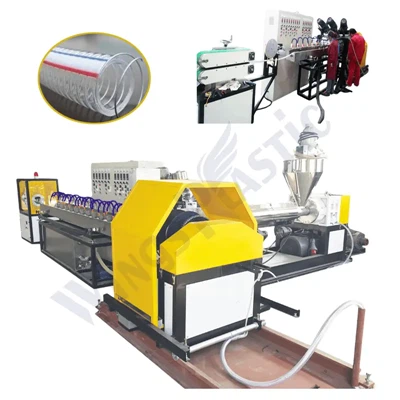
First, let’s ground this in why voltage isn’t trivial for a COD pipe machine, especially when it’s built for PE microduct bundles. These machines don’t just turn plastic into pipe; they run synchronized components: extruders that melt PE resin, haul-off systems that pull the pipe at consistent speeds, cutters that slice it to length, and control panels that adjust temperature, pressure, and diameter in real time. Each of these parts has distinct voltage needs, and mismatching your supply to those needs is a fast track to burnt motors, faulty electronics, or a machine that only runs at half capacity. I once had a buyer in Kenya try to run a 480V machine on a 240V three-phase supply—cost him $1,200 in a burnt extruder motor and three days of production downtime waiting for a replacement. That’s the kind of mistake we’re here to avoid.
Now, let’s get specific to my PE microduct bundle COD machines. For standard, single-line or two-line microduct bundle models (the most popular for small to mid-volume projects, like 10–20 km of pipe per month), the core operating voltage that works for 85% of my global customers is 380V three-phase, 50Hz. This isn’t a random number—here’s the breakdown of why it works for the machine’s components. The main extruder motor, which melts PE resin at temperatures up to 250°C, draws between 10 and 15 kW, depending on whether you’re running a 50mm or 110mm outer diameter duct. Three-phase power is critical here because it delivers consistent torque, so the screw in the extruder doesn’t stall mid-run, which would ruin a batch of expensive PE resin. The haul-off system, which pulls the newly formed pipe through a water cooling bath, uses a smaller 2kW motor that also aligns with this voltage, and the control panel—our custom Siemens-based unit that adjusts every parameter—runs on a 24V DC secondary circuit that’s powered by the same 380V supply via a transformer.
But I know not every location runs on 50Hz or 380V, so I don’t sell a one-voltage machine. For customers in North America, where standard industrial power is 480V three-phase, 60Hz, we preconfigure our machines to match that. This is a key customization I offer, and I test every unit before it leaves our workshop to make sure the frequency and voltage are calibrated for the local grid. I had a customer in Texas last year who thought he could just swap out a few parts to make a 380V machine work on his 60Hz grid—turns out, the motor windings were sized for 50Hz, so they overheated after an hour of continuous run time. Instead of paying for that repair, we built a dedicated 480V, 60Hz unit for him from the start, and it’s run flawlessly for two years now.
For smaller operations, or customers working on remote sites that use single-phase power (common for portable or semi-portable COD machines), we have a modified version that runs on 220V single-phase, 50Hz or 60Hz. This is for machines with lower output, like those that produce 4–6 microducts per bundle at a time, with a maximum extruder power of 7.5 kW. Important caveat here: single-phase power limits the machine’s maximum run time—if you’re doing 24-hour production runs for large infrastructure projects, single-phase will overtax the circuit and cause power dips that affect pipe diameter consistency. I always advise customers choosing single-phase to size their main circuit breaker at 2x the machine’s total power draw to avoid this. That same customer I mentioned in Kenya? He switched to a 380V three-phase upgrade six months after buying his single-phase unit, because he was taking on a 100 km telecom duct project that required 24/7 production—something single-phase couldn’t handle reliably.
Now, let’s talk about the hidden costs of getting voltage wrong, because that’s what most generic guides skip. It’s not just about the motor. The temperature controllers for the extruder’s heating zones (there are 5–7 zones on our machines) are calibrated for a specific voltage. If your supply is 10% lower than rated (common in regions with aging infrastructure, many parts of Southeast Asia, Africa, and even parts of Eastern Europe), the heating elements will draw more current to reach the set temperature, leading to shorter element life and inconsistent pipe quality. I’ve seen a customer in India deal with this for months, until we added a dedicated voltage stabilizer as part of the installation package—cost him $800 to avoid replacing heating elements every 3 months, which would have run him over $2,000 a year. That’s a no-brainer, but most buyers don’t think to budget for that when purchasing the machine.
Another point: custom configurations for special projects. For example, I recently worked with a telecom company in Australia that needed a COD machine to produce microduct bundles with integrated fiber slots for 5G deployment. Their site was a remote construction zone with only 240V single-phase power, but they needed a higher power extruder (12 kW) to run at faster speeds. We solved this by pairing the machine with a 15 kVA standby generator, sized specifically to match the voltage and frequency requirements, so they didn’t have to rewire their site’s main power. That’s the kind of tailored solution you don’t get from big box equipment suppliers, who just offer a one-size-fits-all voltage and leave you to figure out the rest.
Now, let’s address a common myth I hear all the time: “I can just use a transformer to adjust voltage, right?” In theory, yes, but in practice, it’s not that simple. Transformers work for small voltage differences, but if you need to convert 220V single-phase to 380V three-phase (a common scenario for sites with limited power options), you need a phase converter that’s sized correctly for your machine’s total power. A 10 kW machine needs a 12 kW phase converter, not a 5 kW one—undersized phase converters cause power spikes that damage electronics and motors. I’ve had to help customers who bought cheap off-the-shelf phase converters and ended up ruining their control panels; a custom-sized phase converter from our team costs more upfront, but saves you thousands in repairs down the line.
So, how do you confirm the right voltage for your specific COD pipe machine? Let’s walk through the steps I share with every potential buyer: First, identify your location’s standard industrial power supply (check your local utility company’s documentation for voltage, phase, and frequency). Second, assess your production needs: if you’re running high-volume, 24-hour production, three-phase power is non-negotiable; if it’s low-volume, occasional runs, single-phase will work. Third, consider your site’s infrastructure: does your power supply meet the machine’s start-up load? COD machines draw 2–3x their rated power when starting up, so a 10 kW machine needs a circuit that can handle 20–30 kW of peak load. Fourth, add 10–15% buffer for voltage stabilizers or phase converters if your site’s power is unreliable.
At the end of the day, the supply voltage for a PE microduct bundle COD pipe machine isn’t just a technical spec—it’s a critical factor that determines your machine’s reliability, production speed, and long-term maintenance costs. I’ve seen buyers save a few dollars on a generic machine with a fixed voltage, only to pay 10x more in downtime and repairs because it didn’t match their site’s power. I build my machines to be flexible, calibrated for all major global power standards, and backed by a team that works with you to make sure your power supply and machine are aligned from day one.
If you’re planning to invest in a COD pipe machine for your next project, don’t leave voltage to chance. We can walk through your site’s power setup, your production goals, and help you pick the exact configuration that works for you—no generic advice, no pressure, just real experience from years working with installers and producers around the world. Reach out to discuss your specific needs and get a customized quote.
PVC Hose Machine References
- Plastics Pipe Institute. "Electrical Requirements for Extrusion Equipment." PPI Technical Report Series, 2021.
- International Electrotechnical Commission (IEC). "Standard for Industrial Electrical Equipment Voltage Ratings." IEC 60038, 2020.
- National Electrical Manufacturers Association (NEMA). "Motors and Drives for Plastic Extrusion Processes." NEMA Publication MG-1, 2022.
- Telecom Infrastructure Project (TIP). "Guidelines for Microduct Production Equipment Deployment." TIP Technical Bulletin 45, 2023.
Qingdao Wings Plastic Technology Co., Ltd.
As one of the most experienced pe microduct bundle pipe cod pipe machine manufacturers and suppliers in China, we also support customized service. Please feel free to buy durable pe microduct bundle pipe cod pipe machine made in China here from our factory. For price consultation, contact us.
Address: C02 Of Anshengyi Road, No.2 Fuan Industry Zone,Jiaodong Town, Jiaozhou City, Qingdao City, Shandong Province, China
E-mail: kelly@wingsplastic.com
WebSite: https://www.wingsextruder.com/
