If you’ve ever picked up a carton of fresh milk, 100% fruit juice, or plant-based milk from a grocery store shelf, you’ve held the end result of a piece of equipment most of us never give a second thought to: a carton filling machine. As a filling machine supplier who’s worked in this industry for over a decade, I get asked all the time, “What exactly is a carton filling machine, and why does it matter so much for my business?” It’s a fair question—for small craft beverage startups just scaling up and large CPG brands looking to streamline production, this piece of equipment isn’t just a “machine”—it’s the bridge between a well-crafted product and a package that stays safe, appealing, and compliant for months on store shelves. Filling Machine
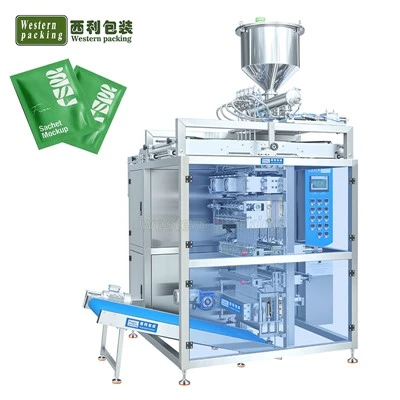
Let’s start with the basics. A carton filling machine is an automated industrial system designed to fill, seal, and often label carton-style containers with liquid or semi-liquid products, tailored for industries like dairy, juice, plant-based beverages, broth, and even liquid food products like soups or sauces. Unlike generic bottle fillers, carton machines are built specifically for the unique structure of gable-top cartons, aseptic brick cartons, or tetra cartons—those rigid, foldable containers with paperboard layers lined with plastic or aluminum to keep contents fresh without refrigeration, for example.
What I’ve learned over the years is that not all carton filling machines are the same. They’re categorized by two key factors: the type of carton they work with (aseptic or non-aseptic) and their production speed. Aseptic carton filling machines, which are the workhorses for long-shelf-life products like UHT milk or shelf-stable fruit juice, operate in a sterile environment. That means every part of the system—from the carton forming station to the filling nozzle—gets sterilized before production, so products don’t need refrigeration to stay safe. Non-aseptic machines, on the other hand, are for products that require cold storage, like fresh dairy milk or cold-pressed juice. These don’t need the same level of sterile pre-production because the final product is kept chilled from factory to store.
Speed matters too, depending on your business size. For a small craft juice brand making 500 cartons a day, a semi-automatic carton filling machine might be perfect. It’s operated by a small team, requires manual loading of empty cartons, and can output anywhere from 50 to 500 cartons per hour. But for a large dairy plant producing 100,000 cartons an hour, a fully automatic high-speed aseptic carton filling machine is non-negotiable. These machines integrate carton forming, filling, sealing, and even coding all in one continuous line, with minimal human intervention—reducing waste and speeding up production to meet big retail orders.
Now, let’s get into the mechanics, because that’s where the value really comes in. A carton filling machine isn’t just a funnel for liquid. It’s a multi-step process that turns flat, stacked carton blanks into ready-to-sell packages. Let’s break down a typical cycle, using an aseptic machine as an example:
First, the carton forming station. Flat, sterilized paperboard blanks are fed into the machine, where they’re folded into their familiar shape—like a gable top or rectangular brick. Adhesive seals the sides and bottom of the carton as it forms, so it’s leak-proof before any liquid is added. This step is critical; a poorly sealed carton will leak during shipping, leading to product loss and unhappy customers.
Next comes the filling station. This is where precision is key. Aseptic machines use sterile filling nozzles that dispense a measured amount of product into each carton, often with a slight overfill that’s then sealed under pressure to push out any air. For non-aseptic machines, the filling is done in a chilled environment to preserve the product’s freshness. I’ve seen mistakes here get costly: too little product leads to customer complaints, too much means wasted product and extra material cost for overfilled cartons. That’s why a good carton filling machine will have volumetric or gravimetric filling technology to ensure accuracy within a 1% margin, no matter the speed.
Then the sealing and coding station. After filling, the top of the carton is sealed—either with a folded gable top (for gable cartons) or a heat-sealed flap (for brick cartons). Many modern machines also integrate a coding system here, which prints expiration dates, lot numbers, and nutritional information directly onto the carton, so you don’t need a separate labeling line. Some machines even add a secondary seal for extra leak protection, which is a big plus for products that are transported long distances.
One of the biggest misconceptions I hear is that a carton filling machine is only for large operations. That’s not true. A few years back, I worked with a small organic dairy in Vermont that started with a 500-cartons-per-hour semi-automatic machine. They made fresh, local milk, and their sales were small at first—just local farmers’ markets and a few grocery stores. As their product took off, they upgraded to a 2,000-cartons-per-hour machine, but they still use the original semi-automatic for a small line of specialty flavored milk for local cafes. The flexibility here is huge: a good supplier will offer machines that can scale with your business, instead of making you invest in a $1 million high-speed machine when you only need 500 cartons a day.
Another important part of a carton filling machine is its sanitation features. For food and beverage industries, compliance with FDA (in the U.S.) or EFSA (in the EU) regulations is non-negotiable. Aseptic machines must be able to withstand CIP (Clean-in-Place) processes, which use high-temperature steam or cleaning solutions to sterilize internal parts without disassembling the machine. Non-aseptic machines need easy-to-clean surfaces, no hard-to-reach crevices where bacteria can grow. I always tell customers: a machine that’s hard to clean isn’t just a hassle—it’s a risk for product contamination and regulatory fines that can shut down production.
What about waste reduction? That’s a big selling point for many businesses these days. A high-quality carton filling machine minimizes product waste by ensuring accurate fills, so you’re not pouring out expensive liquid because of overfills. It also cuts down on carton material waste: the forming process uses precisely cut blanks, so there’s almost no excess paperboard. For example, a gable carton machine I supply uses a nesting blank design that reduces material waste by 12% compared to older models, which translates to lower material costs over time.
Let’s talk about common use cases to make this more relatable. I had a client who makes cold-pressed green juice—they started with a small 500-cartons-per-hour non-aseptic machine because their juice has a 30-day shelf life when chilled. As they expanded to regional grocery stores, they switched to a 2,000-cartons-per-hour machine that’s integrated with a cold storage line, so they can keep the entire production chain at the right temperature. Another client is a baby food manufacturer that uses semi-rigid cartons for liquid toddler meals; their machine is tailored to handle thicker semi-liquid products, not just thin juice, with adjustable filling nozzles that don’t clog.
Now, if you’re in the market for a carton filling machine, there are a few key questions to ask yourself before buying. First, what type of product are you filling? Is it thin liquid (milk, juice) or thick (soup, yogurt drink)? That will determine the nozzle design and filling technology you need. Second, what’s your daily production volume? A machine that’s too slow will bottleneck your growth, and a machine that’s too fast will waste your money on unused capacity. Third, do you need aseptic or non-aseptic? That’s tied directly to your product’s shelf life and distribution: if you’re only selling locally, a non-aseptic machine is cheaper, but if you’re shipping cross-country or internationally, aseptic is necessary to avoid refrigeration costs.
As a supplier, I also emphasize after-sales support. A carton filling machine is a long-term investment—most last 10 to 15 years if maintained properly. That means you need a supplier who offers on-site installation, training for your team, and easy access to replacement parts. I’ve seen clients buy cheap, no-name machines that break down after two years, and the supplier is out of business, leaving them stuck with a $50,000 paperweight. That’s why I always recommend working with a supplier who has a track record in the industry, can reference clients in your niche, and offers 24/7 technical support for urgent issues.
Let’s address some of the pain points I hear from customers. One common one is changeover time—if you want to switch from filling 1L milk cartons to 500mL juice cartons, how long does that take? A good machine will have quick-change parts that let you switch between carton sizes in 15 minutes or less, instead of hours. Another pain point is energy efficiency: newer models use 30% less energy than older ones, which lowers your utility bills every month. I recently upgraded my own inventory to energy-efficient machines, and clients have told me that the savings add up to enough to cover the machine’s maintenance costs within a year.
At the end of the day, a carton filling machine is more than a piece of equipment—it’s a core part of your production and brand. It ensures your product reaches consumers in the same condition you intended, maintains compliance with food safety rules, and scales with your business as you grow. Whether you’re a startup just launching your first product or an established brand looking to upgrade your line, there’s a carton filling machine that fits your needs—you just have to find the right partner to help you select it.
If you’re ready to explore carton filling machine options that align with your production goals, production volume, and budget, reach out to connect for a detailed consultation. We can walk through your specific needs, answer any questions you have about machine types, speed, sanitation, and scalability, and help you find a solution that grows with your business.
Liquid Packaging Machine References
- Food and Drug Administration. (2022). Aseptic Processing and Packaging of Food. U.S. Department of Health and Human Services.
- European Food Safety Authority. (2021). Food Contact Materials: Paper and Board Packaging. EFSA Journal.
- Carton Packaging Association. (2023). Modern Carton Filling Machinery: Efficiency and Sustainability in Food Production.
Guangzhou Western Packing Co., Limited
Guangzhou Western Packing Co., Limited is one of the most professional filling machine manufacturers and suppliers in China, also supports custom service. With abundant experience, we warmly welcome you to wholesale durable filling machine at competitive price from our factory.
Address: No.3, Yilong street, Wulonggang, Zhongluotan Twon, Baiyun District, Guangzhou
E-mail: david@westernpacking.com
WebSite: https://www.westernpackingusa.com/
