If you’ve ever stood inside a new home, deck, or commercial building and wondered how those long, straight, super-strong wooden beams are put together, you’ve probably run into two big, often confused terms: structural composite lumber (SCL) and engineered wood beams. As someone who’s spent the last decade selling engineered wood beams, I get it—they sound like basically the same thing, right? Wrong. Mixing these two up could lead to a costly mistake for your build, so let’s break this down like I would over a coffee at our shop, no boring industry jargon required. Engineered Wood Beams
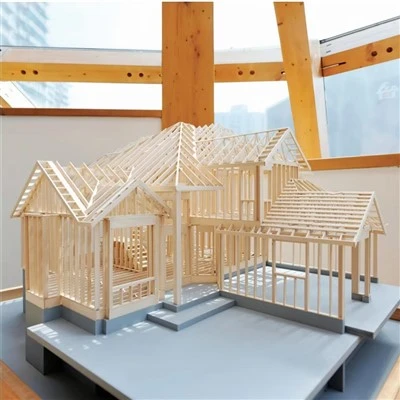
First, let’s start with the low-hanging fruit: what most people mean when they say “engineered wood beams.” At our company, that term almost always refers to I-joists, which are the workhorses of modern residential and light commercial framing. Yeah, I know you’ve heard that term before, but I bet you didn’t realize how different they are from SCL, which is what a lot of contractors accidentally call I-joists when they’re grabbing for specs. Let’s go deep on I-joists first because that’s what we supply every day, and it’s where most of the confusion starts.
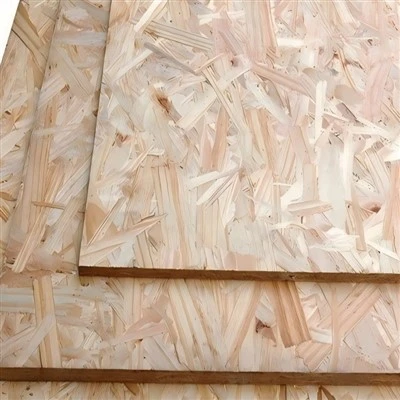
I don’t want to get too technical, but here’s the no-fuss breakdown of an I-joist: it’s literally shaped like the letter I, duh. The two top and bottom parts are called flanges—those are made from solid-sawn lumber, usually Douglas fir or spruce, right? The middle part, the web, is usually OSB (oriented strand board) or sometimes plywood. Unlike old-fashioned solid wood beams, I-joists are made in a factory, not cut straight from a big tree. That’s the key with all engineered wood, by the way: it’s made by combining wood fibers or solid wood pieces with adhesives (safe, formaldehyde-free ones these days, no need to stress about off-gassing) to create a product that’s stronger, more stable, and more consistent than regular solid wood.
Now, why do we love I-joists so much? They don’t have the crazy movement that solid wood does. You know how when you have a 2×10 that’s been sitting in the sun, it twists so bad you can’t even nail a straight stud to it? That’s because solid wood has inherent grain imperfections, knots, and it swells and shrinks with humidity. I-joists? The flanges and the web are layered so they don’t warp, twist, or sag nearly as much. Also, they’re way lighter than solid wood beams of the same strength. If you’re a contractor on a tight timeline, carrying a 30-foot I-joist is way easier than hefting a solid glulam beam of the same load capacity. Oh, and we can cut holes right through the web for plumbing, electrical, and HVAC lines—way easier than drilling a solid beam, which would weaken it. That’s a huge win for any build, whether it’s a new house or a small office addition.
Okay, now let’s talk about structural composite lumber, or SCL. This is where things get messy because SCL is a whole category of engineered wood products, not just one like I-joists. The main types of SCL you’ll hear about are LVL (laminated veneer lumber), LSL (laminated strand lumber), and PSL (parallel strand lumber). Let’s keep it simple, no fancy acronym deep dives: SCL is made by gluing together thin layers of wood (veneers, strands, whatever) in the exact same direction, so all the wood grain runs parallel to the length of the product. That alignment is what makes SCL super strong—stronger than solid wood, actually, for its weight.
Wait a second, so is SCL the same as engineered wood beams? Nope, not even close. Think of it this way: I-joists are a type of engineered wood beam, but SCL is a different, more specialized engineered wood product. Let’s use a food analogy to make this stick: if engineered wood beams are like sandwiches, SCL is like a single, super-thick slice of premium deli meat. An I-joist has two flanges (the “meat”) and a web (the “bread”)—it’s a composite of different materials shaped for a specific purpose. SCL is all one material, laminated together to be solid and strong throughout.
Let’s get specific about where you’d use each, because that’s what really matters for your project. If you’re framing a floor system for a single-family home, a second-story deck, or a small commercial space with spans up to 20 feet? Engineered wood beams (I-joists) are almost always the best pick. They’re affordable, lightweight, easy to work with, and their stability means you won’t get those annoying floor creaks that come with solid wood settling. We supply a range of I-joists for different spans and loads, so even if you need a 30-foot span for an open-concept great room, we’ve got you covered.
SCL, on the other hand, is for the heavy-duty stuff. You’d use LVL or PSL as headers over garage doors or window openings, or as ridge beams for roofs that need to support extra weight—like if you’re adding a second story on top of your house, or building a commercial warehouse. Because SCL is solid, it can hold way more weight without sagging over longer spans than I-joists can. You’d never use an SCL product as the main floor beam for a new home, though, because it’s more expensive and overkill for that application. That’s where the mix-up happens: contractors will grab an SCL header and accidentally call it an engineered wood beam, or vice versa, and end up with the wrong product for their main floor.
Another big difference to keep in mind: consistency. All engineered wood products are consistent, right? But SCL is even more so than I-joists. Since SCL is made from all parallel wood layers, there’s almost no variation in strength or size from piece to piece. I-joists can have slight variations in the web thickness or flange width, but that’s controlled in the factory. Solid wood, by comparison, can have knots that make it weaker in one spot, which is why we moved to engineered products in the first place.
Wait, let’s talk about sustainability too, because that’s a huge question we get all the time. Both SCL and engineered wood beams are way more sustainable than solid wood. When you make I-joists, you use smaller, fast-growing trees that would otherwise be too small for solid sawn lumber, and you even use wood scraps from other parts of the mill for the OSB web. SCL uses the same kind of fast-growing trees, because the thin veneers or strands can be made from smaller logs too. Neither product requires cutting down big, old-growth trees, which is a big plus for anyone trying to build green.
Let’s bust a myth here, because I hear this all the time: “Engineered wood is weaker than solid wood.” No, not anymore. The best engineered products, both I-joists and SCL, meet or exceed the strength of solid wood beams for their size. In fact, they’re often stronger because they don’t have the grain flaws that make solid wood weak. The only time solid wood is better is for very short spans where cost is the absolute bottom line, but even then, engineered wood is competitive.
So let’s recap the key differences to make sure you don’t mix these up: First, engineered wood beams (I-joists) are composite-shaped, with flanges and a web, made for medium spans and general framing. SCL is a solid, laminated product, made for heavy loads and short spans like headers. Second, their uses are totally different—you don’t use SCL for main floor beams, and you don’t use I-joists for a garage header that needs to hold a second story. Third, their consistency and strength profiles are different: SCL is more uniform and stronger for point loads, while I-joists are lighter and easier to cut for plumbing and electrical.
Now, if you’re planning a build, how do you know which one you need? That’s where we come in. All too often, contractors come to our shop saying “I need engineered wood beams” and end up grabbing the wrong product for their project. For example, if you’re framing a 25-foot main floor span for a new home, you need I-joists (our most popular product, by the way—we stock them in lengths up to 40 feet, no backorders like some big box stores). If you’re putting a header over a 12-foot garage opening that has a second story above it, you need LVL (a type of SCL) to hold that extra weight.
We’ve been supplying engineered wood beams for residential and light commercial builds for over a decade, so we’ve seen every mix-up in the book. Last year, a contractor came in thinking he needed SCL for a whole floor of a 1,800-square-foot home—we talked him through it, and he ended up with I-joists that saved him over $1,200 on materials, plus cut his installation time by two days. That’s the kind of value we bring, not just selling products, but helping you pick the right one for your job.
Another thing to consider: installation. I-joists are way easier to handle for most crews because they’re lighter. A 30-foot I-joist that can hold 50 lbs per square foot weighs around 30 lbs, while an SCL beam of the same load capacity would weigh double that. That means fewer people needed on the job, less time lifting, and less risk of injury. SCL is heavier, so it’s better for point loads where you don’t have to move it around a lot, like a header that’s pre-cut to size.
Let’s also touch on pricing, since that’s a big factor for most builds. Engineered wood beams (I-joists) are generally more affordable per linear foot than SCL for the same basic load. But if you need a heavy-duty SCL header, that’s cheaper than a solid wood beam of the same strength, and way cheaper than steel headers. So it’s not just about the per-foot price, but matching the product to the job to save money overall.
Wait, one more key difference: span limits. Let’s get specific here, no numbers that will confuse you. A standard 1-1/2 inch I-joist can span up to about 25 feet for a residential floor. An SCL LVL beam of the same depth can span up to around 35 feet, but wait—only if it’s supporting a heavy load. But if you’re just using it for a main floor where the load is lighter, an I-joist is more than enough, and cheaper. If you need a span over 35 feet, that’s when you might look at a custom SCL beam or even a glulam beam, but that’s way beyond what most residential builds need.
I can’t stress this enough: mixing up these two products is one of the most common, and most costly, mistakes we see. Last year, a homeowner tried to do a small addition himself, thought “engineered wood beams” meant SCL, bought SCL for his main floor, and paid $3,000 more than he needed to. He had to return half the order and get I-joists instead, which was a total headache for him. That’s why we always take the time to talk through your project, ask about span length, load capacity, and what you’re building, so you get exactly what you need, no extra cost.
So to wrap this up, let’s make sure you walk away with the basics: Engineered wood beams (specifically I-joists, the most common type) are composite, shaped like an I, perfect for medium spans and general framing where you need to cut holes for utilities. Structural composite lumber (SCL) is a solid, laminated product, made for heavy point loads like headers and heavy beams for short spans. They’re both engineered wood, they’re both way better than solid wood for most modern builds, but they’re not interchangeable.
If you’re planning a build—whether it’s a new home, a deck, an addition, or a small commercial space—and you’re not sure which product you need, don’t guess. Reach out to our team, tell us the details: how long is your span, what’s it supporting, is there plumbing or electrical that needs to run through it? We’ll help you pick the right product, answer all your questions, and make sure you don’t waste time or money on the wrong stuff. No pressure, no sales pitch—just real advice from people who work with these products every day.
Premade Houses References:
- American Wood Council. (2021). Engineered Wood Products: A Guide for Specifiers.
- Forest Products Laboratory. (2020). Structural Composite Lumber: Properties and Applications.
- National Association of Home Builders. (2022). Modern Framing Techniques: Engineered Wood Systems.
Zendekin Low-Carbon Technology Co., Ltd.
We are one of the most professional engineered wood beams manufacturers and suppliers in China. With abundant experience, we warmly welcome you to wholesale customized engineered wood beams from our factory. If you have any enquiry about quotation, please feel free to email us.
Address: Building 3, Yincheng INC Center, No.59 Tianyuan West Road, Jiangning District, Nanjing, Jiangsu, China.
E-mail: zdqeco@163.com
WebSite: https://www.zdqeco.com/
