Let’s cut to the chase: if you’ve ever installed or maintained a PV solar system, you’ve probably stared at a spool of thick, black solar cable and thought, “Okay, this works great for 25+ years, but what happens when it’s done?” As a PV solar cables supplier who’s been in this game for 8 years—answering the same question a dozen times a month from installers, maintenance crews, and even a few curious homeowners—I’m here to break this down without the stuffy jargon. Spoiler: the short answer is yes, but it’s not as simple as tossing your old phone charger in the recycling bin. Let’s get into the nitty-gritty. PV Solar Cables
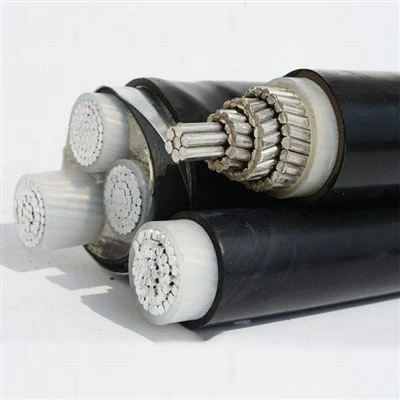
First, let’s talk about what makes PV solar cables special, because that’s why recycling them (or not, back in the day) was a headache. These aren’t your basic household extension cords. They’re built to survive 25+ years out in the elements: blistering desert heat, freezing Midwest winters, salt air near the coast, UV rays that would eat regular wiring alive. To pull that off, they’re a sandwich of different materials that stick together like glue—literally. The core is copper (which is the good stuff, worth mining for if you can pull it out), wrapped in a thin layer of insulation, then another layer of cross-linked polyethylene (XLPE) or EVA, then sometimes an outer jacket of polyolefin or even thermoplastic elastomer (TPE) that’s super tough. And here’s the kicker: they’re cross-linked, which means the plastic molecules are chemically bonded, not just melted together. That makes them way more durable… but also way harder to recycle, because standard plastic recycling relies on melting the plastic to reshape it. Cross-linked plastic doesn’t melt. It just burns or turns to char. That’s why, not long ago, most old PV cables were either sent to landfills or incinerated for energy—totally wasteful, and not great for the planet.
But things have changed a lot in the last 10 years. The solar industry exploded, and with that, so did the push to make every part of a solar system circular. More and more folks are waking up to the fact that copper in old PV cables is valuable—like, really valuable. Copper prices fluctuate, but right now it’s around $3.50 a pound, and each 1000-foot spool of 10AWG PV cable has about 20 pounds of copper. That’s not chump change. So why leave that in a landfill? That’s where specialized PV cable recycling comes in.
Let’s walk through how that actually works, because it’s not magic—though it feels like it sometimes. First, you don’t want to mix these cables with regular electrical waste, because that messes up the recycling process. When old systems get decommissioned, the right move is to set aside all the PV-specific cables (the ones running from panels to inverters, between panels, that big bundle going to the grid) and send them to a facility that does cable recycling, not just general plastic or metal recycling.
The first step there is usually mechanical processing. Most facilities use a shredder that grinds the cables into tiny bits—like, almost confetti-sized. Then they go through a separation system: sometimes air tables blow the light plastic bits away from the heavier copper bits, or they use electrostatic separators (since plastic and copper have different electrical charges) to pull the two apart. Wait, but what about that cross-linked jacket we talked about earlier? Oh, right—those facilities have figured out how to handle that now. The plastic leftover after copper separation is either burned in a controlled way to generate heat (for electricity or even to power the recycling plant itself) or broken down chemically into oil that can be turned into new plastic, though that’s still a newer, less widespread method.
But here’s the thing I always tell people: not all PV cable recycling is created equal. I’ve seen too many horror stories where installers send old cables to a “recycler” that just dumps them in a country with lax environmental rules. That’s not recycling—that’s outsourcing waste. That’s why I always make sure to tell our clients to look for certifications: things like the R2 Standard or e-Steward for electronics recycling, or even specific certifications for solar components. Also, ask if the facility can recover at least 95% of the copper—anything lower is probably just greenwashing, and they’re leaving money on the table too.
Now, let’s get real about the barriers. It’s not like every town has a PV cable recycling drop-off. Most installers I work with don’t have a big on-site storage bin for old cables, so they have to coordinate a pickup or find a local facility that will take them. For small-scale homeowners with a single panel system, that might mean paying a small fee to ship a few old cables to a recycler—though if the copper weight is enough, sometimes the recycler will actually pay you a little, which covers the shipping. It’s not as easy as dropping a bottle in a bin, but it’s doable, especially as more facilities pop up.
Also, let’s talk about new PV cables—how we’re making them easier to recycle from the start, which is something I’ve been super proud to be part of as a supplier. A few years back, all PV cables used that cross-linked XLPE jacket because it was the only stuff that lasted 25 years. But now, there are new materials coming out: thermoplastic jackets that aren’t cross-linked, so they can be melted and reused in standard plastic recycling. We’ve started stocking these “recycle-ready” PV cables for clients who prioritize end-of-life sustainability, and honestly, the performance is just as good as the old stuff—we’ve tested them against UV, heat, cold, all of it, and they still meet UL 4703 standards, which is the big safety cert for PV cables. The catch? They’re a tiny bit more expensive upfront, but over the life of the system, the recycling savings (not to mention the eco-friendly brownie points) make it worth it.
Wait, let’s address a common myth I hear all the time: “My PV cables have a little bit of lead or other chemicals, so recycling is bad.” Yeah, old cables might have had small amounts of additives to make them more weather-resistant, but modern PV cables use RoHS-compliant materials (that’s the EU’s Restriction of Hazardous Substances directive, and most countries have similar rules now). Those additives are regulated, so when recycled properly, they don’t leach into the environment. The whole “toxic” scare is mostly a holdover from 10+ year old cables, not the stuff we’re making and installing now.
I also want to talk about the circular economy angle here, because that’s what this is all about. The International Energy Agency says we’re going to need 8 terawatts of solar by 2030 to hit net-zero goals, which is a huge jump from the current 1 terawatt. That means a lot of new cables, and a lot of old ones coming out of systems that were installed in the 90s and 2000s. If we can build a robust PV cable recycling network, we don’t have to mine as much new copper or plastic. Mining copper is bad for the environment—lots of deforestation, water pollution, carbon emissions. Reusing copper from old cables cuts that mining demand by like 80%, from what I’ve read. That’s a big win, and it’s not something we can afford to ignore.
But let’s be honest: it’s not all perfect. The recycling rate for PV cables is still way lower than it should be. A 2022 study from the National Renewable Energy Lab (NREL) found that only about 10% of end-of-life solar components are recycled globally, and cables are a big chunk of that untapped waste. Why? Because the infrastructure is still new, people don’t know it’s an option, and there’s a lack of standardized processes. That’s why I’ve made it a point as a supplier to not just sell cables, but to educate our clients—installers, project managers, even homeowners—on how to recycle their old stuff. We send out a guide with every bulk order that has a list of certified recyclers in North America (and we’re expanding to Europe and Australia next year), and we even offer a discounted pickup service for large project decommissionings. It’s not just about selling products; it’s about taking care of the whole life cycle.
Wait, let’s get back to the question at hand: “Can PV solar cables be recycled?” The answer is a resounding yes, but with a few important caveats. You can’t just toss them in your curbside bin. They need to go to specialized recyclers that handle electrical wire, preferably certified ones that do it the right way. The copper and metal parts are almost 100% recoverable (that’s the good stuff), and the plastic parts are getting better to recycle every year. We’re also starting to see some closed-loop programs, where a cable company will take back their old cables, recycle them, and use the new copper and plastic to make new cables. That’s the holy grail, right? No more mining, no more waste, just a closed circle.

I’ll wrap this up with what I always tell anyone who asks. If you’re planning a new solar install, or you’re decommissioning an old one, don’t sleep on your cables. Ask your supplier about recycle-ready options, ask your installer if they have a plan for old cables, and if you’re a homeowner, don’t just throw those old spools in the garage. Send them to a recycler that actually does it the right way. And if you’re in the market for PV cables, come chat with us—we’ll walk you through all the recycling options, the certified recyclers we work with, and how we can make your system as sustainable from start to finish as possible. This stuff isn’t just a job for us—it’s about building a solar industry that doesn’t leave a mess behind, and that starts with every cable we ship.
Copper Core Cable References:
- International Energy Agency. (2023). Solar PV Recycling: Current Status and Future Directions. IEA Publications.
- National Renewable Energy Laboratory (NREL). (2022). End-of-Life Management for Photovoltaic Systems: Current Capabilities and Barriers. NREL/TP-5Q00-82147.
- R2 Solutions. (2021). R2 Standard for Responsible Recycling and Reuse of Electronic Equipment. Sustainable Electronics Recycling International.
- Solar Energy Industries Association (SEIA). (2023). Circular Economy for Solar: Best Practices for Component End-of-Life. SEIA Policy Report.
- European Commission. (2022). RoHS 2 Directive: Restriction of Hazardous Substances in Electrical and Electronic Equipment. Official Journal of the European Union.
Hebei Fengbo Electrical Equipment Co., Ltd.
Address: No.100 meters south, East Ring Road & Wei’er Road intersection, Huang’erying East Village, Jiajiakou Town, Ningjin County, Xingtai City, Hebei Province, China
E-mail: fonbocable@gmail.com
WebSite: https://www.fonbocable.com/
