If you’ve ever worked with surface-mount technology (SMT) components—like tiny resistors, capacitors, or ICs, you’ve probably run across paper carrier tape before. It’s that thin, structured strip with pockets that hold those parts, feeding them neatly into pick-and-place machines. But if you’re new to sourcing or testing these tapes, you might’ve wondered: what’s the deal with temperature resistance here? And as someone who’s been supplying paper carrier tape for years, I get so many questions about this—mostly from engineers dealing with SMT lines, who know too well that the wrong temperature can turn a whole batch of parts into a mess. Paper Carrier Tape
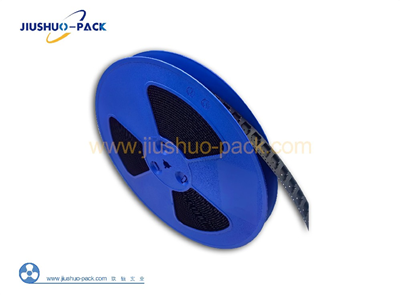
Let’s start with the basics: paper carrier tape isn’t just plain paper. It’s a specialized material, usually made from kraft paper with a coating (think polyethylene or acrylic) to add stiffness, prevent static, and keep the tape from falling apart during handling. That mix of paper and coatings is why its temperature limits aren’t one-size-fits-all—they depend on the grade of tape you’re using, the coating, and what you’re exposing it to.
First, let’s break down the common temperature ranges we deal with in day-to-day SMT and storage. Most standard paper carrier tapes we supply for regular SMT applications work fine between -10°C (14°F) and 80°C (176°F). Wait, that’s not a super wide range, right? That’s because below -10°C, the uncoated paper starts to get brittle—if it’s cold enough, it’ll crack when you pull it off the reel, and the pockets holding your parts might split. On the hot side, over 80°C, that polyethylene coating starts to soften. You don’t want that: soft coating means the tape can stretch, the pockets can warp, and worst of all, your parts might shift or fall out during processing.
But hold on—we don’t just carry standard tape. We have high-temperature grades too, right? For jobs where the SMT line uses lead-free soldering, which runs hotter (around 260°C peak reflow temperature), regular tape won’t cut it. Our high-temp paper carrier tapes use a heat-resistant coating, like a silicone-based acrylic, that can handle up to 150°C (302°F) without melting or warping. Wait, 150°F? No, 150°C. Yeah, that’s a big jump. But even that has a limit: if you expose it to 150°C for more than a few hours, the paper starts to degrade—its cellulose fibers break down, and the tape loses stiffness. So we always tell customers: that high-temp grade is for short, intermittent heat exposure (like a few minutes in a reflow oven), not for long-term storage in a hot warehouse.
Now, what about low temps? If you’re storing parts in a cold warehouse or shipping them somewhere with freezing temperatures, our standard tape can go down to -20°C (-4°F) if it’s got a proper moisture barrier coating. Wait, why the difference? Because plain uncoated paper is way more brittle in cold. The coatings we add act as a buffer, keeping the paper flexible even when it’s cold. But go lower than -20°C, and even that coated tape will get crumbly—we once had a customer who stored a batch of tape in a freezer for three weeks, and half the tape cracked when they tried to run it through the pick-and-place. Oops. That’s a mistake we see all the time.
Here’s a thing a lot of people miss: it’s not just the peak temperature, it’s the humidity too. Paper absorbs moisture, right? If your tape is damp, its temperature resistance drops. Damp paper breaks down faster at high temps, and in cold, damp paper can freeze and expand, making the tape warp. That’s why we always recommend storing paper carrier tape in a dry environment—20-25°C and 40-60% humidity is sweet spot. If you’re dealing with a really humid space, ask for our moisture-resistant grade—it’s coated with a thicker polyethylene barrier, so it holds up better to dampness, which in turn helps its temp performance.
Wait, let’s talk about real-world examples. Last year, a customer who makes automotive sensors came to us with a problem. They were using standard paper carrier tape to hold their ICs, and when their SMT line ran the lead-free solder, the tape would warp mid-process, causing the pick-and-place machine to miss parts. They tried raising the temperature a little to help the solder flow, which made the tape even worse. We swapped them to our high-temp grade, and adjusted their reflow profile to keep the peak temp at 140°C instead of 150, and that fixed the issue. No more warped tape, no more missed parts. That’s the kind of problem we deal with every day—helping people match the right tape to their temperature needs.
Another example: a small electronics startup was storing their prototype parts in a unheated garage over winter. They got standard tape, but the cold made the tape crack, and they lost a whole batch of parts. We sent them our low-temp grade, which handled the -10°C garage temps just fine, and they haven’t had a problem since. It’s the small details like that that matter.
Now, what about other factors that affect temperature resistance? Thickness of the tape, for one. Thicker tape (like 120 microns vs. 80 microns) will generally handle higher temps better, because there’s more paper and coating to hold its shape. Static discharge (ESD) is another one—if your tape isn’t ESD-protective, high temps can make that worse. Static build-up can cause the tape to stick to machine parts, or even damage your components, especially if you’re dealing with sensitive semiconductors. All our tapes are ESD-safe, so you don’t have to worry about that on top of temperature issues.
Wait, let’s clear up a common myth: some people think paper carrier tape can handle the same temps as plastic carrier tape. No way. Plastic (like polycarbonate) can handle up to 180°C, but it’s more expensive, and not as eco-friendly. Paper is biodegradable, cheaper, and works great for most applications—you just have to pick the right grade for your temp needs. That’s why we offer different grades: standard for general SMT, high-temp for lead-free reflow, low-temp for cold storage, and moisture-resistant for humid environments.
So, how do you know what temperature grade you need? Let’s break it down by use case:
- General consumer electronics SMT (regular solder, ~235°C peak reflow): Standard grade works. It’s cheap, flexible, and handles the normal line temps.
- Automotive or industrial electronics (lead-free solder, ~260°C peak reflow): Go with high-temp grade. It’s built to handle that extra heat without warping.
- Shipping or storage in cold climates: Low-temp grade. No more cracked tape when it’s freezing.
- Warehouse with high humidity: Moisture-resistant grade. Keeps the tape from degrading in damp, warm spaces.
Now, a question we get all the time: can you reheat paper carrier tape after it’s been exposed to cold? Like, if you’ve stored it in a cold place, can you warm it up to room temp before using it? The short answer is yes—but gently. Don’t blast it with a heat gun (that can make the coating bubble). Just let it sit in a room temp, dry space for 24 hours, and it’ll go back to its normal flexibility. If you try to use it straight from the cold, you’ll get cracks. That’s a quick fix that saves a lot of headaches.
Another thing: if you’re running a pick-and-place machine, make sure the machine’s temperature is set correctly too. Some machines run too hot, which can affect the tape even if it’s the right grade. We always work with customers to adjust machine settings if needed—small tweaks can make a huge difference in how the tape performs.
As someone who’s been in the paper carrier tape game for years, I’ve seen way too many people cut corners on temperature ratings, and it always comes back to bite them. A $100 batch of cheap tape might save you a little money upfront, but if it ruins $1000 worth of components, that’s not a good deal. That’s why we emphasize testing—we always recommend running a small batch first to make sure the tape works for your specific temperature conditions. We’ll even send free samples for testing, no strings attached.
So, to wrap this up: paper carrier tape’s temperature resistance isn’t a single number. It’s dependent on the grade, coating, thickness, and humidity. Standard tape works for most jobs between -10°C and 80°C, high-temp for up to 150°C short-term, low-temp down to -20°C, and moisture-resistant for damp environments. The key is to match the grade to your exact needs, and don’t forget storage conditions matter too.

If you’re not sure which grade is right for your project, or you’ve had issues with tape that can’t handle your line’s temperature, don’t hesitate to reach out. We can walk you through the options, send samples, and help you find a solution that works for your budget and your SMT process. No one-size-fits-all here—we tailor our tapes to what you need, because we know how important it is to keep your line running smoothly and your parts safe.
Reel and Tape Packaging Machine References:
- Handbook of Pulp and Paper: Raw Material and Production, Vol. 1; J. I. Kroschwitz; Wiley, 2001
- SMT Components Packaging & Handling Guidelines; IPC Association Connecting Electronics Industries, 2019
- Heat Resistance of Paper-Based Packaging Materials; TAPPI Journal, Vol. 92, No. 8, 2009
- Automotive Electronics SMT Process Best Practices; Society of Automotive Engineers, 2021
- Moisture Effects on Paper Carrier Tape Performance; Journal of Electronic Packaging, Vol. 135, No. 3, 2013
Dongguan Jiushuo Industrial Co., Ltd.
As one of the most professional paper carrier tape manufacturers and suppliers in China, we also support customized service. Please feel free to buy high quality paper carrier tape made in China here from our factory. Contact us for more details.
Address: 11th Floor, Building 2, Chuangfu Center, Chashan Town, Dongguan City, Guangdong Province, China
E-mail: sales06@zaidaiw.com
WebSite: https://www.carriertape-pack.com/
