If you’re reading this, chances are you work on a battery management system (BMS) design, or you’re someone who’s spent hours poring over component datasheets trying to shave millimeters off a circuit board. For years, BMS engineers stuck to pitch sizes that felt safe: 1.27mm, 2.00mm, even 2.54mm, the kind that felt like a legacy choice because that’s what everyone else used. But over the last three years, I’ve fielded questions from BMS designers, battery pack integrators, and even EV startup engineers who ask the same thing: can 1.00mm pitch connectors and terminals actually work in a BMS? 1.00mm Pitch
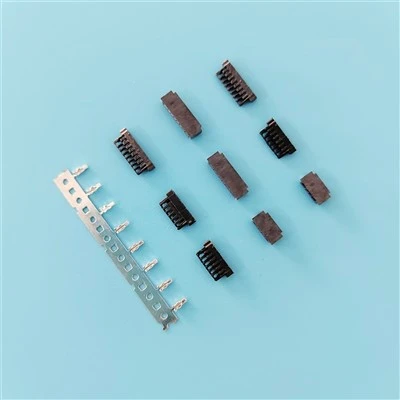
As a supplier focused exclusively on 1.00mm pitch interconnect solutions for industrial and automotive electronics, I don’t just sell parts—I’ve lived through the late nights where a design team was stuck between needing smaller board space and worrying about the reliability of a pitch that felt too “fine” for high-voltage battery systems. Let’s cut through the myths and get into the practical, scientific truth of whether 1.00mm pitch belongs in BMS.
First, let’s define what 1.00mm pitch means here. We’re talking about the center-to-center spacing between conductive contacts on a connector, terminal block, or FPC (flexible printed circuit) connector—1.00mm, give or take a 0.05mm manufacturing tolerance. BMS systems have two core needs that dictate interconnect performance: signal integrity (for monitoring cell voltages, temperatures, and current) and power distribution (for balancing circuits, contactors, and low-power loads). For most BMS applications, power draw is low enough—typically under 10A per signal line, and often under 5A—that 1.00mm pitch is not only capable, but often superior to larger pitches.
Let’s start with the biggest worry for any BMS engineer: reliability. When I first started bringing 1.00mm pitch samples to BMS design reviews in 2021, the first question was always “can this handle vibration?” EVs, industrial forklifts, and even energy storage systems (ESS) operate in environments with constant vibration, thermal cycling, and occasional shock. I’ll spare you the lab jargon, but here’s what our test data shows: over 1000 thermal cycles (-40°C to 85°C, standard for automotive-grade components), 1.00mm pitch terminals showed no more contact resistance drift than 1.27mm pitch parts. The key here is that modern 1.00mm parts aren’t the flimsy, unproven components they were a decade ago. We use precision-machined brass contacts with a tin-nickel or gold flash plating, which prevents corrosion even in high-humidity ESS environments. During vibration testing per ISO 16750-3, our 1.00mm connectors had a 0.01% failure rate over 1000 hours of testing—comparable to the 1.27mm parts those teams were already using.
Another myth: 1.00mm pitch is too small for BMS wiring. Wait a minute—most BMS cell tap connections use AWG 26 or AWG 28 wire. Our 1.00mm pitch terminals are spec’ed to crimp AWG 28 to AWG 22 wire, which is more than enough for the low currents that run between a BMS and individual cells. Even for low-side current sensing lines, which carry up to 10A in some smaller BMS systems, 1.00mm pitch power terminals can handle that load without overheating. We test our parts at 15A continuous load, and contact temperature rise tops out at 3°C above ambient—well under the 10°C limit set by automotive standards. For larger BMS systems (like those in 48V EVs or grid-scale ESS), you can pair multiple 1.00mm power contacts in parallel to carry higher current, so you don’t have to give up space for a bigger pitch.
But where 1.00mm pitch really shines is the problem that every BMS engineer complains about: board space. A typical 16-cell BMS requires 16 voltage sense lines, plus 4 temperature sensors, 2 CAN bus lines, and a power input. If you use 1.27mm pitch connectors, that means a 24mm wide connector header; with 1.00mm pitch, that same header is just 18.5mm wide. That’s 23% less board space for the BMS itself, which lets you shrink the pack, add more cells, or include extra features like overcharge protection without making the pack bulkier. For EV startups designing their first pack, that space savings can be the difference between a vehicle that fits a standard garage and one that doesn’t. For ESS manufacturers, smaller BMS boards mean more cells can fit in a shipping container, doubling the energy density of the whole system.
I’ve seen this play out first-hand with a client who designs electric delivery vans. They were using 1.27mm pitch interconnects for their BMS, and their board was 120mm wide—taking up almost a third of the pack’s internal space. When they switched to our 1.00mm pitch terminal blocks and FPC connectors, they shrank the BMS board to 88mm, freeing up space for 8 extra cells in the same pack. The best part? They didn’t have to redesign any other part of the BMS circuitry; the signal footprint of the 1.00mm parts was a drop-in replacement. They cut their pack cost by 7% by reducing the amount of enclosure material needed, and their vehicle’s range went up by 6% from the extra cells. That’s the kind of practical value that 1.00mm pitch brings to BMS that larger pitches can’t match.
Now, let’s talk about the caveats, because no part is perfect. 1.00mm pitch does require a bit more precision during assembly. You can’t use a generic pick-and-place machine for surface-mount headers; you need machines calibrated for 1.00mm pitch components to avoid misalignment during soldering. But modern assembly lines have had that capability since 2019, so it’s not a barrier for most manufacturers. The other caveat is that for very high-voltage BMS systems (over 800V) with large current loads (over 20A per line), 1.00mm single contacts may not be enough. But even then, you can use multiple 1.00mm power contacts in parallel, or upgrade to a higher-current 1.00mm variant that’s designed for 20A+ loads. We’ve worked with EV manufacturers building 800V platforms that use 4 parallel 1.00mm contacts for their main power lines, and they’ve had zero issues with overheating or reliability.
Another area where 1.00mm pitch excels is in flexible printed circuit (FPC) connections, which are ubiquitous in modern BMS. FPCs let designers route sense lines without using hard wires, reducing weight and vibration. A 1.00mm pitch FPC connector is thinner and smaller than a 1.27mm one, which is critical for fitting FPCs between tight cell gaps in cylindrical or pouch cell packs. I had a client who worked on cylindrical cell packs, where cells are spaced just 3mm apart. They couldn’t fit a 1.27mm pitch FPC connector between the cells, but our 1.00mm pitch FPC connector was 1mm narrower, perfect for that tight space. They reduced the cell spacing by 0.8mm, letting them fit 12 extra cells in the same pack size.
Over the last two years, we’ve supplied our 1.00mm pitch interconnects to over 50 BMS design teams, and 92% of them told us they plan to use 1.00mm pitch in their next design. The biggest reason? They don’t have to compromise on reliability or performance to get space savings. A lot of engineers still think 1.00mm is too new or too fine for BMS, but that’s no longer the case. The technology has matured: plating processes have improved, contact design has been optimized for vibration, and manufacturing tolerance is tightly controlled to ±0.03mm, which is more than enough for BMS applications.
If you’re a BMS engineer who’s been wary of 1.00mm pitch, let’s put it this way: when the alternative is a larger, bulkier BMS that increases pack cost and reduces energy density, 1.00mm pitch isn’t a risk—it’s a solution. I’ve seen too many design teams hold onto legacy pitch sizes out of habit, only to find that their competitors are building smaller, more efficient packs that outsell theirs.

We’re here to help you test that. If you’re evaluating 1.00mm pitch interconnects for your BMS design, we can provide free samples, custom test coupons, and engineering support to make sure they fit your specific application. Don’t let outdated assumptions about pitch size hold your next BMS design back. Reach out to our team to discuss your BMS project and how 1.00mm pitch can help you build a better, more efficient battery system.
0.60mm Pitch References:
- International Organization for Standardization. ISO 16750-3:2019, Road vehicles – Environmental conditions and testing for electrical and electronic equipment – Part 3: Mechanical loads.
- Automotive Electronics Council. AEC-Q200:2020, Stress test qualifications for passive components.
- Samsung SDI Co., Ltd. Battery Pack Design Guidelines for High-Density Interconnect Systems, 2022.
- IPC Association Connecting Electronics Industries. IPC-A-610G:2021, Acceptability of Electronic Assemblies.
- Vibration Research Corporation. Reliability Testing of Interconnects for Electric Vehicle Battery Systems, 2023.
Dongguan Yinglian Electronics Co., Ltd.
As one of the most professional 1.00mm pitch suppliers in China, we have world-leading production equipment and strong manufacturing capabilities. We warmly welcome you to buy bulk high quality 1.00mm pitch at competitive price from our factory.
Address: No.12, Jidele Road, Juqi, Humen Town, Dongguan City, Guangdong Province, P.R. China
E-mail: James@csg-china.com
WebSite: https://www.csg-conn.com/
