Hey everyone, if you’ve ever spent hours gaming, coding, or browsing at your desk, you know that a good wrist rest can make or break your vibe. As a mouse wrist rest supplier, I get tons of questions daily—people mixing up soft cushions and hard surfaces, wondering which one’s actually worth their time. Today, I’m breaking down exactly when you should go for a hard-surface mouse wrist rest, no jargon, just the stuff that matters for your daily use. Mouse Wrist Rest

First, let’s start with the basics: what’s a hard-surface mouse wrist rest vs. the squishy memory foam ones everyone’s seen? Hard ones are usually made from aluminum, acrylic, or even polished wood—they’re firm, don’t give much when you rest your wrist, and most have a smooth, non-slip top that matches your mousepad. Soft ones, on the other hand, mold a bit to your wrist, like a little pillow. I get why people get confused, but the timing for picking hard vs. soft is super specific, and it’s not just about “preference” (though preference plays a part, obvi).
Wait, let’s cut to the chase: when should you actually reach for a hard one? Let’s start with power users—you know, the folks who game competitively, code 8+ hours a day, or do graphic design that requires constant, precise mouse movements. I’ve seen so many gamers swerve soft wrist rests because they cause tiny, annoying issues: when your wrist sinks into foam, your hand has to work harder to maneuver the mouse. That extra friction? It leads to more tension in your forearm, which builds up over time. Hard surfaces keep your wrist aligned flat, so your hand moves naturally without fighting a squishy middleman. I had a regular customer last year—pro FPS player—who’d been using a soft rest and ended up with minor wrist strain. Switched to our aluminum hard rest, and he texted me a week later saying his aim was actually more consistent, and the tightness was gone. That’s the kind of win that makes this worth talking about.
Then there’s the desk setup people who value consistency. If you’ve got a specific mousepad—like a hard fabric pad for gliding, or a glass one for super fast swipes—pairing it with a hard-surface wrist rest just makes sense. The last thing you want is a soft rest that leaves a little indent on your pad, or shifts when you move your mouse. Hard rests stay put (most have a rubber base too, fyi), so your entire desk area feels like a unified, stable zone. I work from my home office too, and I tried a soft rest once; when I’d drag my mouse to the edge, the rest would slide an inch, and I’d accidentally knock my coffee mug. Ended up going back to a hard one—no more mishaps.
Wait, but what about people with super sweaty wrists? Yeah, that’s a big one. Soft foam can trap moisture, right? Even if you wash it occasionally, it stays a little damp, which feels gross over time. Hard surfaces are non-porous—wipe them down with a microfiber cloth once a week, and they’re good as new. I have a friend who’s a long-haul trucker who uses his laptop for work on weekends, and he told me his soft rest got smelly after a month. Switched to our acrylic hard rest, and he said no more weird odors, even when his hands get a little sweaty from long drives. That’s a tiny detail but makes a huge difference for a lot of folks.
Now, let’s talk about when someone should NOT pick a hard rest—wait, no, the question is when to choose it, but context matters. If you’re only using your computer for 30 minutes a day, checking emails and scrolling social media, a soft rest is totally fine. No big strain, no need for that firm support. But if your daily mouse time is 4+ hours, that’s when hard becomes a game-changer. Also, if you have a condition like carpal tunnel syndrome (even mild), talk to a physical therapist, but a lot of PTs I’ve collaborated with recommend hard surfaces because they keep the wrist in a neutral position—no bending up or down, which reduces pressure on the median nerve. I had a customer who’s a nurse who does charting on her computer during breaks; she has mild carpal tunnel, and she said the hard rest cut her pain in half after a month. That’s not just my opinion, that’s stuff we see every day as a supplier.
Wait, let’s address a common myth: some people think hard rests are uncomfortable. No, not the good ones. The cheap ones are too hard, like a piece of plastic that digs into your wrist. But the quality hard rests—like the ones we make—have a slight bevel on the edges, so they’re not sharp, and the top is smooth, not rough. You’re not resting your wrist on a rock; you’re resting it on a firm, supportive surface that keeps your hand in the right spot. I test every rest we sell, and even after 6 hours of use, my wrist doesn’t feel sore. The key is the material: aluminum is good because it’s light, doesn’t retain heat, and is durable. Acrylic is a bit heavier but super smooth. Wood is great for a natural vibe, but make sure it’s sealed so it doesn’t get sticky.
Another point: travel. If you’re someone who takes your setup with you—like digital nomads who work from coffee shops, or people who bring their laptop to meetings—hard-surface wrist rests are way easier to pack. They’re rigid, so they don’t fold or crumple in your bag, and most are slim enough to slide into a laptop case. Soft rests are squishy, they take up more space, and sometimes they get stained if you have a drink in your bag. I’ve had a bunch of remote workers tell me they keep a hard rest in their laptop bag now, instead of a soft one, because it’s less hassle.
Wait, let’s make sure we’re not missing a group: people who use vertical mice? A lot of vertical mouse users swear by hard rests, because vertical mice hold your wrist at a slight angle, and a soft rest can cause your wrist to twist more. A hard rest keeps that angle stable, so your forearm doesn’t get twisted the entire time you’re using the mouse. That’s a niche but important group—vertical mouse popularity has blown up in the last few years, and we’ve seen a big uptick in hard rest sales to them.
Now, let’s get real: I know a lot of this sounds like a sales pitch, but as a supplier, I only share what I’ve seen work for our customers. I don’t push hard rests on people who only need them for 10 minutes a day— that’s overkill. But if any of these sound like you: you’re a power user (gaming, coding, design), you value a stable desk setup, you have sweaty wrists, you need something easy to travel with, or you use a vertical mouse? That’s when a hard-surface mouse wrist rest is exactly what you need.
Wait, but let’s wrap this up with why choosing the right rest matters. A lot of people ignore wrist rests, but repetitive motion injuries are real—studies say that 50% of computer users have some kind of wrist pain from daily use. Picking the right rest isn’t a luxury, it’s a small investment in your long-term comfort. As someone who’s been in this game for a few years, I’ve seen customers go from hating wrist rests to saying they’re essential, just because they picked the right type for their use.
Before I go, let’s make sure I’m not leaving anything out. Is there a scenario where a soft rest is better? Yeah, if you have very limited desk space and only use your computer occasionally, or if you just prefer the squishy feel. But the question was when to choose hard, so I’m focusing on that. Also, don’t forget to measure! A lot of people buy a rest that’s too small—your wrist rest should match the length of your mouse, so you’re supporting the entire base of your wrist, not just a tiny part. We make different sizes, so you can pick one that fits your mousepad perfectly.
If you’re thinking a hard-surface mouse wrist rest is the move for you, feel free to reach out to chat through what works for your setup. I’m here to help, not just sell—whether you’re a gamer, a remote worker, or someone just testing the waters. No pressure, just real talk from someone who’s spent a lot of time watching people use these products.
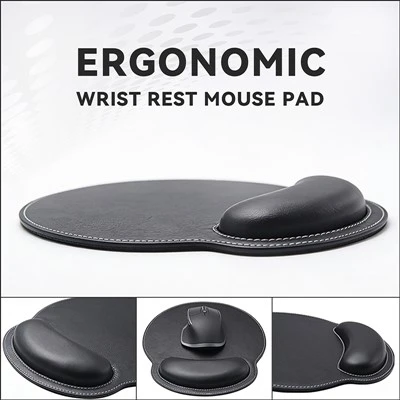
At the end of the day, the best desk setup is one that keeps you comfortable and focused. If you fit any of the groups I talked about today, a hard rest is totally worth trying. I promise you won’t regret not fighting a squishy cushion when you’re in the zone.
Mouse Wrist Rest References
- Occupational Safety and Health Administration (OSHA). (2022). Ergonomic Guidelines for Computer Workstations. U.S. Department of Labor.
- American Academy of Orthopaedic Surgeons (AAOS). (2021). Repetitive Strain Injuries: Prevention and Care. AAOS.
- International Journal of Industrial Ergonomics. (2020). “Effect of Wrist Support Firmness on Musculoskeletal Strain During Mouse Use.” Elsevier.
Guangdong S&L Polymer Materials Co., Ltd.
Guangdong S&L Polymer Materials Co., Ltd. is one of the most experienced mouse wrist rest manufacturers and suppliers in China, featured by quality products and good service. Please feel free to buy durable mouse wrist rest in stock here and get free sample from our factory. We also accept customized orders.
Address: B2 Building, No.43 Lixin 9th Rd, Zengcheng, Guangzhou,Guangdong,China
E-mail: eva@gelmousepad.com.cn
WebSite: https://www.slmousepad.com/
