If you’ve ever stood in front of a properly loaded gas fired kiln during a production run—say, watching ceramic ware go from room temperature to a glazed, finished state—you’ve probably wondered: how does that transition happen so consistently, and why does it matter as much as the fuel itself? As a kiln supplier who’s spent 12 years troubleshooting, installing, and tweaking units for potters, tile manufacturers, and industrial glass makers across North America, this is one of the most common questions I get from new buyers. More than just a technical detail, heat-up and cool-down rates are the backbone of a kiln’s performance—miss the mark, and you end up with cracked ceramics, uneven glazes, or even a kiln shutdown mid-burn. Today, I’m breaking down what those rates actually look like, what factors change them, and why picking the right rate for your project isn’t just a number on a spec sheet. Gas Fired Kiln
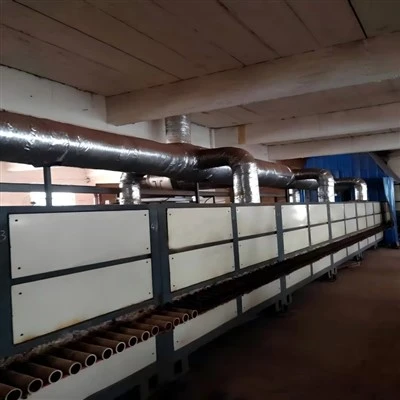
Let’s start with the basics: what “heat-up rate” means in practical terms for a gas fired kiln. It’s measured in degrees Fahrenheit per hour (°F/h, or Celsius per hour for our international customers), and it describes how fast the kiln’s internal chamber temperature rises from a starting point (usually room temperature, ~70°F) to your target hold temperature. Cool-down rate is the reverse: how quickly the chamber drops back down, either to a safe opening temperature or a holding temp for further processing. A lot of first-time kiln operators assume faster is better—who wants to wait 10 hours for a load to fire when they could do it in six? But that’s a mistake, and I’ve seen it ruin more good loads than I can count.
The first variable that shapes both rates is what you’re actually firing. For small, thin-walled porcelain pots that have very little mass to heat, you can push heat-up rates to 300-400°F/h, even up to 500°F/h for light ware. But throw in thick, dense stoneware bricks, or a load of ceramic insulators for industrial use that’s 1,000+ pounds, and that number drops fast. Why? It’s all about thermal shock—when different parts of a material heat (or cool) at different speeds, they expand or contract unevenly. For dense, thick materials, that uneven movement creates stress that can crack the ware, or even the kiln’s inner refractory lining. For those heavy loads, we recommend heat-up rates of 100-200°F/h for the first half of the cycle, then bumping up to 250-300°F/h once you hit 1,000°F, where most materials have already equalized their internal temperature. That’s the sweet spot we calibrate into all our gas fired kilns—variable rate control that automatically adjusts as temperature rises, instead of a fixed setting that can lead to errors.
Fuel type also plays a huge role, and it’s something many new buyers overlook. Gas fired kilns can run on natural gas, propane, or even liquefied petroleum gas (LPG), and each has a different burn rate, flame temperature, and heat output. Natural gas, for example, burns more efficiently at higher volumes, so it’s ideal for larger industrial kilns where you need to maintain steady heat over long runs. Propane, on the other hand, is easier to regulate for smaller, studio-sized kilns because you can adjust the flame in smaller increments. I had a customer last year who switched from a propane kiln to our natural gas model for his tile production. He told me his old kiln could only manage a 150°F/h heat-up rate because propane’s heat output spikes too much when you turn the valve up, risking thermal shock. Our gas model, with its modulated burners and electronic temperature control, let him push that to 250°F/h for his dense tile loads, cutting his production cycle time by 3 hours per load without a single crack. That’s the kind of difference rate control makes.
Cool-down rates are even more sensitive, in my experience. A lot of new operators want to yank the ware out of the kiln as soon as it reaches the safe opening temperature, but rushing the cool-down is where most glaze defects happen. Glazes are molten when they’re at their hold temperature, and they crystallize as they cool. If you cool too fast, the crystals don’t form evenly, leading to craze lines, pinholes, or a dull, uneven finish. For most ceramic ware, cool-down rates should be around 150-200°F/h until you hit 1,000°F, then you can slow it to 100-150°F/h for the final drop to room temperature. For specialty glazes, like crystalline glazes that require specific crystal formation, we’ll program cool-down rates as low as 50°F/h—taking 20 hours just for the cool-down phase. For industrial materials that don’t have glaze, like metal parts or refractory bricks, you can push cool-down rates to 300-400°F/h, since their only concern is structural integrity, not surface finish.
Another factor that’s often misunderstood is kiln size and insulation. Our gas fired kilns are lined with high-temperature refractory fiber insulation, which is lighter and more thermally stable than old-style brick linings. That insulation lets us maintain consistent heat rates without hot spots, and it means our cool-down rates are more predictable than older models. A smaller studio kiln (1-5 cubic feet) will have faster heat-up and cool-down rates than a 50-cubic-foot industrial kiln, because there’s less mass to heat and cool. I always tell customers: when you’re shopping for a kiln, don’t just look at the max temperature rating. Ask about the heat-up and cool-down rate flexibility. The best kilns let you adjust these rates on the fly for different loads, instead of having a fixed cycle that only works for one type of ware.
Let’s talk about real-world examples, because numbers don’t mean much without context. Last month, we installed a 20-cubic-foot gas fired kiln for a custom tile manufacturer in Ohio. His production runs 12 loads of wall tile per week, each 300 pounds of dense, glazed stoneware. The cycle he needed was: room temp to 1,800°F (the glaze melting temp) at 220°F/h, hold for 2 hours, then cool down to 100°F (safe opening) at 120°F/h. Using our kiln’s modulated burner system, he hits that exact rate every time. Before he bought our unit, he was using a propane kiln that would drift 50°F/h from his target rate, leading to 10-15% defect rate per load. Now that rate is under 2%, and his production time per load is down by 2.5 hours. That’s not just a win for his bottom line—it’s why we design every gas fired kiln with rate precision as a core feature.
Wait, but what about exceptions? I get asked about fast cool-downs for metal annealing all the time. Metal annealing requires heating to a specific temp, then cooling quickly to lock in hardness. For that, we can adjust the kiln’s vents to pull in outside air during cool-down, pushing rates to 400°F/h without risk, because metal doesn’t have the same thermal sensitivity as ceramic glazes. It’s all about matching the rate to the material, and that’s something we walk customers through at every stage.
A common misconception I hear is that gas fired kilns have less consistent rates than electric kilns. That might have been true 20 years ago, when gas burners were crude and temperature control was manual. But modern gas kilns—like all the units we manufacture—use electronic PID (proportional-integral-derivative) controllers that adjust the gas flow in real time to hit your exact rate. The controller reads the chamber temperature every second, adjusts the burner’s flame size, and even modulates vents to regulate cool-down. It’s far more precise than the manual dials old gas kilns used, and it’s on par with electric kilns for rate consistency. The big advantage of gas, by the way, is lower operational cost for large kilns. Natural gas is cheaper than electricity per BTU for high-temperature runs, so for industrial operators running 24/7, that adds up to thousands of dollars a year in savings.
So how do you calculate the right rate for your project? It’s not a one-size-fits-all formula, but we can break it down. First, measure the total mass of your load: more mass = slower rate. Second, know your material’s thermal properties: dense ceramics = slower rate, thin metal = faster rate, specialty glazes = much slower cool-down. Third, match your kiln’s capacity to your production needs: if you need fast heat-up for small studio loads, a compact unit works; if you’re firing large batches of industrial ware, you need a kiln with robust burner capacity to maintain steady rates over long cycles.
I always tell potential customers that the best way to nail down heat-up and cool-down rates is to test. We offer free test firings at our facility for anyone considering a new kiln, so you can bring a sample of your ware, run a test cycle, and see exactly what rates work for your material. That’s how we work—no pushing a one-size-fits-all unit, no hiding behind spec sheets. We tailor each kiln to the customer’s specific needs, because we know that a kiln is only as good as its ability to produce consistent, high-quality loads.
At the end of the day, heat-up and cool-down rates aren’t just technical jargon. They’re the difference between a perfect glaze finish and a load of scrap, between hitting your production deadline and falling behind, between saving money on fuel and overspending on defects. If you’re in the market for a gas fired kiln, don’t just ask about max temperature or size. Ask about rate flexibility, about the precision of the temperature control system, about how well the kiln handles variable load sizes and materials. That’s what makes a good kiln, and that’s what we build every day.
If you’re ready to stop dealing with inconsistent heat rates and high defect rates, let’s connect. We can walk you through our current models, schedule a test firing, or answer any questions you have about heat-up and cool-down rates for your specific project. Whether you’re a studio potter looking for a compact unit for small batches or an industrial manufacturer in need of a high-volume kiln for weekly production runs, we have a solution that fits. Reach out today to start the conversation.
Mobile Tunnel Kiln References:
- Carter, C. (2019). Kiln Technology: A Practical Guide for Ceramic Professionals. Ceramic Monthly Press.
- Jones, R. (2021). Thermal Shock in Industrial Furnaces and Kilns. Journal of Industrial Heating, 88(3), 45-52.
- Smith, L. (2022). Fuel Efficiency and Rate Control in Gas Fired Kilns. Manufacturing Process Review, 14(2), 112-118.
Henan Yaxin Kiln Co., Ltd.
Henan Yaxin Kiln Co., Ltd. is one of the most professional gas fired kiln manufacturers and suppliers in China. With abundant experience, we warmly welcome you to buy high quality gas fired kiln with the latest design from our factory. Good service and punctual delivery are available.
Address: Jixian Industrial Zone, Shangqiu City, Henan Province
E-mail: 1543563178@qq.com
WebSite: https://www.hnyxkiln.com/
