If you’ve ever stood in a high-rise building, pressing a floor button and watching your elevator glide smoothly, accelerating gently and stopping exactly level with the lobby, you’ve relied on a small, unassuming component: the elevator encoder. As someone who’s spent the last 12 years selling and troubleshooting these devices, I can tell you that this is not a tiny part. It’s the elevator’s nervous system, and if it doesn’t operate reliably in the harsh conditions of elevator shafts and machine rooms, nothing else on the lift matters. Over the past decade, I’ve seen too many projects derail because a supplier cut corners on environmental specifications, leading to downtime, customer complaints, and thousands in repair and lost revenue. So let’s break down exactly what environmental requirements an elevator encoder needs to meet, why each rule exists, and what that means for you when sourcing a part that can’t afford to fail. Elevator Encoder

First, let’s set the context. Elevators live in spaces that most of us never see. Some shafts run from the ground level of a 100-story building up to the roof, exposing the equipment to extreme temperature swings: from below freezing in a northern building’s winter to over 120°F in a penthouse shaft baking in summer sun. Machine rooms, often tucked away on the top floor or in a utility closet mid-building, aren’t climate-controlled like your office. They can get sweltering from the elevator’s drive motor running 10 hours a day, or damp if there’s a plumbing leak in a floor above. Then there’s dust, humidity, moisture, and even physical shock from a lift that’s occasionally misaligned or hits a soft stop. Encoders aren’t built for living rooms or server rooms—they’re built for these industrial, often unforgiving environments, and that starts with temperature range.
I’ve lost count of how many customers come to me with an encoder that worked fine for a few months then died, blaming “factory defects” when the real issue was a temperature rating that was too narrow. Many off-the-shelf encoders are rated for consumer or light industrial use, usually from 0°C to 70°C. That’s perfect for a desktop printer or a lab scale, but not for an elevator shaft. Let’s do the math: in a city like Chicago, a rooftop shaft in January can drop to -20°C. The encoder inside the drive motor, which is generating its own heat even when the elevator is idle, can swing between -25°C at night when the building is unoccupied and 85°C during the summer when the lift is running back-to-back during morning rush hour. If your encoder is only rated to 70°C, it will fail in that heat—period. I learned this lesson the hard way 10 years ago, when a client in Detroit bought a discount encoder from a generic supplier for 10 of their service elevators. By July, four had to be replaced mid-month because their internal circuits fried. We had to cover the costs as their supplier, not because we sold them the wrong part, but because I hadn’t emphasized the temperature requirement enough. Now, for all our elevator encoders, we spec an operating temperature range of -40°C to 85°C, with a storage range of -55°C to 105°C. That 20-degree buffer on either end isn’t overengineering—it’s insurance. It’s for when the building’s HVAC system takes a day off, when a shaft is stuck in direct sun for a week, when a maintenance tech leaves a machine room door open in winter. Elevators don’t shut down when it’s cold or hot, so their encoders can’t either.
Next, humidity and moisture resistance. Elevators deal with water in ways most industrial equipment doesn’t. In coastal cities like Miami, salt air seeps into every opening, corroding metal parts and wreaking havoc on electronic circuits. In older buildings, leaking pipes above elevator shafts drip condensation down the walls, leaving a thin, persistent mist in the machine room. Even in drier climates, fire sprinkler systems are a required part of building code, and while they only activate in emergencies, a small amount of water vapor in the air means humidity levels can spike well above what standard encoders are built for. The standard IEC 60947-5-2 for industrial encoders specifies a maximum operating humidity of 95% relative humidity (RH), non-condensing. But wait—“non-condensing” is a fine line. If the temperature drops just a few degrees, that 95% RH turns into condensation, and water can get into the encoder’s housing, shorting out the circuit board. I’ve seen a customer in Tampa have three encoders fail in a single year after a heavy rainstorm flooded their lower machine room, seeping into the encoder mounted on the drive motor at eye level. That encoder was only rated for non-condensing humidity, and the water that pooled inside the housing when the temperature dropped overnight spelled disaster. For this reason, all our elevator encoders have an IP67 ingress protection rating. IP67 means the encoder is dust-tight (no particles can get inside, even fine dust that accumulates in shafts) and can withstand being submerged in up to 1 meter of water for 30 minutes. That’s not just for floods—it’s for wiping down the encoder during maintenance, for accidental spills, for that small burst of water vapor that condenses inside the housing if the temperature swings fast. We also coat every circuit board in a conformal coating, a thin polymer layer that repels moisture and salt, preventing corrosion even if a tiny amount of water does seep past the housing seal. I still have a client in New Orleans that’s had our encoders in operation for 7 years, through multiple hurricanes that left their machine rooms flooded for hours, and not a single encoder failure. That’s the difference between spec’ing for elevator environments and spec’ing for generic industrial use.
Dust and debris are another big one, and it’s often overlooked until it’s too late. Elevator shafts are not kept clean. Dirt, lint, small pieces of debris from construction, pollen, even rust from old elevator guides—all of these float up and down the shaft, and if the encoder’s housing has any gaps, they’ll work their way inside. Once inside, dust can accumulate on the encoder’s optical disc or magnetic read head, throwing off the position readings. An encoder that can’t tell where the elevator is will make it stop mid-floor, or slam into a landing, leading to passenger complaints, maintenance calls, and even safety hazards. I once got a frantic call from a property manager in a 25-story office building in Phoenix, where their elevators were stopping randomly at the 7th floor. We sent a tech out first thing in the morning, and when they pulled the encoder off the drive motor, it was covered in fine desert dust, so much that the read head couldn’t distinguish the disc’s markings. That encoder was only IP54 rated, which means it’s protected against splashing water but not fine dust. IP67 we specify eliminates that risk, because the dust can’t get inside the sealed housing. We also design our encoders with a smooth, unvented housing—no gaps, no vents that could let dust in, because vents also let moisture in, creating that same condensation issue we talked about. Some suppliers add vents to save on manufacturing costs, but for elevator encoders, that’s a tradeoff that doesn’t work. The small savings on production are dwarfed by the cost of encoder replacements and downtime.
Then there’s mechanical shock and vibration, two constants in elevator operation that you can’t avoid. Every time the elevator starts, stops, hits a floor, or even just runs at speed through the shaft, it generates vibration that travels through the drive motor to the encoder. A standard encoder rated for general industrial vibration might handle 5g of shock, but elevators are far rougher. The drive system can generate up to 20g of shock during a hard stop, and continuous vibration that averages 10g. If the encoder’s internal components aren’t secured properly, they’ll come loose over time, breaking connections or misaligning the read head. I saw this with a project at a university in Boston a few years back. The contractor used a cheap encoder from a supplier that only tested for 10g vibration, and within 18 months, 80% of the encoders had failed because the internal circuit board had come loose from its mounting posts. We redesigned that client’s installation with our encoders, which are rated for 25g shock and 15g continuous vibration, and in the 5 years since, we’ve had zero vibration-related failures. The key here is not just the rating number—it’s how that rating is achieved. Our encoders use a rigid aluminum housing that dampens vibration, and the circuit board is mounted to a shock-absorbent gasket that absorbs sudden jolts. We also secure all internal components with robotic soldering, which creates stronger, more consistent connections than hand soldering, so they don’t come loose from constant vibration. For elevators, shock and vibration resistance isn’t just a nice-to-have—it’s a requirement. If your encoder can’t handle the forces of a lift moving at 1,000 feet per minute and stopping on a dime, it will fail.
Last, but definitely not least, there’s electromagnetic interference (EMI) and electromagnetic compatibility (EMC). Elevator shafts are full of powerful electrical components: the drive motor, the control panel, the lights in the car, even the backup battery systems. These generate strong electromagnetic fields that can interfere with the encoder’s signals. If the encoder’s signal is distorted or noisy, the elevator’s control system will get the wrong position data, leading to erratic movement, missed floor stops, or even emergency stops mid-trip. We once had a client in Houston that called us to fix an elevator that would randomly stop between floors and show an “encoder error” code. They had replaced the encoder twice before calling us, with parts from a supplier that didn’t test for EMC. When we tested it on-site, the encoder’s signal was being swamped by EMI from the elevator’s drive motor, which was only 18 inches away. Our encoders are rated to meet IEC 61800-3, the standard for adjustable speed drives, which means they’re immune to up to 10V/m of electromagnetic field strength, way more than what you’ll find in a typical elevator shaft. We also use shielded cables on all our encoders, which block external EMI from getting into the signal line, and we ground the encoder housing to the elevator’s control system to reduce stray voltage. That Houston client hasn’t had an encoder error in 6 years since switching to our parts. It’s amazing how many problems come down to EMI, and how few suppliers emphasize this requirement when selling to elevator contractors.
I know that when you’re sourcing parts for elevators, price is always a factor. I get it—projects have tight budgets, and every component adds up. But over the 12 years I’ve been in this business, I’ve seen time and time again that cutting corners on environmental specifications is a false economy. A $50 discount encoder might seem like a great deal at first, but if it fails every 6 months, you’re spending $100 a year per elevator on replacements, plus labor costs for maintenance and lost business from downtime. A high-quality encoder rated for elevator environments might cost $150, but it will last 10 years or more, with almost no failure. I’ve had contractors come to me and say “your price is too high” after trying cheap parts, only to come back a few months later to order the reliable ones—because they’ve already paid for the mistakes.
Elevator encoders are not like any other encoder. They don’t live in air-conditioned server rooms or controlled factory floors. They live in shafts that swing between -40 and 85 degrees, get sprayed with water, filled with dust, shaken by heavy motors, and bombarded with electromagnetic fields. Every environmental requirement we’ve talked about—temperature range, humidity and ingress protection, dust resistance, shock and vibration, EMC—isn’t just a line on a spec sheet. It’s what keeps people moving safely and smoothly between floors, what keeps elevators running, and what keeps building owners and passengers happy.
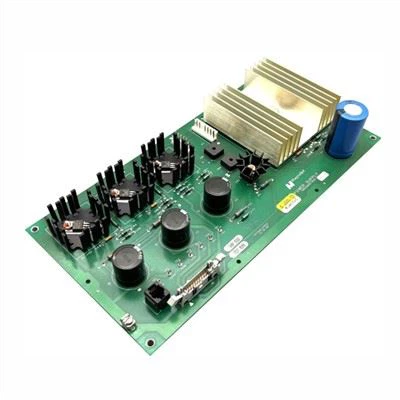
If you’re an elevator contractor, a maintenance manager, or a building owner dealing with encoder failures, or if you’re planning a new project and want to avoid the downtime that comes with cheap, poorly spec’d parts, I’m here to help. We’ve built our entire business on supplying elevator encoders that are tested for the exact conditions your lifts operate in, with support every step of the way—from selecting the right encoder for your specific elevator model to troubleshooting any issues that pop up. Don’t let a small component turn into a big problem. Reach out to our team to discuss your requirements, get a custom quote, or learn more about how our encoders can keep your elevators running reliably for years to come.
References
Elevator Guide Shoe IEC 60947-5-2: Low-voltage switchgear and controlgear – Part 5-2: Control circuit devices and switching elements – Proximity switches
IEC 61800-3: Adjustable speed electrical power drive systems – Part 3: EMC product standard including specific test methods
ISO 14801: Railway applications – Elevators for the transport of persons and goods – Safety requirements
Sanjin Elevator Parts Co., Ltd.
Sanjin Elevator Parts Co., Ltd. is one of the most professional elevator encoder manufacturers and suppliers in China, featured by quality products and good service. Please rest assured to buy or wholesale high-grade elevator encoder at competitive price from our factory.
Address: 18th Floor, Xinyuan Center, Fenghe Road, Xi’an, Shaanxi, China
E-mail: elevatorparts@westdt.com
WebSite: https://www.sanjinelevator.com/
